
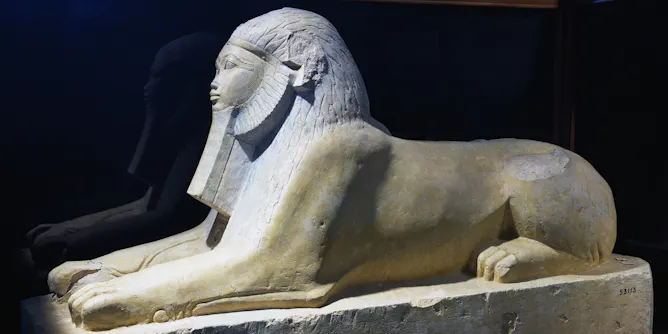
There is evidence of people who crossed gender boundaries even in ancient civilizations, though the terms naming them have evolved over time.
Articles on Ancient civilizations
Displaying all articles

Archaeology teaches us that we are not immune to extinction.

Builders knew how to keep people cool in hot, dry climates thousands of years ago. It’s time to get that knowledge back.

Students are invited to imagine how the social, political and legal landscape for cannabis will look in the future.
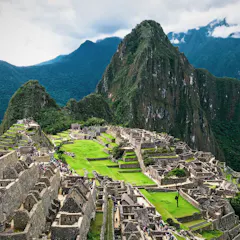
Machu Picchu is now an iconic tourist destination in Peru – but it was once a royal palace that pulled people from all corners of the Inca empire.
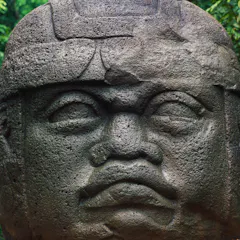
The return of an important monument to Mexico puts a spotlight on a culture whose influence is still felt in the Americas today.

Treatment has a high success rate. Getting problem gamblers in the door – and getting them to complete a full course of therapy – is another matter.
Norman Daly’s 1972 exhibition, ‘The Civilization of Llhuros,’ presented fiction as fact – and reminded viewers of just how easily they could be duped.
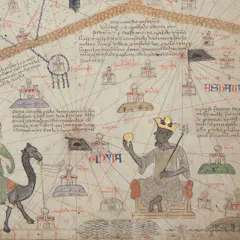
Born in Blackness by Howard W. French is a towering work. It argues that, because of gold and slavery, Africa is central to creating the modern world.
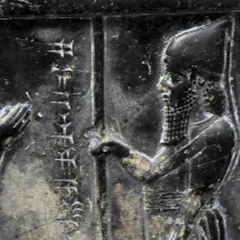
Ancient Babylonians achieved a practical application of trigonometry that was massively advanced for the time.
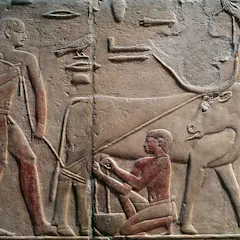
Natural landscape changes in the Nile Delta may have not only stimulated local take up of farming technologies, but might also have played a role in the emergence of the first “nation state”.

Believed to possess magical qualities, amulets were once widely used. They range from amber pendants worn during Denmark’s Mesolithic age to wind chimes found at Pompeii.
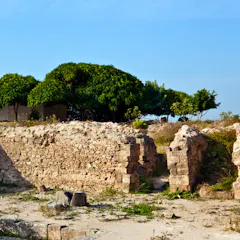
New modelling techniques shed light on the ancient city of Ugarit and can help plan effective conservation.
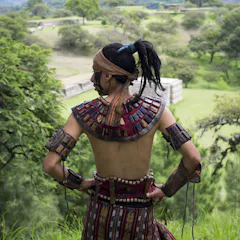
Grisly war trophies made from the heads of vanquished enemies certainly grab attention. But archaeologists are more interested in what they may tell about a tumultuous time of shifting political power.
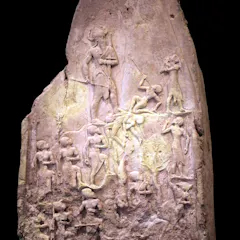
Scientists have discovered new evidence of a drought that finished off the Akkadian Empire 4,000 years ago.

A new study reveals that the demise of the ancient city of Angkor was related to the fragmentation of critical infrastructure during a period of climatic instability.
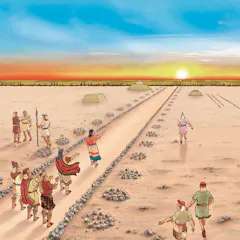
How did civilization emerge from small groups of hunter-gatherers? Some archaeologists focus on cooperation as the vital ingredient – and find evidence for it in the form of feast-related artifacts.

Erotic spells were a popular form of magic in ancient Greece and Rome. Ancient spells were often violent, brutal and without any sense of caution or remorse.

More than 2,000 years ago, the Babylonians understood the cycle of eclipses. They also regarded them as signs that could foretell the death of a king.
Top contributors
-

Honorary Professor of Classics and Ancient History, School of Historical and Philosophical Inquiry, The University of Queensland
-
Associate Professor of Classics & Ancient Mediterranean Studies, History, and Asian Studies, Penn State
-
Exec. Director, Institute for the Advanced Study of Culture and the Environment; Professor of Anthropology, University of South Florida
-
Associate professor in Physical Geography, Northumbria University, Newcastle
-
Associate Professor, University of Sydney
-
Research Professor of Clinical Health, University of Memphis
-
Chancellor’s Professor of Art, University of Tennessee
-
Associate Professor in Architectural Heritage, School of Architecture, Art and Design, University of Portsmouth
-
Distinguished Professor of Anthropology, University of California, Riverside
-
Senior lecturer, UNSW
-
Lecturer, Stellenbosch University
-
Professor of Anthropology, Michigan State University
-
Visiting Fellow in Geoarchaeology, University of Southampton
-
Professor of Anthropology, Quinnipiac University
-
PhD candidate in Genetic Anthropology, Adelaide University