
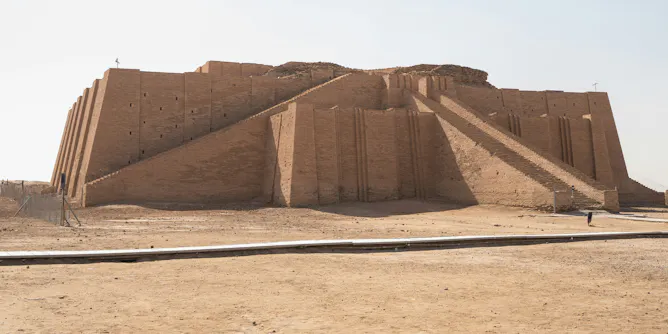
Unlike the Egyptian pyramids, ziggurats were not places of royal burials, but temples dedicated to the patron deity of a city.
Articles on Mesopotamia
Displaying 1 - 20 of 28 articles

Cylinder seals were intimately tied to their owner, showcasing their identity, beliefs and social status.
There was previously no direct genetic data from an Egyptian individual of this period.
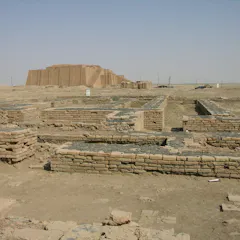
A collection of artefacts collected 2,500 years ago in modern-day Iraq reveal the forgotten world of Mesopotamia, home to many world firsts – including beer production.

Using a sheep’s liver to predict the outcome of the US election makes a serious point about how humans have coped with uncertainty throughout history.
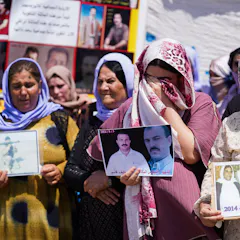
A scholar of Iraq describes the ongoing loss following the genocidal violence by IS − not just of human lives, but of a rich cultural heritage.
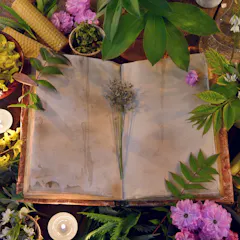
Perfume has complex and fascinating links to ancient chemistry.
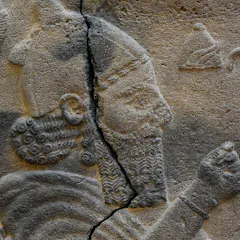
To protect their kings, ancient Mesopotamians discovered how to predict eclipses, which were associated with the deaths of rulers. This eventually led to the birth of astronomy.

Whether thousands of years ago or right now, fans have always created new stories based on familiar characters, weaving their own experiences into the tale.

Some of popular culture’s most famous ghosts and demons have roots in ancient Mesopotamia. What did ancient humans believe about the supernatural? And what stories did they tell?

From snake-like creatures with claws to jealous virgin ghosts, female monsters have long been a part of women’s lore. Such figures were Intimately tied to childbirth, sexuality and child mortality.

Generations of readers have experienced the frustration of reading fragments when trying to access classics of ancient Mesopotamian literature.

Millions of people around the world live on river deltas and are vulnerable when those rivers shift direction. A new study shows why and where these events, called avulsions, happen.
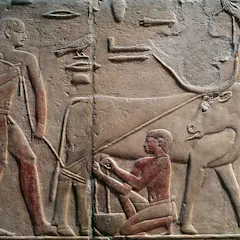
Natural landscape changes in the Nile Delta may have not only stimulated local take up of farming technologies, but might also have played a role in the emergence of the first “nation state”.
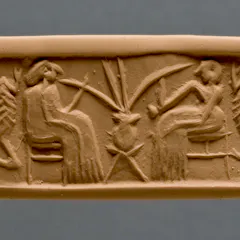
Beer was extremely popular in ancient Mesopotamia. Sipped through straws, it differed from today’s beer and was enjoyed by people from all walks of life.
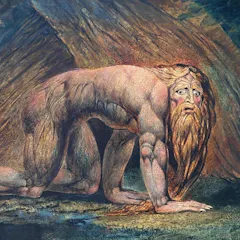
Nebuchadnezzar was a warrior-king of the Neo-Babylonian empire. And now, Kanye West has written an opera inspired by him.

What caused the rise and then collapse 2,600 years ago of this vast empire centered on Mesopotamia? Clues from a cave in northern Iraq point to abrupt climate change.
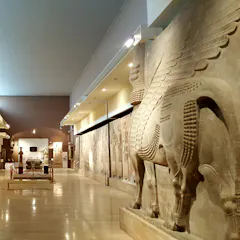
Ennigaldi-Nanna is largely unknown in the modern day. But in 530BC, this Mesopotamian priestess worked to arrange and label various artefacts in the world’s first museum.

Enheduanna’s name means ‘Ornament of Heaven’. She wrote hymns and myths more than 4000 years ago, studied the stars and yet is almost entirely unknown in the present day.
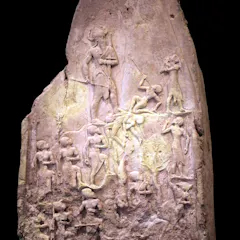
Scientists have discovered new evidence of a drought that finished off the Akkadian Empire 4,000 years ago.
Top contributors
-

Honorary Research Associate, Department of Classics and Ancient History, University of Sydney
-
Curator for Ancient Near East, Ashmolean Museum, University of Oxford
-
Associate professor in Physical Geography, Northumbria University, Newcastle
-
Professor Geography, Archaeology and Environmental Studies, University of the Witwatersrand
-
Associate Professor of Global Environmental Change, Xi'an Jiaotong University
-
Assistant Professor of Religious Studies, University of Dayton
-
Honorary Professor of Classics and Ancient History, School of Historical and Philosophical Inquiry, The University of Queensland
-
Professor, Classics and Archaeology; Philosophy, Queen's University, Ontario
-
Postdoctoral Researcher in Analytical Chemistry, Dublin City University
-
Professor of Earth and Climate Sciences, California State University, Dominguez Hills
-
Visiting Fellow in Geoarchaeology, University of Southampton
-
Associate Professor, Management Discipline, Faculty of Business, Arts and Law, Southern Cross University
-
Associate Professor in Ancient History, Australian Research Council Future Fellow, Macquarie University
-
Chair of Ancient Near Eastern Literatures, Ludwig Maximilian University of Munich
-
Assistant Professor of History, North Carolina State University