
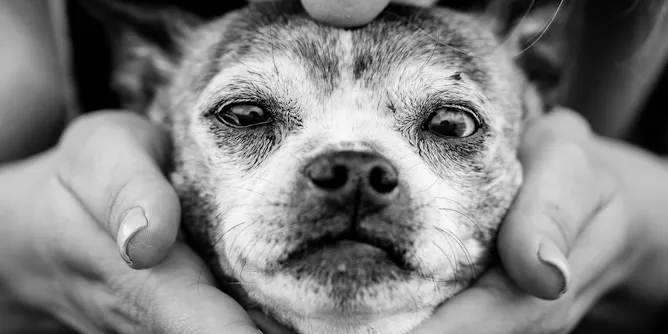
As dogs age, their brains undergo similar changes to human brains, making them a valuable natural model to study dementia and other neurodegenerative diseases.
Articles on Alzheimer's research
Displaying all articles
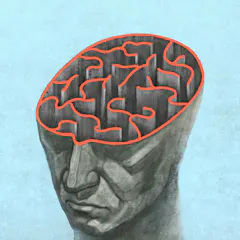
Our understanding of the causes of Alzheimer’s disease is evolving. Recent discoveries have revealed the important role of the cerebral vascular system.

Alzheimer’s research shows what happens when funding pressures and vested interests corrupt the pursuit of scientific truth.
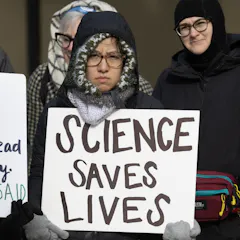
The majority of the 23 states disproportionately affected by the cuts are red states.

Confused by conflicting studies about the link between viagra and Alzheimer’s? Two experts explain the disparaties
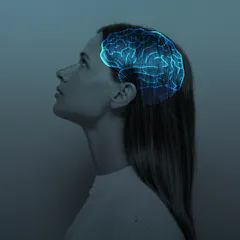
Two thirds of people with Alzheimer’s disease are women – but activation of a brain protein called CYP46A1 might hold the key to prevention.
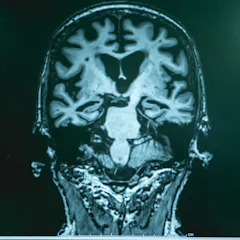
Disorders such as Alzheimer’s and epilepsy are difficult to diagnose with only occasional doctor visits. A new approach would allow fathering of extensive real-world data directly from patients.
The drug has been hailed as a ‘turning point’ in Alzheimer’s treatment. But keep in mind the trial only included participants with early or mild disease. And while it slowed decline, it’s not a cure.

People living with dementia often become more confused in the late afternoon and into the night. Why, and what can we do about it?
Impaired insulin receptors in the blood vessels between the blood and the brain may contribute to the insulin resistance observed in Alzheimer’s disease.
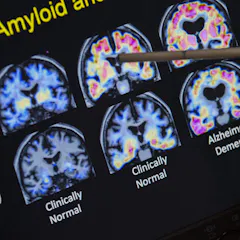
Alzheimer’s may not be primarily a disease of the brain. It may be a disorder of the immune system within the brain. Beta-amyloid may not be an abnormal protein, but part of the brain’s immune system.
Top contributors
-

Head of Clinical Services, Dementia Support Australia, & Associate Professor of Psychiatry, Monash University
-
Professeur, Université Laval
-
Professor of Chemistry and Senior Scientist of the Krembil Research Institute, University Health Network, University of Toronto
-
PhD student, Université Laval
-
Professor in Clinical Pharmacy, Aston University
-
Associate professor and Principal Researcher, Neurobiology, Karolinska Institutet
-
Research director at the Decision Support Systems (DSS) Laboratory, National Technical University of Athens
-
Professionnel de recherche, Université Laval
-
Professor of Pathology, Microbiology and Immunology, University of South Carolina
-
Professor of Pathology, Microbiology and Immunology, University of South Carolina
-
Professor of Research Ethics, University of Portsmouth
-
Senior lecturer in Pharmacoepidemiology, Aston University
-
Candidat au doctorat en sciences cliniques et biomédicales, Université Laval