
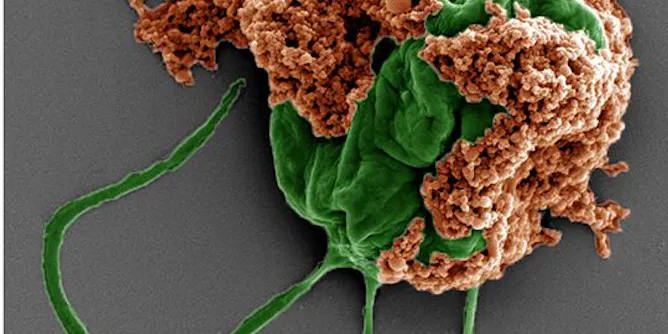
Green algae carry drug-loaded nanoparticles directly to the lungs, reducing side effects in other organs and increasing treatment efficiency.
Articles on Algae
Displaying 21 - 40 of 97 articles

In winter 2023-24, the Great Lakes’ ice cover was near record lows, peaking at just 16%. Researchers explain how diminishing ice could have consequences for fisheries, and how species are evolving.
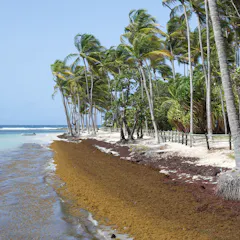
A leading driver of this seaweed invasion is pollution, carried down rivers and into the Atlantic Ocean from the continents.
Slime gets a bad name in popular culture, but it’s food for invertebrates who become food for many other creatures.

The microbiome and its signature smells are crucial for most organisms, whether human, insect or plant. The silent signals sent by the microbiome are essential communications that influence behaviour.
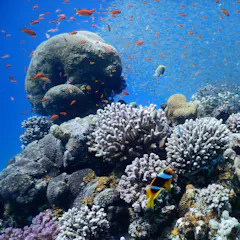
Reef corals grow vigorously in nutrient poor water – new research has found out why.

New research dating and reading the rocks of the Flinders Ranges in South Australia reveals a fascinating story about how complex life emerged on our planet.
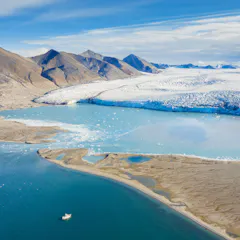
To fully understand the extent of climate-related dangers the Arctic – and our planet – is facing, we must focus on organisms too small to be seen with the naked eye.
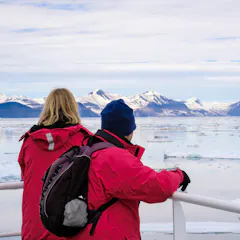
Arctic sea ice algae contaminated with microplastics have serious consequences for ecosystems and the climate.
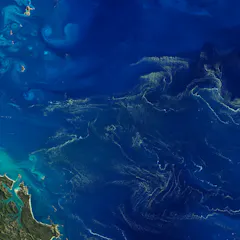
The ocean absorbs a quarter of the CO₂ emitted by humans, thanks in particular to phytoplankton, including diazotrophs. Knowing how to model them is crucial to understanding the ocean’s role in climate.
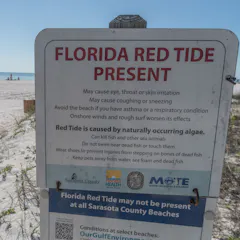
The tiny organisms that cause harmful blooms of algae can have a big impact on your trip to the shore. A toxicologist explains what causes these events and how to keep people and pets safe.

Agricultural technologies to grow food on Mars can help address climate change, sustainability and food scarcity challenges.
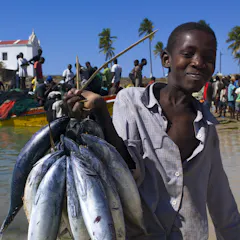
From planting mangroves to dumping minerals in the ocean, there are lots of ideas for ocean carbon dioxide removal – and even more questions.
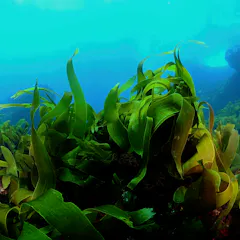
Our ocean forests of seaweed are enormous. But these quick-growing, life-supporting forests are already vanishing.
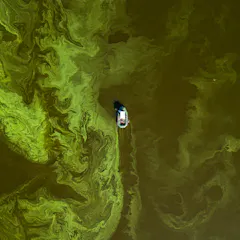
Windermere has seen extensive algal blooms, attracting attention over its ecological consequences. But this is nothing new.
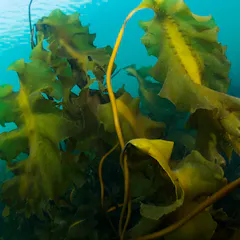
The abundance, versatility and quality of seaweed from the St. Lawrence makes this resource a real asset for Québec. We must now integrate it into our kitchens.
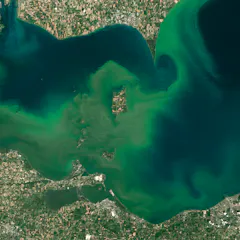
Nutrient pollution fouls lakes and bays with algae, killing fish and threatening public health. Progress curbing it has been slow, mainly because of farm pollution.
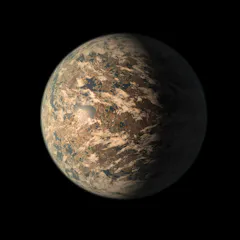
Life on Earth has dramatically changed the chemistry of the planet. Astronomers will measure light that bounces off distant planets to look for similar clues that they host life.
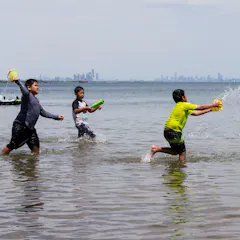
Cleaning up the Great Lakes was a big job when the US and Canada undertook it in 1972. Today it’s far more challenging.
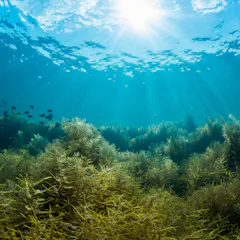
Substances found in algae, squid and fish all have potential antiviral properties.
Top contributors
-

Professor Emeritus of Environment and Sustainability, University of Michigan
-
Professor of Microbiology, University of Tennessee
-
Research Associate in Plant Biotechnology, University of Cambridge
-
Professor of Ecology, University of Southampton
-
Professor, Queensland University of Technology
-
Honorary Research Associate in Biological Sciences, University of Sydney
-
NRF-DST Research Fellow; Researcher, Department of Chemistry and Polymer Science, Stellenbosch University
-
Professor and Deputy Vice-Chancellor (Research), University of Sydney
-
Professor, Director of Florida Sea Grant, University of Florida
-
Professor, Department of Earth and Planetary Sciences, Weizmann Institute of Science
-
Professor of Ocean Biogeochemistry and Palaeoclimate, The Open University
-
Professor, Marine Biology, Adelaide University
-
Senior Lecturer in Geoenergy, Durham University
-
Associate Professor in Sustainability, University of Sydney
-
Lecturer, UNSW