
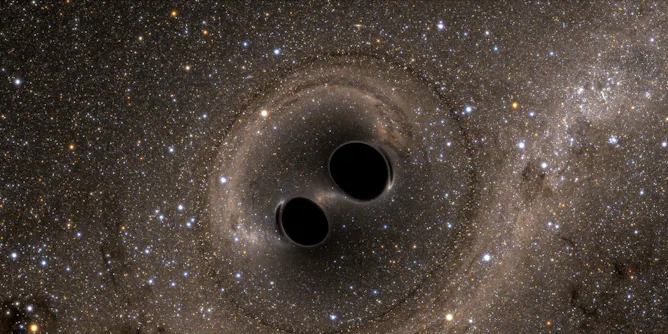
Einstein called entanglement “spooky action at a distance”. But now it’s been used to design an incredibly sensitive detection method for gravitational waves.
Articles on Albert Einstein
Displaying 81 - 100 of 126 articles
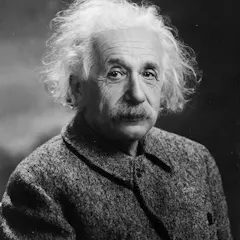
Einstein’s theories of relativity underpin our understanding of the universe, yet they’re not taught in high school. How can we change that?
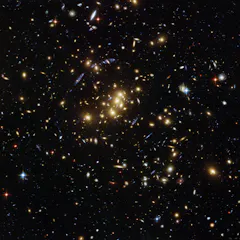
Einstein’s famous theory of general relativity theory lives on thanks to new research.

Both genetic and environmental factors determine someone’s personality. Genes account for between 30-50% of the determination and unique environmental experiences making up the rest.
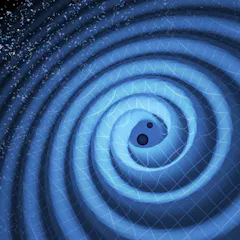
The observation of gravitational waves from a second black hole merger implies there are many more black holes in the universe than scientists had previously anticipated.
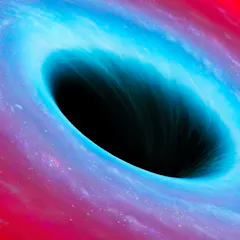
State of the art detectors have found another signal from a pair of collapsing black holes – the consequences could be momentous.

Scientists being wrong is not a bug or a glitch – it’s a feature of science and mistakes can actually lead to new, deeper discoveries.

Africa has deep-rooted problems: poverty, disease, corruption and war. Could these be solved through mathematical science?
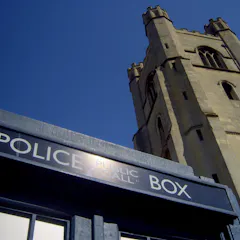
It is possible – with just a couple of awkward provisos.
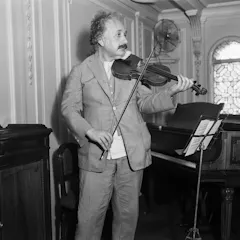
Einstein, an accomplished violinist, claimed that, had he not pursued science, he would have been a musician. That’s worth reflecting on, in the wake of last week’s discovery of gravitational waves.
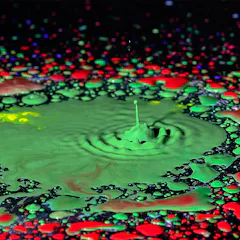
Music has always played a role in our understanding of the universe. Listening to gravitational waves confirms thousands of years of metaphysical investigation.
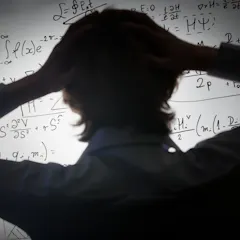
There’s a good reason you should care about the discovery of gravitational waves, even if you don’t understand the science.
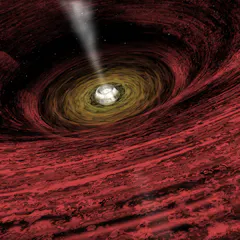
The discovery of gravitational waves has ushered in a new era in astronomy and physics. Where will the next big discovery be made? There’s no reason for it not to be Africa.

It’s taken centuries for our understanding of gravity to evolve to where it is today, culminating in the discovery of gravitational waves, as predicted by Albert Einstein a century ago.
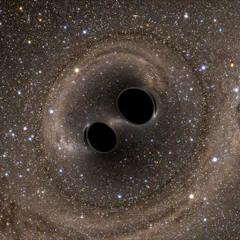
Here’s a LIGO insider’s description of how he got the news of a phenomenon that had first been theorized 100 years ago.
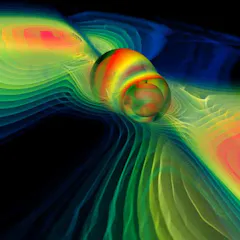
If you understand how a trampoline works, you’ll be able to understand what gravitational waves are.
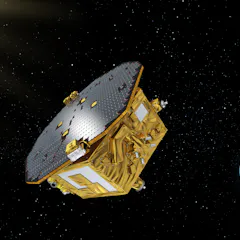
Why the LISA pathfinder mission, just about to launch, could revolutionise astronomy forever by giving us a completely new window into the universe.
After the triumph of general relativity, Albert Einstein spent the rest of his life chasing a unified theory, which eluded him right up until the end.

Many people think relativity puts a hard speed limit on the universe, but it actually opens up the possibility of faster-than-light travel - if we can overcome some significant practical hurdles.
Einstein’s theory of general relativity is a triumph of reason and imagination, of art and science, with a profound beauty of its own.
Top contributors
-

Emeritus Professor, ARC Centre of Excellence for Gravitational Wave Discovery, OzGrav, The University of Western Australia
-
Professor of Astrophysics, University of Sydney
-
Professor, Philosophy of Science, The University of Melbourne
-
Professor of Physics, Penn State
-
Senior Lecturer and ARC Future Fellow, Monash University
-
Associate Professor of Physics, Oklahoma State University
-
Professor of Mathematical Physics, University of Cape Town
-
South African Research Chair in Physical Cosmology, Department of Mathematics and Applied Mathematics, University of Cape Town
-
Professor, Physics & Astronomy, Bishop's University
-
Reader in Astrophysics, Keele University
-
Senior Lecturer in Astronomy & Astrophysics, Coordinator of Swinburne Astronomy Online, Swinburne University of Technology
-
Professor of Astrophysics, University of Cambridge
-
Professor of Psychology, Indiana University
-
Professor of Astrophysics, University of Glasgow
-
Professor of Theoretical Physics, University of Canterbury