

One Google response asked for my medical history. Another answered a personal health question without asking who I was. Both replies came across as authoritative advice.
Articles on AI literacy
Displaying all articles

Beyond technical fluency, Canadian students need judgment to decide how to use AI and when it should not be used at all.

A survey and workshop project is designed to help educators reflect on their comfort with genAI, assessment and educational practices and their fears and challenges.

Universities’ crackdown on the use of AI misses the point. They should instead teach it as a vital productivity tool, undepinned by ethics.

AI literacy should help students recognize simulated care, not make simulated care a normal part of schooling.

Research on generative AI use among youth pinpoints design features that pose age-specific risks, which must be addressed before we adopt genAI into our schools and homes.

How provinces approach digital learning and AI literacy will shape to what extent this is grounded in critical thinking and ethical reflection.

AI literacy has become synonymous with prompt engineering. It should mean something else entirely.

Generative AI changes how we see – and how we decide what’s real.

Canada and other OECD countries’ plans to test students’ AI literacy in 2029 threatens to obscure essential questions about the marketing of AI.

Despite growing resources, the development of AI technology continues to outpace essential education for teachers and implementation support.

The future of work isn’t about humans being replaced by robots, but about learning how to use the technology to enhance skills and creating new entry points into the professional world.

What if instead of trying to detect and avoid AI glitches, we deliberately encouraged them instead?
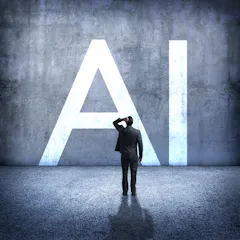
President Trump’s executive order calling for AI literacy highlights its importance. The order also underscores its amorphous nature. Here’s how to develop and measure effective AI literacy programs.

Universities should teach AI literacy, emphasise why developing knowledge is important and teach students why being an expert matters.
Top contributors
-

Assistant Professor, International Islamic University Malaysia
-
Professor of Creative Pedagogies, Edinburgh Napier University
-
Professor of Higher Education, Rhodes University, South Africa, Rhodes University
-
Senior Lecturer and Researcher in Educational Technology and Higher Education Studies, Stellenbosch University
-
Research Associate at the School of Social Sciences and Technology, Technical University of Munich
-
Post Doctoral Researcher in Educational Sciences, Technical University of Munich
-
Assistant Professor of Political Science, Purdue University
-
Senior Lecturer, Media & Communication, RMIT University
-
Lecturer of Marketing in the Lazaridis School of Business and Economics, Wilfrid Laurier University
-
Doctoral Student, EdD., Learning Sciences, Werklund School of Education, University of Calgary
-
Associate Professor, Learning Sciences, Werklund School of Education, University of Calgary
-
Chair in Sociology of Education, University of Cambridge
-
Adjunct faculty and Associate Lecturer, Department of Secondary Education, University of Alberta
-
Lecturer in Sociology of Digital Education, University of Naples Federico II
-
Assistent Professor, Media Linguistics, University of Innsbruck