

Their desire to pursue marriage abroad not only reveals their longing for a better life but also reveals the pervasive gender, age and class inequalities that continue to plague modern-day China.
Articles on Ageism
Displaying 21 - 40 of 69 articles

Children absorb these stereotypes from a young age. And ageism is all around us.
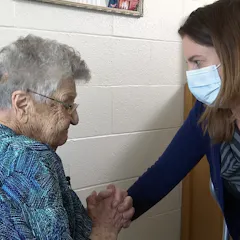
What is life like at 100? Centenarians shared their joys and future hopes with a team of Saskatchewan researchers.

The challenging realities surrounding end-of-life care are especially difficult for older people experiencing homelessness, who have more barriers to accessing hospice care.

COVID-19 is the third-leading cause of death in Canada, but it’s older people who are dying. That we accept this and carry on as if the pandemic is over reveals our ageism: We don’t value older people.

To reduce ageist perceptions of older people, we should encourage collectivist norms and the importance of acting for the common good.

Ageism is pervasive and these women are still exceptions in society.

Labels that reflect our gender, racial or age-specific biases can often undermine others.
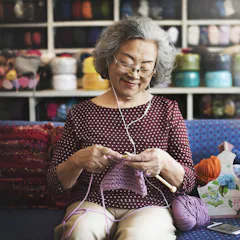
Locking individuals into the narrative of age as a vulnerability means inevitably creating ageist stereotypes.

It’s not just a problem of leadership – ageing politicians tend to dominate around the world.

Technologies are now ubiquitous in everyday modern life, but ageism means that older adults are excluded from the design of the technologies that they use.

For many men, grey hair is just part of getting older, but for women, going grey can have major consequences.

Universities can support mature students by addressing stigma and ageism, creating a sense of community and adapting programs to suit their multiple roles.

When Maree was given flowers by a TikTok influencer, she felt ‘de-humanised’ and reduced to her age. Here is how benevolent ageism shows up in our society.

TikTok is increasingly the social media of choice for older people who enthusiastically reject socially constructed notions of old age.
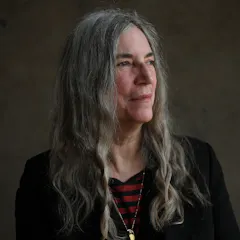
Old women remain the butt of jokes; they are some of society’s most marginalised people. But age also invites us to become our most authentic selves, writes Carol Lefevre.
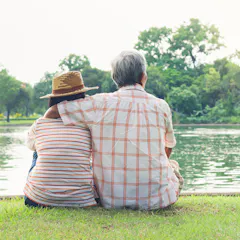
Retirement villages tend to treat older people as a homogeneous group when the reality is they have a hugely diverse range of needs.

Universities can have a role forming age-conscious students: those who aren’t ageist, don’t fear aging and are attuned to the aging process.

Even though the media exposed the negligence that led to so many elderly deaths, it continues to portray old people as faceless and voiceless, contributing to the insidious spread of ageism.

Being age-friendly is not just a matter of responding to the needs of Australia’s ageing population. It will benefit all students and the university as a whole.
Top contributors
-

Lecturer in Psychosis Studies, King's College London
-
Professor of Gender & Social Justice and English Literature, Trent University
-
Instructional Associate Professor of Gerontology, University of Southern California
-
Regents and Distinguished Professor of Environmental and Occupational Health, Texas A&M University
-
Reader in the Department of Music, University of Liverpool
-
Associate professor, Universitat de Girona
-
PhD Candidate in Management, Massachusetts Institute of Technology (MIT)
-
Associate professor, Kansas State University
-
Professor, Monash University
-
Progam Director - Sport Media / RTA School of Media / Assistant Professor, Toronto Metropolitan University
-
Professor in Management,, University of Glasgow
-
Co-Director of Texas A&M Center for Population Health and Aging, Texas A&M University
-
The Aljoya Endowed Professor of Aging, Director of the de Tornyay Center for Healthy Aging, University of Washington
-
Academic Convenor, Hallmark Ageing Research Initiative, The University of Melbourne
-
Reader in Human Geography, University of St Andrews