
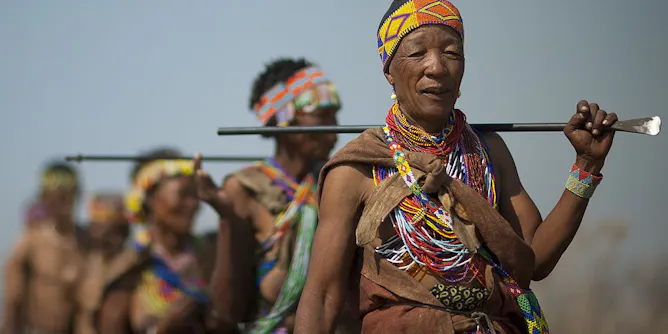
The first speech sounds were uttered about 70,000 years ago and not hundreds of thousands of years ago as is sometimes claimed.
Articles on African languages
Displaying 21 - 40 of 55 articles
Indigenous knowledge, African languages, queer rights and Afrofuturism are some of the issues discussed in the new book.
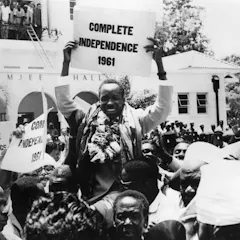
Over two millennia, Swahili has built bridges among people across Africa and into the diaspora.
Reconstructed vocabulary sheds light on cultural items and people’s habitats, including the spread of ideas and the importance of certain concepts.

There is something beautiful about African languages carrying science, fictionalised of course, into imagined futures.
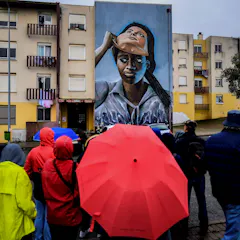
Students from São Tomé and Príncipe must negotiate being both native speakers of Portuguese and Black Africans. And how they speak Portuguese is perceived as an issue.
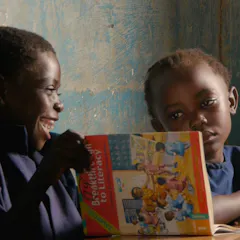
The documentary resulted in the creation of an active translation network.

A realignment is needed as the current systems have lost the competence to midwife a new nation out of the formative experiences of the last 25 years.

Police officers are also not, and are not expected to be, sworn translators or interpreters. This has serious implications for justice.
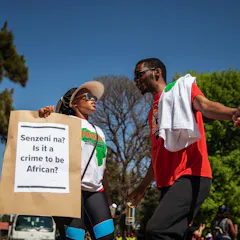
Research has shown that African immigrants in South Africa refrain from speaking their own languages and try to speak local languages to blend in.
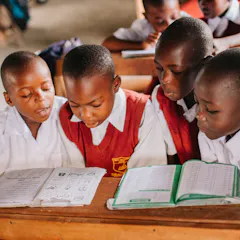
A much more flexible and open teaching and language policy would help teachers and pupils to enable a meaningful learning environment in a multilingual and diverse classroom setting.
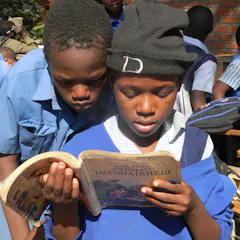
The International Year of Indigenous Languages serves as a good impetus to start implementing policies that prioritises Africa’s own languages.
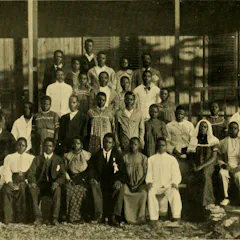
It’s hailed as one of the greatest works of fiction to emerge from Africa. But Things Fall Apart was written in English, sparking debate about the colonisation of language.

Kiswahili will be easy for South Africans to learn compared to foreign languages from outside Africa.

It’s not far-fetched to suspect that the common understanding of the idea of “mother tongues” in South Africa is coloured by outside influences.
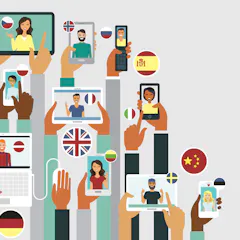
Software tools for South Africa’s Nguni languages may assist with redress and effective communication.

Africa’s current situation has a parallel in European history - the Reformation and the changes it wrought in terms of language exceptionalism.
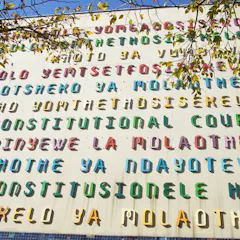
South Africa must be seen as a country for speakers of all its official languages rather than an English-only elite.
Africa needs a new strategy for mother-tongue based bilingual education, from primary through to tertiary level.
It’s important to shift educational discourse in and around Africa in a more equitable, representative direction.
Top contributors
-

Professor of African Language Studies, University of the Western Cape
-
Assistant Professor, Harvard University
-
Emeritus Professor of African Linguistics, University of Leipzig
-
Postdoctoral research fellow (Forensic Linguistics/ Language and Law), University of the Western Cape
-
Associate Professor in Applied Linguistics, Adelaide University
-
Lecturer on the New Generation of Academics Programme (nGAP) in African Language Studies, University of the Western Cape
-
Lecturer, Department of African Languages, Makerere University
-
Lecturer in African Languages, Makerere University
-
Subject Head, African Languages, Rhodes University
-
Senior Lecturer in African Languages, Rhodes University
-
Professor and Deputy Vice-Chancellor Teaching Learning, North-West University
-
Professor of Linguistics, University of Cape Town
-
Senior Lecturer, Applied Language and Literacy Studies, University of Cape Town
-
Professor emeritus Applied Language Studies, Nelson Mandela University
-
Adjunct Professor, Richmond American International University