

The new policy is an opportunity to promote equity and redress the past politics of language.
Articles on Mother tongues
Displaying all articles

There’s a new wave of indigenous language podcasts that could attract big new audiences.

Forensic linguistics can play a valuable role in interpreting evidence.

It’s not far-fetched to suspect that the common understanding of the idea of “mother tongues” in South Africa is coloured by outside influences.
Africa needs a new strategy for mother-tongue based bilingual education, from primary through to tertiary level.
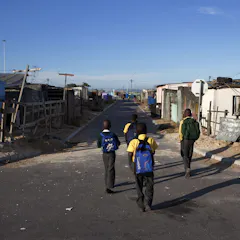
Policies must seek to improve the manner in which the language of instruction is taught to learners who don’t speak that language at home.
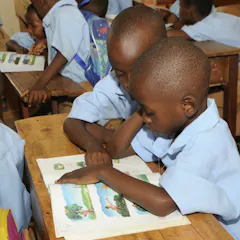
Textbooks in sufficient quantities are effective in improving the quality of education but in Africa language poses a problem to how pupils interact with the material they are taught.
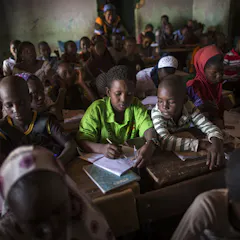
Over the years, our understanding of how language and learning are linked has shifted and changed. There is ample evidence about the value of mother-tongue-based multilingual education.

Learning is an independent activity at university. Students who don’t speak English as a mother tongue struggle to decode the content, let alone make sense of it.

Schools and universities in post-colonial contexts still operate within the logic of coloniality. This is starkly illustrated by their language policies.
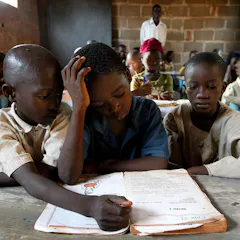
There are many layers of complexity at play in the way that South African schools use and teach languages.
Top contributors
-

Professor of African Language Studies, University of the Western Cape
-
Associate Professor in Applied Linguistics, Adelaide University
-
Postdoctoral research fellow (Forensic Linguistics/ Language and Law), University of the Western Cape
-
Professor in Language Education, member bua-lit collective, University of Cape Town
-
Senior Research Manager in the Education and Skills Development Research Programme, Human Sciences Research Council
-
Emeritus Professor of African Linguistics, University of Leipzig
-
Associate Professor in the School of Molecular and Cell Biology, University of the Witwatersrand
-
Professor of Curriculum Studies, Stellenbosch University
-
Head: Science Teaching and Learning Centre, Faculty of Science, University of the Witwatersrand
-
Lecturer of Biology/Life Sciences (research in Science Education), University of the Witwatersrand
-
Chief Research Specialist, Human Sciences Research Council
-
PhD Student School of Languages and Literatures, University of Cape Town
-
Lecturer in International Education, University of Bath
-
Associate professor, University of the Western Cape
-
Lecturer on the New Generation of Academics Programme (nGAP) in African Language Studies, University of the Western Cape