
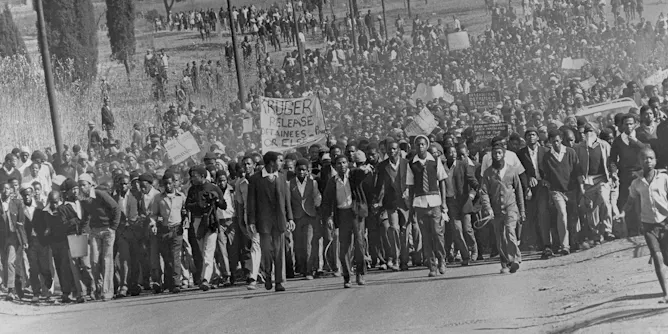
Together Apart: The Story of Living in Apartheid was written by two academics for readers of all ages to know about the pain and the triumph of South Africa’s past.
Articles on South African languages
Displaying all articles

The ǀxam language has been carved into a new building at Rhodes House to honour the labour and suffering of Africans during colonialism.

After three decades of democracy, the status of Afrikaans at formerly Afrikaans universities remains the subject of considerable debate.
The new policy is an opportunity to promote equity and redress the past politics of language.

Academic literacy is a mode of reasoning that aims to develop university students into deep thinkers, critical readers and writers.

This is an opportunity for Deaf people to finally be properly educated in a language they understand.
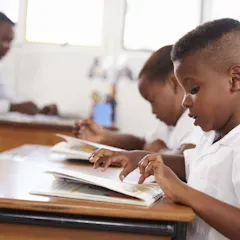
Reading fluency and expanding vocabulary are the bridge from decoding to comprehension. Weaknesses in any of these building blocks will limit a child’s ability to read for meaning.
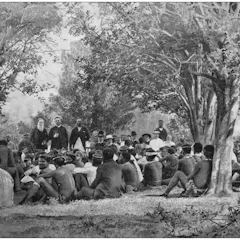
Missionaries and African translators working on local versions of the Bible divided South Africa’s ethnic groups by language.

There’s a new wave of indigenous language podcasts that could attract big new audiences.

Bilingual education is possible for all South Africa’s children.

English has failed often as the main language of court in proceedings - this impacts testimony and must be addressed.

A realignment is needed as the current systems have lost the competence to midwife a new nation out of the formative experiences of the last 25 years.

Police officers are also not, and are not expected to be, sworn translators or interpreters. This has serious implications for justice.
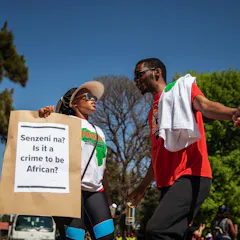
Research has shown that African immigrants in South Africa refrain from speaking their own languages and try to speak local languages to blend in.
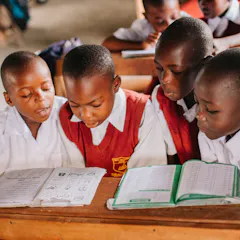
A much more flexible and open teaching and language policy would help teachers and pupils to enable a meaningful learning environment in a multilingual and diverse classroom setting.

It’s not far-fetched to suspect that the common understanding of the idea of “mother tongues” in South Africa is coloured by outside influences.
Software tools for South Africa’s Nguni languages may assist with redress and effective communication.
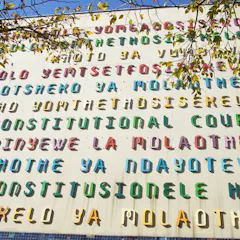
South Africa must be seen as a country for speakers of all its official languages rather than an English-only elite.
Top contributors
-

Professor of African Language Studies, University of the Western Cape
-
Postdoctoral research fellow (Forensic Linguistics/ Language and Law), University of the Western Cape
-
Senior Lecturer, Applied Language and Literacy Studies, University of Cape Town
-
Professor and Founder of the Wits Centre for Deaf Studies, University of the Witwatersrand
-
NRF SARChI Chair Post-Doctoral Research Fellow, School of African Languages, Rhodes University
-
Senior researcher at Research on Socio-Economic Policy, Stellenbosch University
-
Senior Researcher, University of the Western Cape
-
Dean: Faculty of Arts and Humanities, University of the Western Cape
-
Fellow of the Stellenbosch Institute for Advanced Study, Stellenbosch University
-
Professor at Southern Africa Labour and Development Research Unit, University of Cape Town
-
Associate Professor of History, Virginia Military Institute
-
Professor in Language Education, member bua-lit collective, University of Cape Town
-
Evan Pugh University Professor of Anthropology, Penn State
-
Associate professor, University of Pretoria
-
Part-time lecturer, University of Johannesburg