

Among contemporary African musicologists, Agawu has been one of the most distinctive voices over the past half-century.
Articles on African colonialism
Displaying 1 - 20 of 57 articles
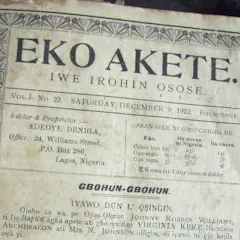
English was imposed as Nigeria’s official language, but the British had no way of controlling what people did with it.

A new book explores the country’s history, from world famous rock art to colonial genocide and the struggle for freedom.

A beautifully written book that shows why nostalgia is not to be trusted.
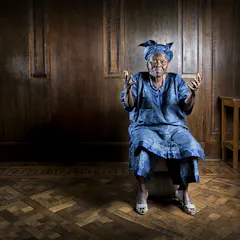
Oluwole faced a double challenge: a woman in philosophy and an African, confronting both sexism and Eurocentric bias.

Why has international success evaded a region that’s so in love with the game?

Rural people mostly grew their own food. But in the city, the daily meal became a commodity to be bought and sold.
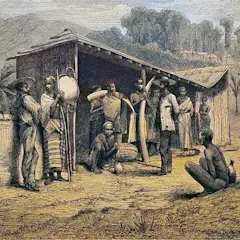
Africa’s ‘new consumer class’ isn’t new; in the 1800s the continent called the tune for European factories.
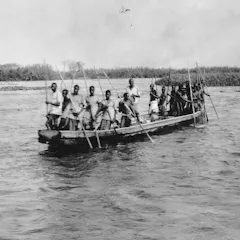
Gold was the first attraction, but late in the 1500s the Portuguese became obsessed with the idea that there were silver mines in Africa.
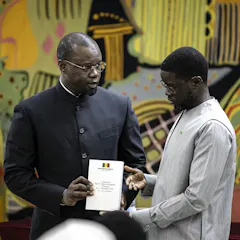
A recent report focuses on the death toll and on the burial site of the victims, stressing the importance of telling their stories.
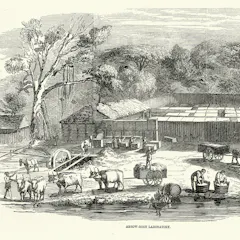
Colonial era records reveal the intersection of race and access to water in South Africa’s history.

There’s a deep-seated interdependence between France and its former African colonies.

When a language isn’t in the data, its speakers aren’t in the product – and AI cannot be safe, useful, or fair for them.
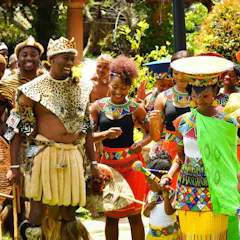
Although the judgment promotes gender equality, it opens another chapter in the struggle between customs and constitutional rights.

Ableist microaggressions are made by able-bodied people who don’t understand the realities of living with a disability.

The end of colonisation did not dismantle the BBC’s operation – the style was already embedded in the broadcasting system.

French authorities allowed sex work because they believed brothels could help prevent interracial relationships from developing.

A Kenyan exhibition working with communities in conflict zones offers insights into how Côte d'Ivoire could use the drum for reconciliation.
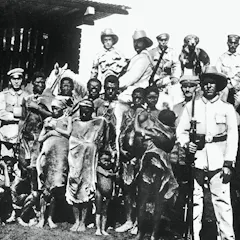
Germany’s genocide of the Ovaherero and Nama has been well documented, but the massacre of the Bushmen from 1912 to 1915 is seldom discussed.

Municipal drinking amenities were built to control and profit from African drinking. In Bulawayo, the quality of the beer became a colonial obsession.
Top contributors
-

Assistant Professor, Harvard University
-
Professor, Canadian and Cultural Studies, Stockholm University
-
Extraordinary Professor, Department of Political Sciences, University of Pretoria
-
Professor of African legal pluralism, University of the Western Cape
-
Postdoctoral Research Fellow
-
Emeritus Professor in History, King's College London
-
Historien et anthropologue spécialisé dans les armées coloniales et postcoloniales en Afrique de l’Ouest, École des Hautes Études en Sciences Sociales (EHESS)
-
Postdoctoral research fellow, University of the Witwatersrand
-
Research Fellow, History Department, Universität Trier
-
Invited User
-
Lecturer, University of Fort Hare
-
Professor of Public Theology in the Department of Beliefs and Practices, Faculty of Theology, at the Vrije Universiteit Amsterdam (Free University of Amsterdam), Vrije Universiteit Amsterdam
-
Senior Lecturer in Media and Communication, University of Mauritius
-
South African Research Chair in Sexualities, Genders and Queer Studies, University of Fort Hare
-
PhD candidate in Art History, Rhodes University