
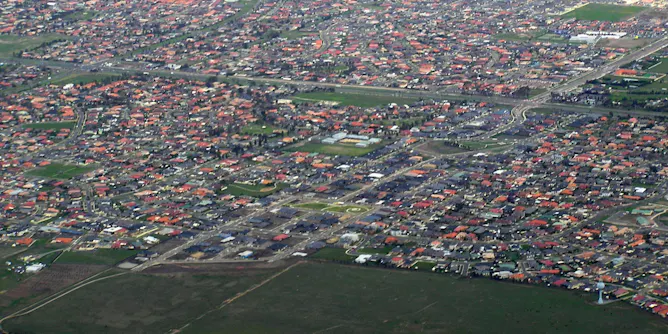
Victoria has been lagging behind other states in developing an affordable housing strategy. Now that one has been released, how well does it meet the needs of households on lower incomes?
Articles on Affordable housing
Displaying 301 - 320 of 369 articles

Business Briefing: how the attitudes of the next generation are changing the property market
The Conversation18.5 MB (download)
There's been a shift in attitudes to the property market over generations, from owning a home as a right, to owning a home as a commodity.
The housing supply solution our leaders are advocating will only work if affordability is simply a problem of supply. In fact, Australia is almost a world leader in rates of new housing production.
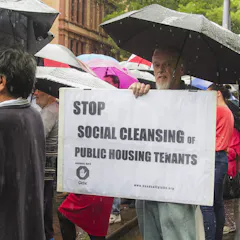
Although the federal-state agreement does it inadequately and lacks transparency, an enduring program of federal funding for operational expenses is essential to sustain the social housing system.
Any attempt to improve security for tenants should not deprive them, or their landlords, of the flexibility that many also want. The key problem is landlords’ ability to give notice without a reason.
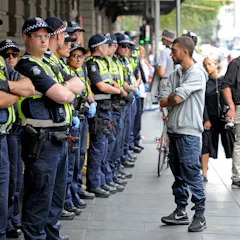
Weak state policies, which lack clear targets and mechanisms for providing more and better affordable housing, are part of the problem. Victoria still doesn’t have an affordable housing strategy.

Housing affordability is often not the only problem households face. More often the compounding effects of multiple problems leave people unable to cope, which is why one solution won’t work for all.

Shared ownership schemes can unlock access to suitable housing, although these are less common in Australia than overseas. And most are not specifically tailored for people with disability.

Scott Morrison has been exploring a UK model for channelling investment via a specialist financial intermediary into new affordable housing provided by landlords with a social purpose. It makes sense.

A combination of transit-oriented centres, inclusionary zoning and a special rate on land instead of stamp duty could make housing more affordable by cutting congestion, development and travel costs.
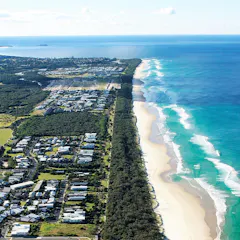
The affordability crisis in regional Australia has a long history. In some places the problem is even worse for residents than in the capital cities.
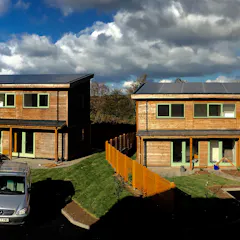
Ecologically sound housing needs to be built on a much larger scale.
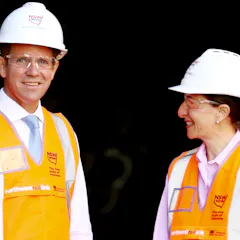
The new NSW premier is right to identify housing affordability as a priority for the people and economy of Sydney. It’s not just housing supply that’s the problem – action is needed on many fronts.

For the increasing proportion of people living in private rental accommodation who can expect to be dependent on the age pension, the prospects of financial and housing insecurity are grim.

Brazil should ask itself which is more important: having a roof over your head or owning the roof over your head?

Informal settlements are often undocumented or hidden on official maps, but they house about a billion people worldwide. Their existence demands a more sophisticated approach to urban development.
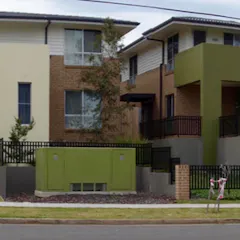
Do affordable housing projects drive down property values? Does neighbours’ quality of life suffer? Case studies in Brisbane and Sydney suggest such fears aren’t justified.

The community needs affordable housing and that requires meaningful targets for new developments. The only ones who will lose out are landholders who make windfall profits from rezoning.
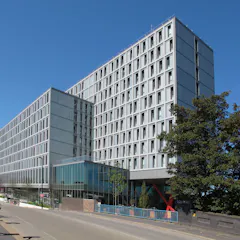
While some forms of co-living seek to match modern lifestyles and a desire to downsize, other profit-driven models simply exploit a lack of affordable housing alternatives.
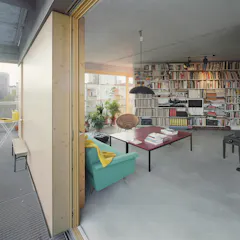
Citizens can switch from being consumers to pioneers who drive new designs for living. The German baugruppe model is a leading example.
Top contributors
-

Emeritus Professor of Housing, UNSW
-
Professor of Urban and Regional Planning, University of Sydney
-
Housing Policy Researcher, Expert Advisor, Housing Assessment Resource Tools and Adjunct Professor, L’Université d’Ottawa/University of Ottawa
-
Research associate, The University of Melbourne
-
Emeritus Professor, Urban Planning and Policy, University of Sydney
-
John Curtin Distinguished Professor, Curtin Business School, Curtin University
-
John Curtin Distinguished Professor, Curtin University
-
Professor, City Futures Research Centre, Faculty of the Built Environment, UNSW
-
Adjunct Professor, Centre for Urban Research, RMIT University
-
Senior Research Fellow, City Futures Research Centre, UNSW
-
Professor of Housing Research, Adelaide University
-
Alan Morris is a Friend of The Conversation.
Professor, Institute for Public Policy and Governance, University of Technology Sydney
-
Associate Profesor, School of Planning, University of Waterloo
-
Program Director, Housing and Economic Security, Grattan Institute
-
Professor of Urban Policy and Director, Urban Futures Enabling Impact Platform, RMIT University