
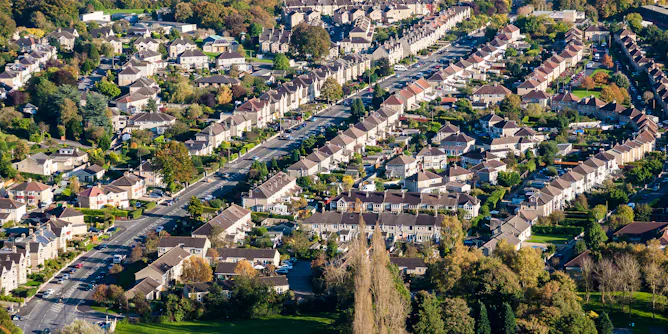
Theresa May wants to rapidly increase the supply of affordable homes, but will have to tread carefully on Britain’s talismanic property wealth.
Articles on Affordable housing
Displaying 261 - 280 of 369 articles
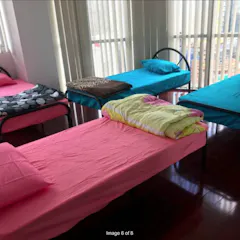
City living costs are driving people to organise themselves to share a room with strangers. These precarious living arrangements hardly qualify as a home.
Unaffordable housing and homelessness are burning issues. Policymaking has suffered from a critical lack of data and expert input since the National Housing Supply Council was axed in 2013.
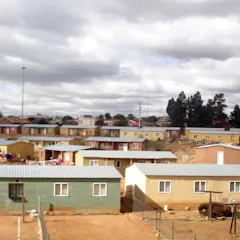
Durban one of South Africa’s third largest cities, by population has reported that the number of people living in informal dwellings has remained stubbornly high.

The NDIS has the resources and mandate to develop a mature market that delivers suitable housing for people with high disability needs, including the more than 6,200 young people now in aged care.

Residents of two high-rise public housing blocks are being given ‘mood lights’ to express how they feel based on their experience of the process of redeveloping their neighbourhood.
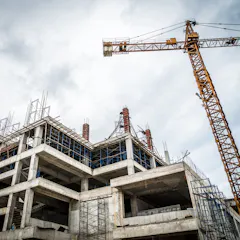
A modest rebalancing of federal tax policy toward build-to-rent housing could fill affordable housing funding gaps. Australian funds are already investing in such a scheme in the US.
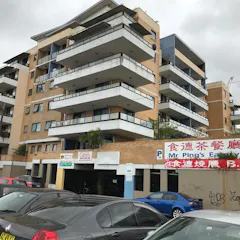
The inexorable logic of the market will create suburban concentrations of lower-income households on a scale hitherto only experienced in the legacy inner-city high-rise public housing estates.

The conventional view is that insecurity of land tenure results from the lack of a registered title deed which records the property rights of occupants of land or housing.
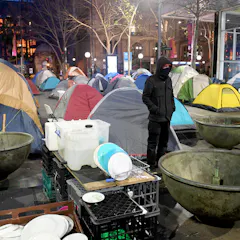
The Martin Place camp and others like it should make us uncomfortable. We live in a system that creates and tolerates homelessness.

With some tinkering, a federal tax credit that encourages developers to create new units that low-income Americans can afford to rent might yield other benefits.

While many talk about 30-minute cities, some aim for residents to be able to get to most services within 20 minutes. But cities like Melbourne have an awful lot of work to do to achieve their goal.
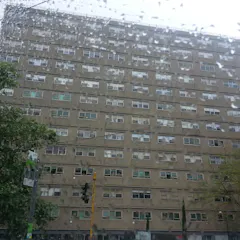
Even where communities are mixed, many inner-city families go to extraordinary financial and geographic lengths to ensure their children do not go to school with children from ‘the flats’.

One in seven Australian households is in a state of housing need. A shortfall in social housing supply means some are locked out of the market and others pay much more for rent than they can afford.

Retirees are often urged to downsize to free up suburban properties for the next generation and for higher-density development. What’s being ignored is the costs of moving into a unit or apartment.
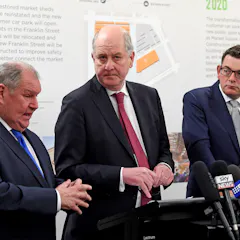
Mixing public and private housing in urban renewal projects can be a contentious business. But public good and optimal use of public resources, not developer interests, should guide such decisions.

A tax on empty homes will make a modest difference to housing affordability. The sheer wastefulness of our housing system calls for something much more ambitious.
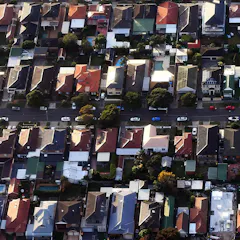
New research reveals outdated concepts and thinking are shaping Australia’s troubled housing system.
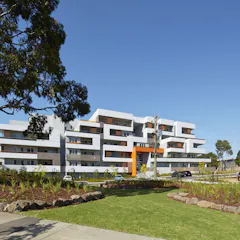
Concerns about the privatisation of public housing estates should not blind us to the benefits of the transfer of public housing to the not-for-profit community housing sector.

A variable special rate on new residential housing developments in selected centres could be used to create a local incentive to supply more affordable dwellings at higher density.
Top contributors
-

Emeritus Professor of Housing, UNSW
-
Professor of Urban and Regional Planning, University of Sydney
-
Housing Policy Researcher, Expert Advisor, Housing Assessment Resource Tools and Adjunct Professor, L’Université d’Ottawa/University of Ottawa
-
Research associate, The University of Melbourne
-
Emeritus Professor, Urban Planning and Policy, University of Sydney
-
John Curtin Distinguished Professor, Curtin Business School, Curtin University
-
John Curtin Distinguished Professor, Curtin University
-
Professor, City Futures Research Centre, Faculty of the Built Environment, UNSW
-
Adjunct Professor, Centre for Urban Research, RMIT University
-
Senior Research Fellow, City Futures Research Centre, UNSW
-
Professor of Housing Research, Adelaide University
-
Alan Morris is a Friend of The Conversation.
Professor, Institute for Public Policy and Governance, University of Technology Sydney
-
Associate Profesor, School of Planning, University of Waterloo
-
Program Director, Housing and Economic Security, Grattan Institute
-
Professor of Urban Policy and Director, Urban Futures Enabling Impact Platform, RMIT University