

Programs and policies to help domestic abuse survivors find safe housing work only if they’re implemented and supported with resources.
Articles on Unaffordable housing
Displaying 1 - 20 of 61 articles

A new report on sustainable and affordable housing falls short by failing to fully consider land-and-housing market dynamics.
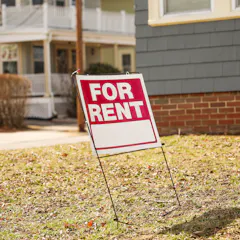
Most research on unaffordable housing has focused on homeownership, but rental affordability is also a serious issue.

Prime Minister Justin Trudeau’s comments about housing not being the primary responsibility of the federal government miss the mark.
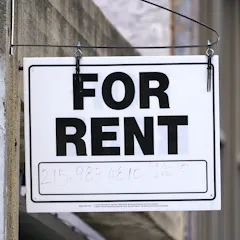
Cities across Canada are rapidly losing affordable housing. Provincial and federal governments aren’t helping, so it’s up to cities to start taking action themselves.

In order for Canada to overcome the housing affordability crisis, individuals, families, the real estate industry and government all need to work together.

Young adults are among the groups most adversely affected by the housing crisis. Foreign-born young adults, in particular, are disproportionately more likely to live in unaffordable housing.

Despite a common belief that councils won’t approve tiny houses and modular and container homes, early findings from a national survey suggest planners are increasingly open to these housing options.

In a housing crisis, publicly owned land should never be sold to private developers and should instead be used to build the kind of housing the market is unwilling and unable to build.
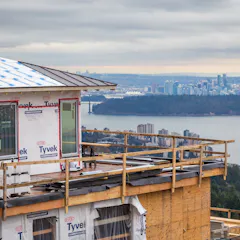
Unaffordability is only one type of housing vulnerability that has taken its toll on British Columbians during the COVID-19 pandemic.

Our study reveals that the housing affordability crisis is having a pervasive impact on Canadian society. It is imposing constraints that alter the structure and composition of Canadian families.

Ensuring visible minorities have equitable access to affordable housing is an important step in fulfilling the National Housing Strategy’s goal to make affordable housing available to all Canadians.

Canada’s current economic growth model is currently dependent on the conversion of housing from a human right into a financial investment tool, leading to an ever-worsening housing crisis.
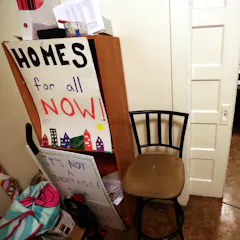
It’s getting much harder in the US to find an affordable home, even for people who work multiple jobs.
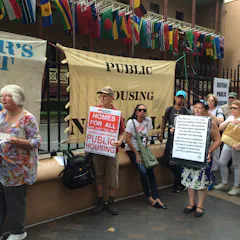
The need to manage long waiting lists for social housing, rather than serving the best interests of tenants and prospective tenants, is a major driver of policymakers’ approach.

From Berlin to New York, citizens from around the world have shown that it is possible to get governments to make affordable housing a priority.
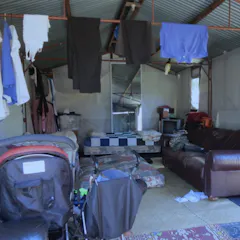
With Australian city rents too high for low-income earners, increasing numbers are forced to share houses or rooms or to live in options like ‘beds in sheds’ and other illegal dwellings.

Affordability is a problem across Sydney for prospective home buyers. But if they are able to become owners, new research shows affordability becomes much less of a problem over five to ten years.

While share houses are more a matter of financial necessity than choice, many older Australians are discovering it has unexpected social benefits for them.

Brasília was designed to be a just and inclusive city, but it still failed. Can Egypt’s new capital avoid the same mistakes?
Top contributors
-

Emeritus Professor of Housing, UNSW
-
Housing Policy Researcher, Expert Advisor, Housing Assessment Resource Tools and Adjunct Professor, L’Université d’Ottawa/University of Ottawa
-
PhD Student, Department of Sociology, University of Toronto
-
John Curtin Distinguished Professor, Curtin University
-
Professor of Urban and Regional Planning, University of Sydney
-
Associate Professor, Sociology cross-listed in Epidemiology and Biostatistics, Western University
-
Professor of Housing Research, Adelaide University
-
Professor of Housing & Social Policy, HHAUS Housing, Homelessness & Urban Studies, Swinburne University of Technology
-
Associate Professor of Property, UNSW
-
ARC DECRA Fellow and Lecturer in Urbanism, School of Architecture, Design and Planning, University of Sydney
-
Lecturer in GIS and Planning, Griffith University
-
Program Director, Housing and Economic Security, Grattan Institute
-
Professor of Social Epidemiology and Director of the Centre of Research Excellence in Healthy Housing at the Melbourne School of Population and Global Health, The University of Melbourne
-
Emeritus Professor, Urban Planning and Policy, University of Sydney
-
John Curtin Distinguished Professor, Curtin Business School, Curtin University