
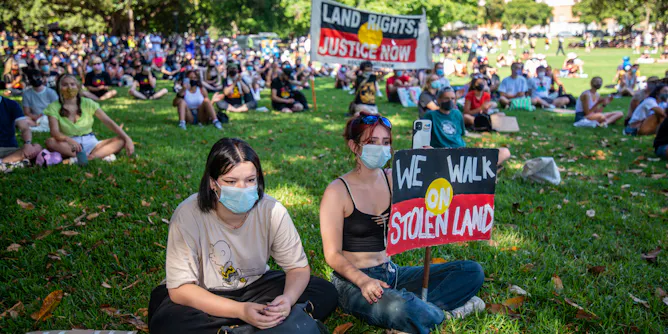
In NSW and wider Australia, there is a history of First Nations people fighting for land rights. However, while there have been successes, there are a significant number of unprocessed claims in NSW.
Articles on Aboriginal and Torres Strait Islander peoples
Displaying 161 - 180 of 319 articles
First Nations children are 20 times more likely to be incarcerated. Governments need to consider raising the age of incarceration and pursuing culturally-led care for these children.

The Beeyali project explores ways to connect to environment. A Kabi Kabi word meaning “to call”, Beeyali intends to inspire Australians to listen to the environment and to assist in its preservation.
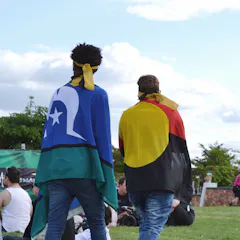
According to the 2021 Census there are now almost one million Indigenous people in Australia. Although increase in population is a reason for this, there are some other factors to consider.
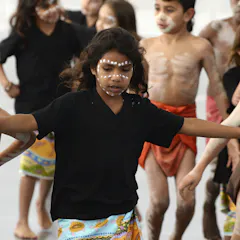
Around the world, one Indigenous language is lost every one or two weeks. Almost 10% of the world’s critically endangered languages are in Australia.
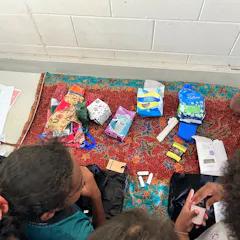
The Queensland government’s announcement this month of free period care products for state schools is laudable. But have they considered reusable alternatives, or remote and Indigenous students?
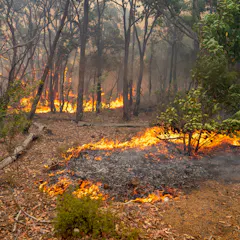
This NAIDOC Week, with the effects of climate change affecting Australia, It’s beyond time to listen to First Nations people who have extensive knowledge of caring for Country.
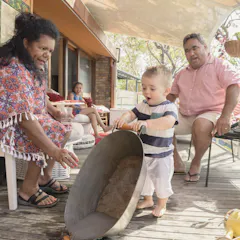
The census includes an increase in the number of people who identify as Aboriginal and Torres Strait Islander, but it lacks details about other ways they may identity and how they live.

The Northern Territory has had alcohol restrictions since 2012. These restrictions are going to be lifted in July of this year, despite concerns expressed by First Nations people in the community.
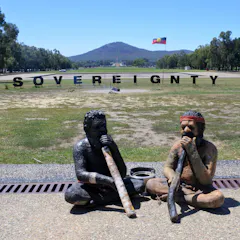
Survey findings bring insight to the general public’s thoughts and concerns of an Indigenous Voice to parliament. What questions still need to be answered to obtain a yes vote in a referendum?
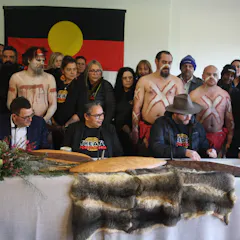
In partnership with the First Peoples’ Assembly of Victoria, the Victorian government has committed to advancing state treaty processes. This is through a new bill establishing a Treaty Authority.
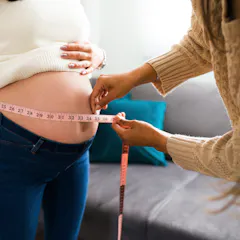
First Nations women and their newborns are considered high risk due to fatality rates and access to care. Research shows First Nations-led culturally safe healthcare could prevent further deaths.
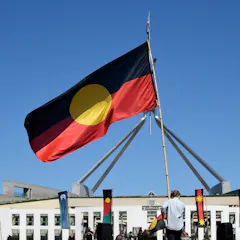
An Indigenous Voice to parliament and government does not require a constitutional enshrinement or referendum to be enacted immediately. So why is the Australian government asking for a referendum?

The launch of the National Centre for Reconciliation Practice brings the question; what are reconciliation action plans, and do they work?
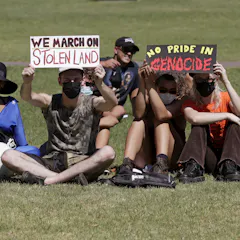
Learning about First Nations people and their histories can make some feel awkward or uncomfortable at times. However, being willing to embrace that discomfort is vital to learning.
Prime Minister Anthony Albanese announced Labor’s commitment to the Uluru Statement from the Heart. This means there may soon be a First Nations Voice to Parliament. However there is a journey ahead.
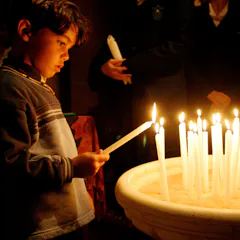
Today is National Sorry Day. This is when we commemorate Aboriginal and Torres Strait Islander people who were forcibly removed from their families.

Universities can be hostile, overwhelming and unwelcoming places for many First Nations Peoples working in academia. More needs to be done to ensure culturally safe workplaces.
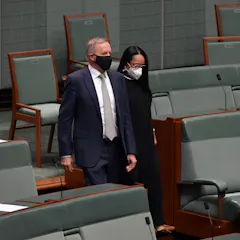
Prime Minister Albanese’s victory speech commitment to the Uluru Statement brings new possibilities for First Nations peoples’ Voice to Parliament.
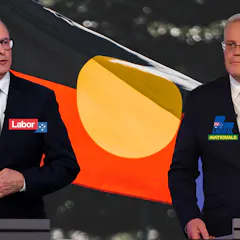
One of the recommendations from the 2017 Uluru Statement from the Heart calls for the establishment of a First Nations Voice to parliament, enshrined in the Constitution. This would ensure First Nations…
Top contributors
-

Professor, Critical Indigenous Studies and Director of The Centre for Global Indigenous Futures, Macquarie University
-
Professorial Fellow, University of Canberra
-
Managing Director, Her Story Consulting & Postdoctoral fellow, Australian National University
-
Research Fellow in Disaster Resilience, Monash University
-
Director of Monash Indigenous Studies Centre, Chief Investigator for the Australian Research Council Centre of Excellence for the Elimination of Violence against Women (CEVAW), School of Philosophical, Historical & International Studies, School of Social Sciences (SOSS), Monash University
-
Associate Dean Education, Gnibi College, Southern Cross University
-
Professor, Australian and Aboriginal History, Faculty of Arts, Design and Architecture, Convenor: Indigenous Land & Justice Research Group, UNSW
-
Principal Research Fellow, James Cook University
-
Senior Lecturer of Indigenous Studies, Indigenous Education and Research Centre, James Cook University
-
Senior Lecturer in Law at the University of Queensland, The University of Queensland
-
Lecturer, Department of Indigenous Studies, Macquarie University
-
Lecturer, Griffith Law School, Griffith University
-
PhD Candidate, University of Technology Sydney
-
Research Fellow (Indigenous Diplomacy), Australian National University
-
Senior Lecturer in Education/Applied Linguistics, Curtin University