

In the lead-up to the Voice to parliament referendum, we’re seeing constitutional change is possible. If the Voice is successful, Australia could next consider separating us from the monarchy.
Articles on Aboriginal and Torres Strait Islander peoples
Displaying 121 - 140 of 319 articles
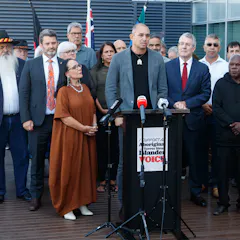
The proposed Voice to Parliament is a First Nations advisory body. The way New Zealand have ensured Māori representation in Parliament could be a better way to approach Indigenous self-determination.
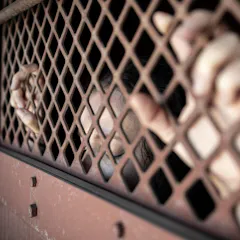
Despite Australia spending so much money on prisons, incarcerated women’s reproductive health care is lacking to the point of being degrading.
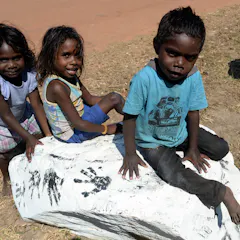
A Voice to Parliament will not fix every problem facing Aboriginal and Torres Strait Islander peoples. But it is an important step towards moving the nation to truth telling and beyond.
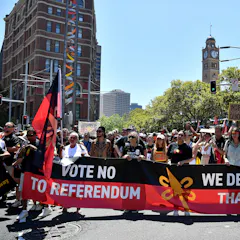
Right-wing opposition of the Voice to parliament has been dominating the so-called ‘no’ campaign. First Nations communities calling for more detail and more discussion also have reason to oppose it.
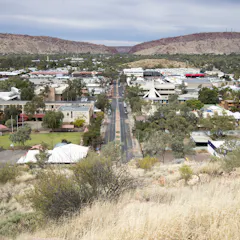
Research has found Aboriginal children who lived through the 2007 NT Intervention saw little impact from alcohol restrictions, other than bringing shame to communities.
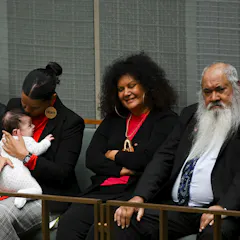
Decades of government Indigenous Affairs policy has not delivered. A new approach is needed. Policy-making informed by Indigenous lived experience through a Voice to parliament may be the answer.

Some reporting on Mparntwe/Alice Springs has perpetuated racial stereotypes, causing emotional harm for First Nations people. This article debunks the myths we keep seeing in the media.
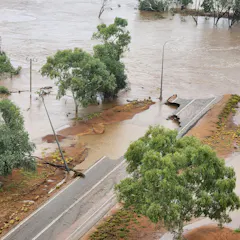
The Kimberley region of Western Australia is currently being devastated by flooding. Remote communities need more support with prevention and recovery plans.
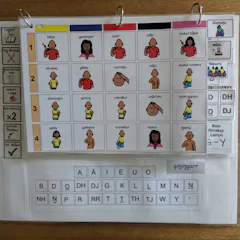
Degenerative illness Machado-Joseph disease, which affects speech, is prevalent among First Nations people in northern Australia. Researchers have now created Yolŋu communication systems to help mob.

People in the Gurindji community of Kalkaringi in northern Australia call their sign language ‘Takataka’.

After participation in the Literacy for Life Foundation adult literacy campaign, serious offences by students dropped by almost 65%.
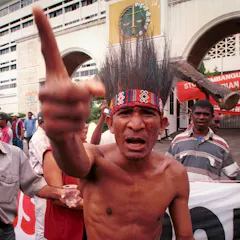
Energy transition minerals are essential to tackling climate change. But First Nations people must have a genuine say in where and how this happens.

The new report calls for funding and support for Aboriginal community controlled organisations. They are best placed to lead reform and to make decisions about the wellbeing of Aboriginal and Torres Strait Islander children.
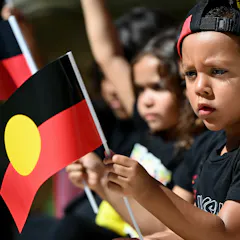
The Uluru Statement from the Heart will give us new meaning to the expression.
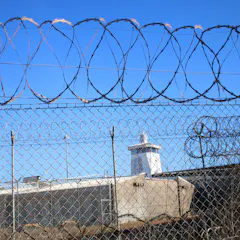
Where is the justice for young people whose mental health is impacted by being incarcerated?
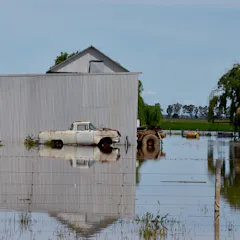
With Australia experiencing its third year of a La Niña weather cycle, First Nations communities continue to be disproportionately impacted by floods. Culturally safe solutions are needed.

Health and service workers are not asking women about a potential traumatic brain injury, there’s a lack of referral options, and often no diagnosis.
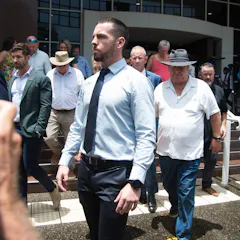
The inquest into the death of Kumanjayi Walker has begun, examining the causes of Kumanjayi’s death.

Too many First Nations women have been killed by people who have a history of violence in relationships.
Top contributors
-

Professor, Critical Indigenous Studies and Director of The Centre for Global Indigenous Futures, Macquarie University
-
Professorial Fellow, University of Canberra
-
Managing Director, Her Story Consulting & Postdoctoral fellow, Australian National University
-
Research Fellow in Disaster Resilience, Monash University
-
Director of Monash Indigenous Studies Centre, Chief Investigator for the Australian Research Council Centre of Excellence for the Elimination of Violence against Women (CEVAW), School of Philosophical, Historical & International Studies, School of Social Sciences (SOSS), Monash University
-
Associate Dean Education, Gnibi College, Southern Cross University
-
Professor, Australian and Aboriginal History, Faculty of Arts, Design and Architecture, Convenor: Indigenous Land & Justice Research Group, UNSW
-
Principal Research Fellow, James Cook University
-
Senior Lecturer of Indigenous Studies, Indigenous Education and Research Centre, James Cook University
-
Senior Lecturer in Law at the University of Queensland, The University of Queensland
-
Lecturer, Department of Indigenous Studies, Macquarie University
-
Lecturer, Griffith Law School, Griffith University
-
PhD Candidate, University of Technology Sydney
-
Research Fellow (Indigenous Diplomacy), Australian National University
-
Senior Lecturer in Education/Applied Linguistics, Curtin University