

Demolitions in Addis Ababa have become common as the state seeks to attract private and foreign capital to modernise the city.
Articles on Abiy Ahmed
Displaying 21 - 40 of 103 articles

Ethiopia’s urban projects are often portrayed as beneficial to all residents – but this glosses over their highly uneven impact.

The peace agreement was short-lived largely due to the absence of open and genuine commitments by both sides.

Oromia is a cultural, economic and political powerhouse. It significantly shapes Ethiopia’s identity and trajectory.
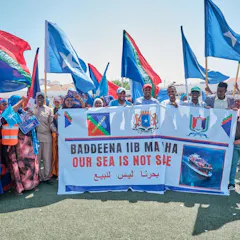
Ethiopia has maintained strong ties with Somaliland since the 1980s when it supported a rebel movement in the breakaway region.

Africa’s youth are not countering the deepening of autocratisation across the continent.
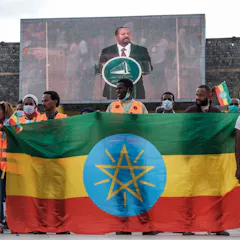
After more than 30 years of federalism, ethnic conflict in Ethiopia hasn’t been resolved – but neither has the country disintegrated.
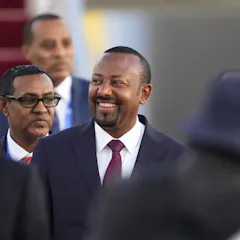
Ethiopian Prime Minister Abiy Ahmed claims his landlocked country has a right to demand maritime access to a Red Sea port from its neighbors in the Horn of Africa − Somalia, Eritrea and Djibouti.
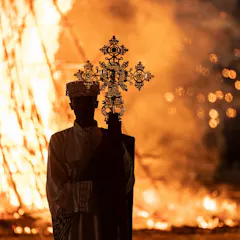
News coverage of Ethiopia’s ethnic conflicts has overshadowed the growing tensions and polarisation between religious communities.

The Nobel Peace Prize has recognized some legendary leaders and peace activists, but it has a mixed track record of recognizing people who actually deserve the prize.

The rhetoric that presents the Amhara people as a national enemy has gone on, unchallenged, for far too long.

Lack of sea access has constrained Ethiopia’s ability to cater for its large population.

Abiy Ahmed’s use of the military to address a critical challenge is likely to fail.
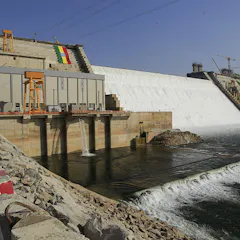
The Nile Basin states are keen to see what kind of deal Ethiopia reaches with Egypt and Sudan.
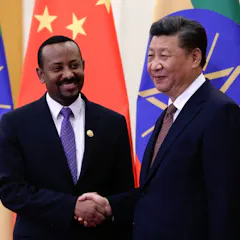
There is increased demand to join BRICS in the emerging world order, partly as a countervailing power to “the west”.
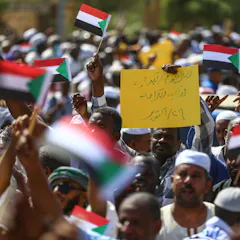
An African-led process would take into account complex regional dynamics – which would lead to a better and more stable peace agreement.
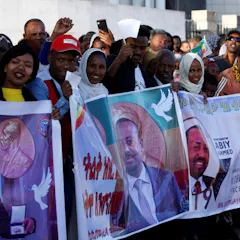
Governments coming to power riding a wave of youth protests can employ authoritarian tactics to silence dissent from the same movements.
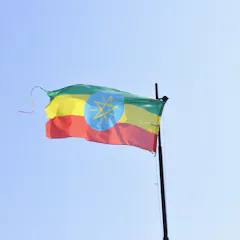
Parties to the conflict in Ethiopia’s Tigray region have agreed to end hostilities after two years. Here is a selection of previously published articles on its devastating consequences.
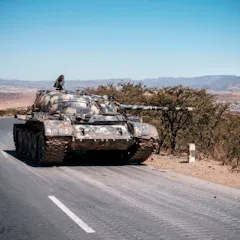
The African Union needs to launch a credible, robust mediation process with mutually accepted mediators.
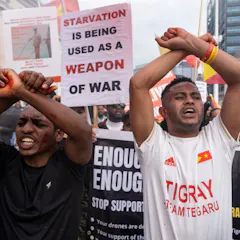
Leaders at the centre of the Ethio-Tigray war don’t believe in equal partnership. In their political cultures, winners take all.
Top contributors
-

Senior Lecturer of Political Science, Georgia Gwinnett College
-
Visiting Lecturer, University of Roehampton
-
Senior Research Fellow, Horn of Africa and Southern Africa, Institute of Commonwealth Studies, School of Advanced Study, University of London
-
Senior Fellow, World Peace Foundation, Fletcher School of Law and Diplomacy at Tufts, Tufts University
-
Professor of Sociology and Global and Africana Studies, University of Tennessee
-
Ph.D. Fellow, Center for Constitutional Democracy, Indiana University
-
Associate Professor, Department of Political Sciences, University of Pretoria
-
Associate Researcher, University of Hamburg
-
Doctoral Researcher, University of Helsinki
-
Lecturer in Comparative Politics, Queen's University Belfast
-
Director, Centre for Human Rights Education, Curtin University
-
Lecturer, Bayreuth University
-
Assistant Professor, Acadia University
-
Professor of International Relations, Norwegian University of Life Sciences
-
Professor, United States International University