
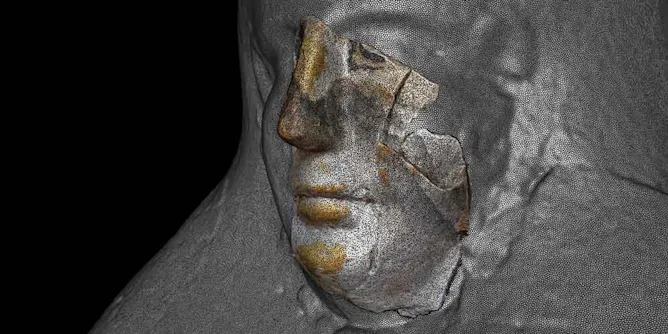
Digital tools allow archaeologists to identify similarities between fragments and artifacts and potentially recover previously unknown parts of their stories.
Articles on 3D scanning
Displaying 1 - 20 of 38 articles

Can a new database of 3D bone scans help solve the mystery of the elusive ngudlukanta?
One criticism of current 3D models of archaeological sites is that they are presented devoid of human traces and history.
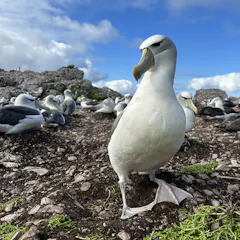
Just as Darwin’s finches evolved specialised beaks to target prey, 3D modelling of 61 museum specimens reveals albatross beaks vary in size and shape for different diets. They can also drink seawater.
Digital scanning offers a new window on Australia’s unique fossil history, from early multicellular lifeforms to gigantic ‘marsupial lions’.
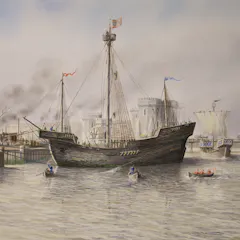
The Newport medieval ship is the most complete section of a 15th-century European vessel discovered to date.
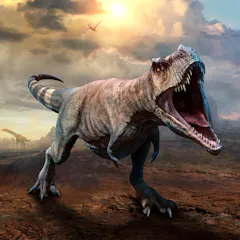
Our new study has found younger tyrannosaurs would have hunted small prey.
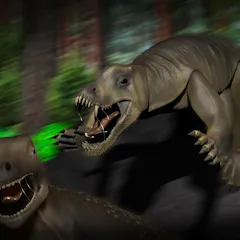
Because of its skeleton’s heavy architecture, scientists have always assumed that Anteosaurus was a rather sluggish, slow-moving animal, only capable of scavenging or ambushing its prey, at best.
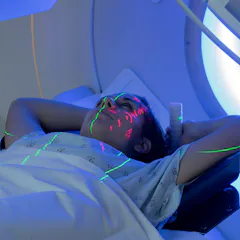
Tattoos might be the norm, but Surface Guided RadioTherapy for breast cancer is both more accurate, and doesn’t require a permanent mark.
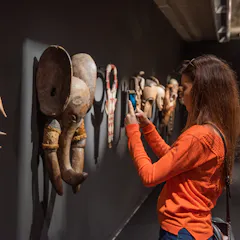
New technology means museums can return items to their countries of origin while still representing those cultures in fair, interesting ways.
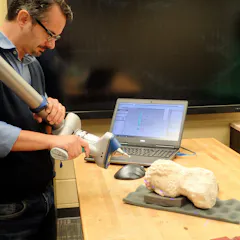
Davide Tanasi, a digital archaeologist, thinks it’s a pity when historical artifacts are locked away in storage. He’s working to fix this by sharing them as 3D models.
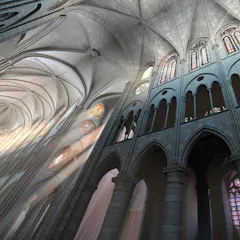
After the tragic fire at Notre-Dame de Paris, planning for an ambitious reconstruction is already underway – and the latest digital technologies will be at the forefront.

With advancements in technology, libraries are offering much more than something to read. A library researcher offers a sampling of some unexpected items that library patrons can check out these days.
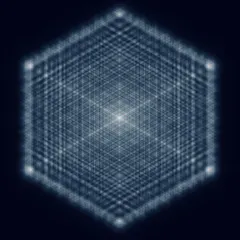
Nature can produce fractals, computers can, too. Could light be a fractal? The answer is yes.
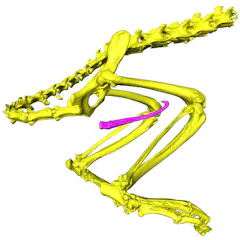
Our study used innovative 3D scanning and engineering-inspired computer simulations to understand the evolution of the penis bone in some mammals.
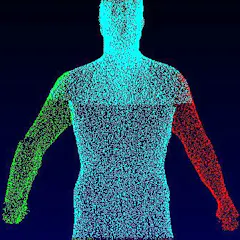
When people see their bodies in 3D, they feel worse about themselves and more negative in general. That might not put shoppers in a buying mood even for clothes that fit better.
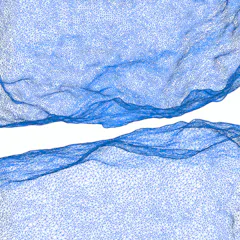
The possible join between the fragments of an ancient epic written in cuneiform in London and Geneva has been speculated for over 50 years.

Art can help us explore and understand some of the more abstract ideas in maths - such a topology.
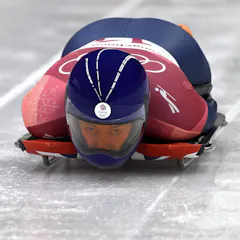
The science behind the suits that gave Britain’s medal-winning athletes a crucial speed boost.

Scanning physical items constructed with nefarious intent can introduce malware into a smartphone or computer.
Top contributors
-

PhD Candidate, College of Science and Engineering, Flinders University
-
Associate professor in Vertebrate Palaeontology, University of the Witwatersrand
-
Professor of Anthropology and Geosciences, and Executive Director of the Center for Virtualizaiton and Applied Spatial Technologies (CVAST), University of South Florida
-
Research Associate in Musculoskeletal Biology, University of Liverpool
-
Senior Research Fellow, Technology Policy Program, Mercatus Center, George Mason University
-
Assistant Professor of Retail Entrepreneurship, Florida State University
-
Paleoanthropologist, University of Wisconsin-Madison
-
Lecturer In Visual Communication Design, Deakin University
-
PhD researcher, Swansea University
-
Research Fellow in Animal Biology, Manchester Metropolitan University
-
Senior Lecturer in Aerodynamics, Northumbria University, Newcastle
-
Professor of Cultural Computing, Director NVIDIA Joint-Lab on Mixed Reality, University of Nottingham
-
SHARP Professor, Vitalities Lab, Centre for Social Research in Health and Social Policy Centre, and the ARC Centre of Excellence for Automated Decision-Making and Society, UNSW
-
Senior Research Fellow, University of Southern Queensland
-
Assistant Professor of Computer Science, North Dakota State University