
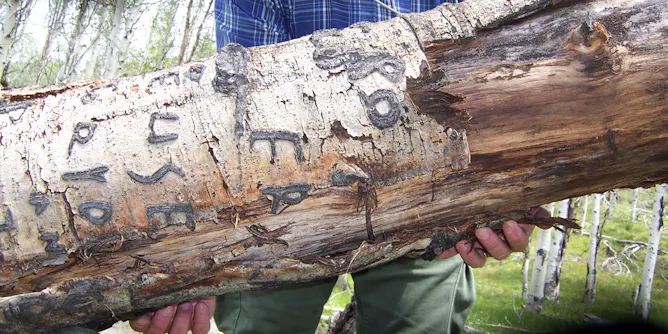
Herders carved names, slogans, nude silhouettes and more into the trees around them during lonely seasons in the mountains. Now, researchers rush to find and record the arborglyphs before they disappear.
Articles on 3D modelling
Displaying 1 - 20 of 28 articles
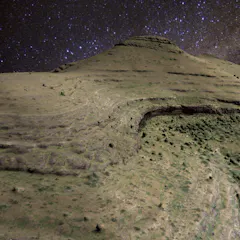
One criticism of current 3D models of archaeological sites is that they are presented devoid of human traces and history.
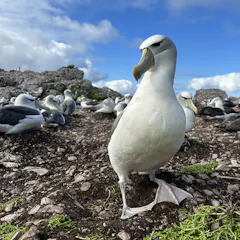
Just as Darwin’s finches evolved specialised beaks to target prey, 3D modelling of 61 museum specimens reveals albatross beaks vary in size and shape for different diets. They can also drink seawater.
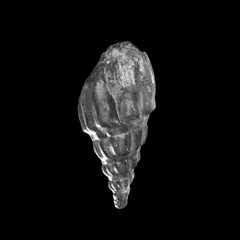
Digital scanning offers a new window on Australia’s unique fossil history, from early multicellular lifeforms to gigantic ‘marsupial lions’.

Once the capital of the Mughal empire, Old Delhi is now under threat. Geo-information technology can reveal its previous form, function, and context, however, and so help preserve and bring it back to life.

Organ models that more accurately capture finer details could reduce surgical error and lead to personalized implants.
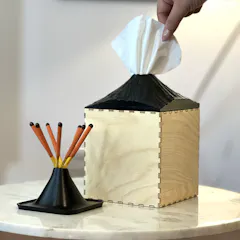
During the brainstorming stage of the design process, AI-powered image generation programs can open creative doors that may have otherwise never been accessed.
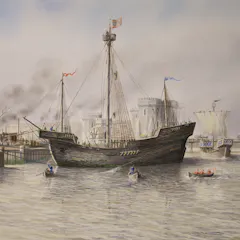
The Newport medieval ship is the most complete section of a 15th-century European vessel discovered to date.
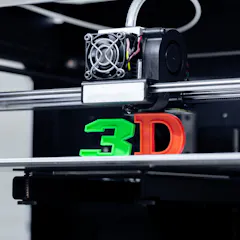
3D printing doesn’t need high-volume centralised production and large inventory stocking.

While we know that most chameleons have such a prehensile tail, it’s not yet clear how it works and what makes it simultaneously so flexible and strong.
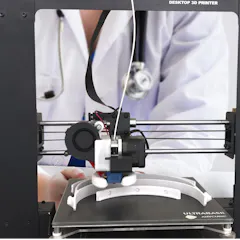
Designers, engineers, makers and doctors worldwide have used 3D printing to produce products such as face shields, face masks, ventilator components, hands-free door openers and nasal swabs.
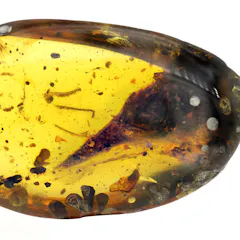
The skull of Oculudentavis, found encased in amber, provides new clues into the transition from dinosaurs to birds and may be smallest of either ever found.
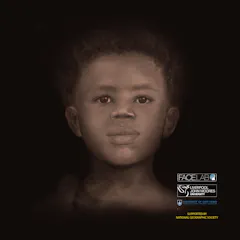
Through science, art and technology, we are able to reconstruct the faces of the dead based on their remains. The researcher who did this work for descendants in Sutherland explains the process.
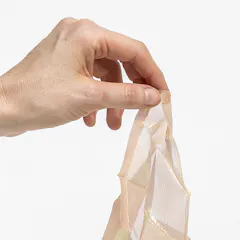
Art can help us explore and understand some of the more abstract ideas in maths - such a topology.
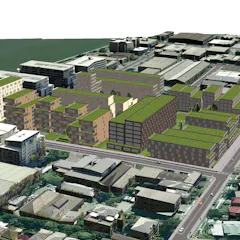
3D urban modelling is a transformative technology for designing cities. But incorporating new technologies into planning practice has its challenges.

New discoveries are changing archaeologists’ ideas about the origins of our own species and our migration out of Africa. This fossil pushes Homo sapiens’ African exodus date back by 50,000 years.

Scanning physical items constructed with nefarious intent can introduce malware into a smartphone or computer.
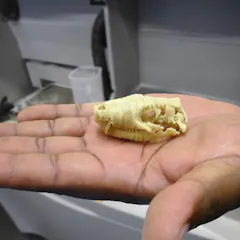
An old technique to explore the inside of fossils unfortunately ended up destroying some unique specimens. New technology has been used to reconstruct one such fossil.
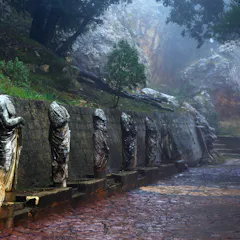
Hand over your travel photos and help build digital 3D recreations of threatened heritage sites.

Historical insight is not the only thing that has been raised with the Mary Rose.
Top contributors
-

Associate professor in Vertebrate Palaeontology, University of the Witwatersrand
-
Honorary Associate, University of the Witwatersrand
-
British Academy Research Fellow, University of Oxford
-
Senior Lecturer in Property Management and Development, Nottingham Trent University
-
Lecturer in Media and Cultural Studies, Cardiff University
-
Associate Professor in Urban Planning, The University of Melbourne
-
Assistant Professor of Computer Science, North Dakota State University
-
Associate Professor of Anthropology, Binghamton University, State University of New York
-
Senior Lecturer in Planning, The University of Queensland
-
Senior Lecturer, University of the Witwatersrand
-
Senior Professor of Paleontology, Chinese Academy of Sciences
-
Senior Research Fellow, Technology Policy Program, Mercatus Center, George Mason University
-
Associate professor, University of Bristol
-
Senior Research Fellow, University of Southern Queensland
-
Professor of Geographical Information Science, School of Earth and Environmental Sciences, The University of Queensland