
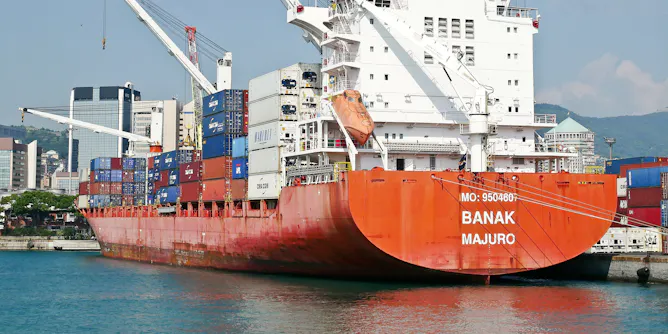
Rising sea levels threaten the low-lying island nation with the world’s third-largest shipping register. That’s why it’s leading efforts to cut shipping emissions in an equitable way.
Articles on 1.5 degrees
Displaying 21 - 40 of 76 articles
Our annual reports will update the world on the climate’s vital signs.
There’s a 98% chance of a record hot year by 2028, and a 66% chance of exceeding the 1.5°C threshold for at least that year, according to the latest World Meteorological Organization update.
Developing countries are expected to quit coal faster than any energy transition in history.
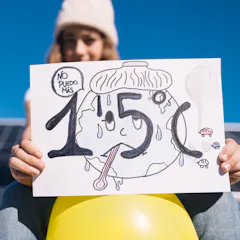
There is no safe limit to global warming – there is only what people deem to be acceptable damage.
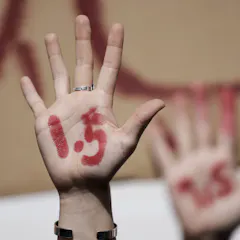
A leading climate scientist explains why going over 1.5 degrees Celsius puts the world in a danger zone.
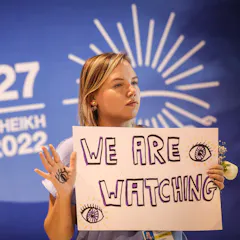
The agreed loss and damage fund was a breakthrough in an otherwise inconclusive conference.

A recent paper suggested damaging climate tipping points could be closer than first thought.
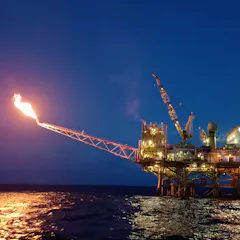
More than 400 proposed fossil fuel extraction projects threaten to blow the world’s 1.5°C target.
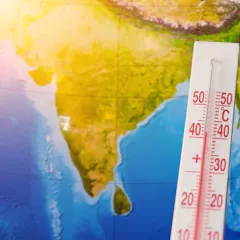
Every tenth of a degree makes climate change significantly worse.
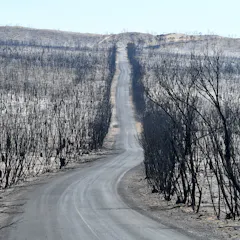
The Coalition’s climate policy is consistent with a very dangerous 3°C of global warming. But one party is comfortably consistent with keeping warming at safe levels.

Emission of greenhouse gases is on the rise, an indication that the worst lies ahead.
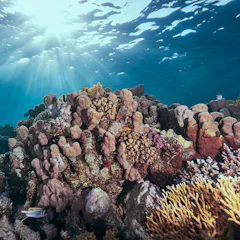
Marine heatwaves will happen so often that reefs will struggle to weather successive bleaching events.

Canada has neglected to keep up with China’s climate politics, putting the future of the country’s fossil fuel exports at risk.

COP26 saw progress and announcements, but the commitments made by states — in addition to having to pass the test of implementation —fall far short of what the science requires.

We need new experiments to model Earth’s climate if global warming is stabilised at 1.5°C. A new paper explains why.
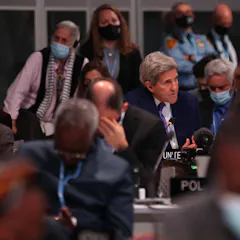
The world promised progress at the Glasgow climate conference. Now it has to turn those promises into reality. A former senior UN official describes what to watch for in the coming year.
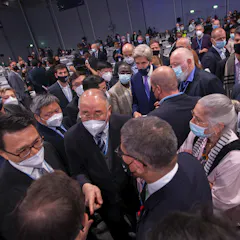
COP26 saw incremental progress but not the breakthrough moment needed.
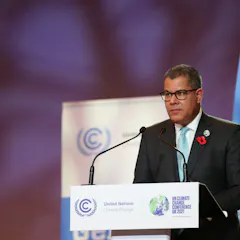
In Paris, the French drafted ambitious texts and dared the biggest emitters to oppose it. In Glasgow, it’s the least developed countries which will have to do the most work.
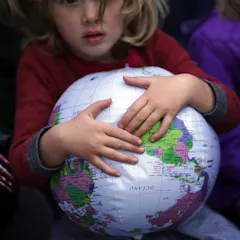
Heading into the final days of the Glasgow summit, the goal of limiting heating below 2°C looks attainable, and 1.5°C is still within reach. There is still room for hope.
Top contributors
-

Professor of Physical Climate Change; Director of the Priestley Centre for Climate Futures, University of Leeds
-
Adjunct Professor of Energy, Murdoch University
-
Chief Research Scientist, CSIRO Environment; Executive Director, Global Carbon Project, CSIRO
-
Professor of Energy Systems, UCL
-
Senior Researcher, Center for International Climate and Environment Research - Oslo
-
ARC Future Fellow and Associate Professor in Climate Science, ARC Centre of Excellence for 21st Century Weather, The University of Melbourne
-
Professor and Climate Scientist, Department of Geography, Planning and Environment, Concordia University
-
Professor of Earth System Science, UCL
-
Director of Research and Lecturer - Grantham Institute Climate Change & the Environment, Imperial College London
-
Professor of Infrastructure Engineering and International Development, UCL
-
Researcher in Earth System Resilience, University of Sussex
-
Lecturer in International Development, UCL
-
climate campaigner
-
Research Group Leader, International Institute for Applied Systems Analysis (IIASA)
-
Senior Research Associate in Energy, UCL