

Ancient carbon is leaking from two lakes in the Congo Basin, revealing a previously unknown link between tropical peatlands and the atmosphere.
ETH Zurich

ETH Zurich is one of the leading international universities for technology and the natural sciences. It is well-known for its excellent education, ground-breaking fundamental research and for putting its new findings directly into practice. It offers researchers an inspiring working environment and its students a comprehensive education.
Founded in 1855, ETH Zurich today has some 18,000 students from over 100 different countries, 3,800 of whom are doctoral students. About 500 professors currently teach and conduct research in the areas of engineering, architecture, mathematics, natural sciences, system-oriented sciences, and management and social sciences.
ETH Zurich regularly appears at the top of international rankings as one of the best universities in the world. 21 Nobel Laureates have studied, taught or conducted research at ETH Zurich, underlining the excellent reputation of the institute.
Transferring its knowledge to the private sector and society at large is one of ETH Zurich’s primary concerns. It does this very successfully, as borne out by the 80 new patent applications each year and some 260 spin-off companies that emerged from the institute between 1996 and 2012.
ETH Zurich helps to find long-term solutions to global challenges. The focal points of its research include energy supply, risk management, developing the cities of the future, global food security and human health.
Links
Articles
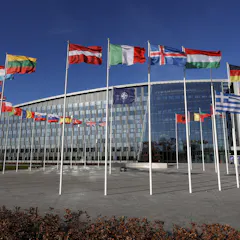
The ‘new NATO’ is caught between competing visions and many unresolved questions.
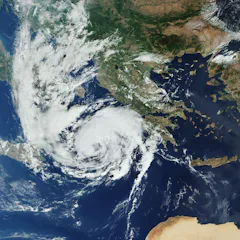
Freak tropical-like storms are highly sensitive to climate change and as a result, could be coming soon to the Mediterranean.
Saviez-vous que des cyclones tropicaux peuvent se produire en Méditerranée ?
A gas crisis could challenge Europe next winter if its gas reserves are not replenished. The phaseout of Russian gas and LNG by late 2027 is a major part of the EU’s gas diversification strategy but it exposes the continent to price volatility.

L'Afrique n'a pas besoin d'une avancée technologique pour accélérer l'adoption des véhicules électriques. Elle a besoin d'un cadre politique favorable.

Africa doesn’t need a technological breakthrough to scale EV adoption. It needs cheaper capital and supportive policy environments.

Several years worth of findings from a floating laboratory have tapped into a well-stocked coral library of taxonomic, genetic and chemical diversity, previously unknown to Science and Medicine.

Comme des ingénieurs chimistes, ces microbes synthétisent des molécules suivant des recettes que nous commençons tout juste à découvrir dans leurs ADN.

One of Latin America’s smallest nations has a robust network of housing cooperatives, which give access to permanent, affordable housing to citizens at a range of income levels.

Setting up the world’s biggest giant tropical forest reserve in the Congo Basin is a step towards conserving the area and creating jobs for local communities.

Until now, it’s been very hard for scientists to establish a detailed timeline of the early evolution of bacteria.

Most explanations say discrimination is driven by differences between groups – but random individual differences may also play a role.

A global new survey shows there’s no crisis of trust in scientists, as some might claim. But there are some nuances.

Water availability regulates tree growth and can have ‘legacy effects’ long after conditions change.
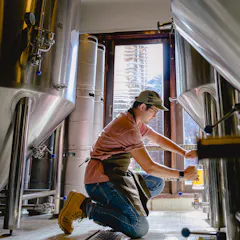
Les drêches de brasserie, principal déchet de l’industrie brassicole, peuvent être utilisées pour produire des microbilles, qui remplacent le plastique dans les produits d’hygiène personnelle.
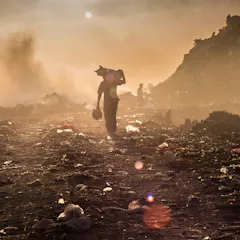
The new global plastics treaty needs to tackle inequalities that surround how plastics are produced, handled, collected or not, and the level of care taken to deal with them.

Como detentor da presidência do G20, o Brasil tem uma oportunidade de assumir um papel de liderança na construção de resiliência e na mitigação de riscos no comércio global

Factories producing non-stick coatings for cookware aren’t properly limiting emissions of one of the most potent greenhouse gases, our research suggests.

Brewer’s spent grain, the main waste product from the brewery industry, can be used to produce microbeads, replacing plastic in personal hygiene products.
Authors
-

Postdoctoral Fellow, Department of Biology, ETH Zurich
-
Scientist, ETH Zurich
-
Senior Researcher, ETH Zurich
-
Senior Researcher, Paul Scherrer Institute PSI, ETH Zurich
-
PhD Student, ETH Zurich
-
Senior researcher in atmosphere and climate sciences, ETH Zurich
-
Head of Global Security, Center for Security Studies, ETH Zurich; University of Sydney
-
Doctoral Researcher (D-MTEC), ETH Zurich
-
Senior Lecturer of Social Anthropology, ETH Zurich
-
Professor of Sustainable Agrosystems, ETH Zurich
-
Research Technician, ETH Zurich
-
Senior Scientist, Neural Control of Movement Laboratory, ETH Zurich
-
Associate Professor at the Department of Biology, ETH Zurich
-
Postdoctoral Researcher, ETH Zurich
-
Postdoctoral Researcher, Swiss Institute for Advanced Study, ETH Zurich