

From Jaws to Pixar, you’ve likely seen this hypnotic camera technique before. Here’s how it works.
Articles on Zoom
Displaying 1 - 20 of 67 articles
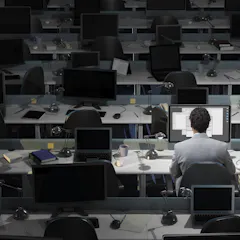
Where, when and how Americans work has dramatically shifted since the COVID-19 pandemic disrupted the routines of everyday life.

Researchers found that when salespeople perceived their leaders as ethical, they felt more committed to the organization.

Founders often carry over aspects of old workplace culture into new businesses.

That’s a huge change from 2019, when remote work accounted for only 7% of the nation’s paid workdays, even if it’s a big decline from 2020.
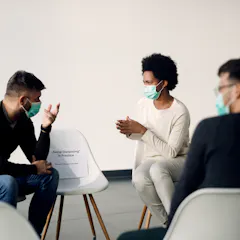
Community-engaged research was disrupted by COVID-19 restrictions, meaning researchers faced serious challenges when their results were most needed: during a public health crisis.
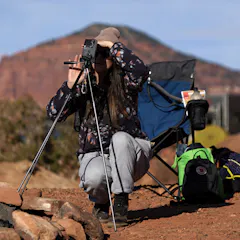
Your phone can’t take a perfectly clear picture of a solar eclipse like a professional camera can, but there are lots of other creative directions you can take to capture the rare moment.

Research can help you make a good first impression in a virtual interview.

With our faces seemingly everywhere − from Zoom meetings to selfies − more people are developing anxieties about how they appear online.
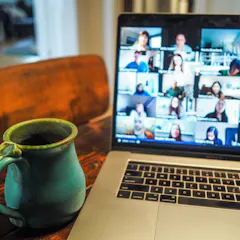
In-person collaboration between Indigenous communities has been aided by information technologies like Zoom. However, recent attempts to mine personal data raise concerns about data ownership.
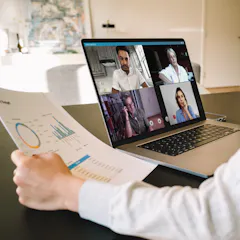
Advising managers to ‘focus on clear objectives’ with remote workers overlooks the importance of relationships as the basis for understanding performance.

We found men managed to bounce back quicker after lockdowns ended, in part due to their involvement in sporting and recreational activities.

Performance reviews were always a challenge, but even more so in the age of hybrid work, when some employees are in the office more often than others.
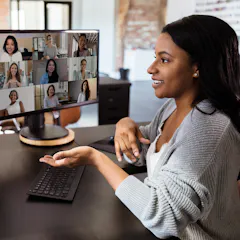
Mirrors, selfies and knowing other people are looking at you all cause people to think of themselves as objects. Video calls are all three in one and are likely increasing the harms of self-objectification.
Networking involves a skillset that can be learned and practised. Doing so – online or in person – is crucial to career advancement.

It appears that the rhythms of your brain waves get in sync with the speech patterns of the person you’re conversing with. Videoconferencing throws off that syncing process.

October’s employment report was rosy, with more than 500,000 jobs added in the month. There were also signs that the American workforce was heading back to the old normal.

Even when the pandemic ends, the vast majority of US companies are expected to let many employees continue to work at least part time from home.
The COVID-19 pandemic has meant an increased dependence on digital technologies. However, this comes with a serious threat to our personal privacy and property.

Research is now showing what works — and what doesn’t — for students forced online by the pandemic. Better course design should be the next step.
Top contributors
-

Professor of Information Management and Business Analytics, Drake University
-
Senior Lecturer in Computing and Information Systems, Cardiff Metropolitan University
-
Associate Professor in Tourism, University of Greenwich
-
PhD student, Researcher at the Center for Studies on Integration and Globalization (CEIM), Université du Québec à Montréal (UQAM)
-
PhD Candidate in Computer Science
-
PhD Student, Information, University of Toronto
-
Teaching Fellow, Durham University
-
Western University
-
Professor, Professional Communication, Toronto Metropolitan University
-
Senior Research Fellow, Matilda Centre for Research in Mental Health and Substance Use, University of Sydney
-
Gerontologist, University of Waterloo
-
Associate Professor of Religious Studies and Jewish Studies, University of Colorado Boulder
-
Professor of Economics, University of Nottingham
-
Associate Professor, School of Health Studies, Western University
-
Professor of Psychology and Area Director, Cognitive, Neuroscience and Social Psychology, University of South Florida