

Companies have a lot to gain from implementing external corporate innovation programs such as sending their employees on work placements in open labs.
Articles on Remote working
Displaying 1 - 20 of 70 articles

The newly-appointed Nationals leader outlined his economic plan to grow regional Australia and develop Australian sovereignty.

Remote working does not always mean more freedom.

Trade unions are vital to designing new European labour laws that actually protect workers.

Letting employees use their own devices for work has many benefits – and many risks, too.

Going to the office doesn’t have to be a chore. Here’s how:

Recent research points to three types of behaviour that can help managers bridge physical distances with staff.

Working from a holiday destination, for those lucky enough to be able to do it, can be a productive break from the daily grind.

If the coffee giant’s CEO can perform the role just as well from home, then the three-hour flight may be little more than a performative gesture.

The appetite for remote working is not going anywhere. Faced with this phenomenon, managers can either double down on the old 9-to-5 model or offer ever tailored work choices to their employees.

A statutory right to request flexible-working arrangements was introduced in 2014 but has been little used. New legislation coming into force could change all that.

As a partner on the International Public Policy Observatory, The Conversation is making an impact.

Half of the Australian workers whose jobs could be done at home appear not to value the option. Another fifth value it very highly.

Research can help you make a good first impression in a virtual interview.

Stereotypes continue to provide excuses to executives for not exercising what likely constitutes the most critical skill for leadership.

Collaboration is often promoted as a tool for harnessing collective intelligence. But sometimes working solo is the best option.

While working from home can have advantages, new research shows that there can also be a wide range of negative effects, including psychological reactions such as emotional exhaustion.

The pandemic has seen more and more full-time employees working fully remotely – and seeking out cheaper, warmer places in which to do so. Property price hikes show the impact on local communities.
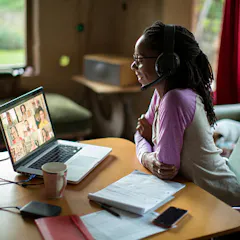
Remote working policy needs to strike a balance between productivity and individual rights of employees.
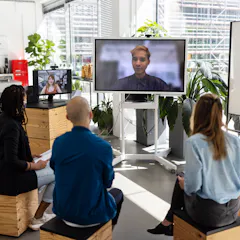
Hybrid and remote-heavy work setups have fundamentally changed how people interact at ‘the office.’ What do workers and managers want out of the workplace now?
Top contributors
-

PhD Candidate in Anthropology, UCL
-
Professor of Work and Employment, University of Southampton
-
Professor of the Future of Work, Newcastle University
-
Associate Professor of Human Resource Management, University of Southampton
-
Associate Professor - Innovation & Entrepreneurship, EDHEC Business School
-
Senior Lecturer and Researcher in Innovation and Digital Leadership, University of Brighton
-
Research Fellow, UCL
-
Senior Lecturer, RMIT University
-
Reader in Cyber Security, University of Kent
-
Principal Lecturer, Corporate Education, Faculty of Business and Law. Anglia Ruskin University. Human Resource Management, Anglia Ruskin University
-
Research associate, Department of Computer and Systems Sciences, Stockholm University
-
Assistant Professor at the Centre for Business in Society, Coventry University
-
Lecturer in Human-computer interaction, Northumbria University, Newcastle
-
Professor of Entrepreneurship, University of Stirling
-
Professor of Management, Te Herenga Waka — Victoria University of Wellington