

The NHS plans to treat 50,000 patients a month in their own homes.
Articles on Video conferencing
Displaying 1 - 20 of 22 articles
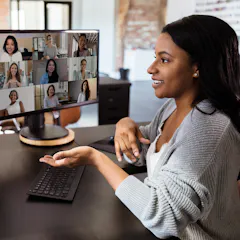
Mirrors, selfies and knowing other people are looking at you all cause people to think of themselves as objects. Video calls are all three in one and are likely increasing the harms of self-objectification.

Two strategies can make videoconferencing as effective as meeting face to face, or even better.
Zoom shares tumbled with the announcement of a vaccine - but reactive markets don’t reflect people’s desire to keep working from home

The six-month extension to Medicare-funded telehealth has given us time to gather more evidence and think beyond surviving the pandemic. We can do more with telehealth.

From setting passwords to cultivating patience, a mindful approach to virtual working, studying and socializing can make life online manageable.

Many people feel some form of anxiety when speaking in front of others. That includes taking part in video hook-ups for work or study thanks to coronavirus restrictions.
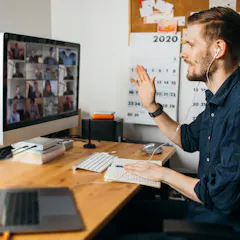
Enforced working from home during the pandemic levelled the playing field between remote and office-based workers.
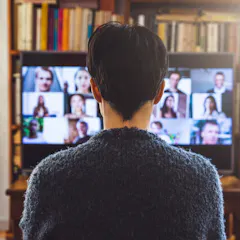
As workplace meetings move from offices to living rooms in the wake of the coronavirus pandemic, what people say – absent nonverbal communication – is more important than ever.

The pandemic has intensified online learning, but educators are struggling to keep students engaged. Faculty members from the National University of Singapore offer three strategies to overcome this.

The Zoom boom means more work for you.

Our brains have to work hard to deal with difficult and unexpected noise.

Lots of research shows why video calls are mentally and emotionally taxing.

Do you need a new video conferencing provider?

Even before COVID-19, older adults were vulnerable to isolation and loneliness. Video conferencing apps can ease this. Here are some tips to help make that happen.

As the pandemic moves us indoors, it’s time to reconsider our understanding of ‘screen time’ – especially since we’re relying on our devices now more than ever.

Zoom’s privacy and security shortcomings are just the latest videoconferencing vulnerabilities. Knowing each platform’s risks can help people avoid many of the downsides of virtual gatherings.

‘Zoombombing’ trolls have started to infiltrate virtual meetings - bombarding unsuspecting victims with racist and sexist speech and in some cases, pornographic imagery.

Compared to many other advanced countries, both federal and state court systems in the United States are behind in using videoconferencing in court settings.

Remote working is about to surge as companies around the world advise employees to stay away in response to the coronavirus outbreak. But nothing beats the effectiveness of face-to-face interactions.
Top contributors
-

Senior Lecturer and Researcher in Innovation and Digital Leadership, University of Brighton
-
Professor of Psychology and Area Director, Cognitive, Neuroscience and Social Psychology, University of South Florida
-
PhD Candidate in Social Psychology, University of South Florida
-
Director of the Masters of Commerce, RMIT University
-
Senior Lecturer, RMIT University
-
PhD Candidate in Cyber Security, De Montfort University
-
William Nelson Cromwell Professor of Jurisprudence and Political Science, Amherst College
-
Research Fellow, The University of Queensland
-
Associate Professor of International Business, University of South Carolina
-
Professor of Industrial-Organizational Psychology, University of Waterloo
-
Professor of Entrepreneurship, University of Stirling
-
PhD Candidate in Recreation and Leisure Studies, University of Waterloo
-
Director of Learning Design & Innovation | Non-executive Director ADHD Australia, The University of Melbourne
-
Associate Professor of Instructional Systems and Workforce Development, Mississippi State University
-
Sessional Lecturer, RMIT University