

Parents and managers can work together to plan ahead, avoid returnees feeling excluded and maintain a good work-life balance.
Articles on Work-life balance
Displaying 81 - 100 of 172 articles

Canadian fathers increased their share of work at home — in housework and in child care — in the early days of the pandemic as work and routines put pressures on the family.

Working from home during lockdown reminded many of us of the benefits of office life. With a bit of imagination we could have the best of both worlds.

Caught between the educational care of children and a considerable amount of full-time work to be done, women managers continue to shoulder a large part of the domestic and parental burden.

The Covid-19 pandemic has hit women hard, in particular amplifying gender gaps. Yet women have also proved that their contributions – on the front lines and leadership positions – are invaluable.

The idea of work-life balance caught on the 1980s. The COVD-19 pandemic shows we need to replace it with a more integrated approach.

The higher a person’s salary, the most likely they are to be able to work from home; it’s not an option for most low-income workers. Here’s what governments can do to help encourage more remote work.

Social media has become a virtual lifeline during the COVID-19 crisis. How people in isolation are using Zoom and other platforms goes against the notion that social media makes us more anti-social.

The coronavirus pandemic is a stressful time for everyone. Here are some ways employers can help their employees through this crisis.

Flexibility and planning are key to managing boundaries if you’re working from home and have to look after kids.

How does a family of five with different priorities and attention spans get work done and still have fun in the same small space?

COVID-19 has forced many of us to do the daily shift from home. An anthropologist who observed a group of remote workers raises some concerns and shares some tips.

The search for meaning in their work is inevitable for employees seeking job satisfaction. Defining that meaning, however, can mean different things for different people.

Flexible work has the potential to solve many issues that see people fall out of the workforce but many companies still struggle to do it right.
New research shows Australians are working non-standard hours, and the job of scheduling a social life around them falls disproportionately to women.
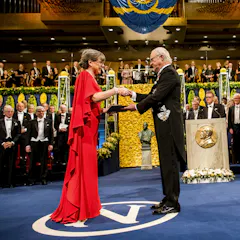
Progress has been made toward gender parity in science fields. But explicit and implicit barriers still hold women back from advancing in the same numbers as men to the upper reaches of STEM academia.

Do you often forget where you put the keys or what you were looking for in the fridge? It’s not necessarily a sign of cognitive decline – it might just come down to being tired, stressed or worried.

Average commuting times for Australians have increased by 23% in 15 years. And those with long commutes are less satisfied with their work, working hours, work-life balance and even pay.

Celebrity chefs often preach about the ease of home cooking and meal planning. But for most mothers juggling a job, child care, housework and meal prep, this is virtually impossible.

For many working women, motherhood is a major interruption to their career. Some eventually work their way back up to full-time work, but there are many other paths that women might follow.
Top contributors
-

Associate Professor Leeds University Business School, University of Leeds
-
Professor of Sociology and Founding Director of The Future of Work Lab, Podcast at MissPerceived, The University of Melbourne
-
Dean's Chair in Management and Māori Business, Te Kunenga ki Pūrehuroa – Massey University
-
Professor of Management, Deakin University
-
Professor and Lincoln Professor of Ethics in Public Affairs, Arizona State University
-
Professor of Organisational Psychology and Health, University of Manchester
-
Emeritus Professor University of South Australia, Adelaide University
-
PhD Candidate in Anthropology, UCL
-
Director of the King's Global Institute for Women's Leadership, Professor of Work and Employment, King's College London
-
Professor of Quantitative Social Science, UCL
-
Professor of Organizational Behaviour, University of Guelph
-
Professor and Head, Department of Marketing, Griffith University
-
Adjunct Professor, Business School, University of Technology Sydney
-
Associate Head of School (Research), UniSQ School of Business, University of Southern Queensland
-
Associate Professor in Marketing, Griffith University