

Indonesians’ desire to have a work-family balance is partially driven by the importance of religion in their lives.
Articles on Work-life balance
Displaying 61 - 80 of 172 articles

Working from home and performing multiple roles leads to constant guilt, which has personal health consequences for women academics.
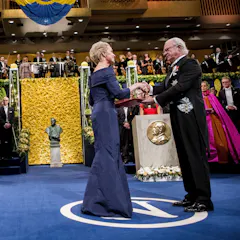
Science fields are improving at being more inclusive. But explicit and implicit barriers still hold women back from advancing in the same numbers as men to the upper reaches of STEM academia.

Tipping the scales away from work may not be the wisest way to recalibrate your work-life balance.
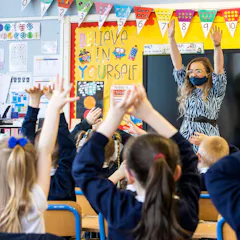
Women are often drawn to teaching because of the supposed life-work balance. Extreme workloads and inflexible school structures means too many quit early.

Iceland has trialled shorter working hours, but not a four-day week.
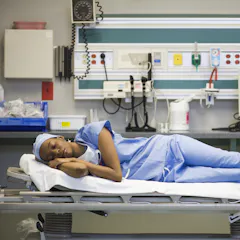
To keep our health care providers healthy, we need to help them sleep.
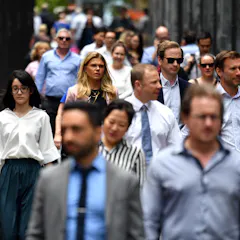
Victoria Police recently won the rights not to be contacted out of work hours. They are not the only employees who need a proper break from work.

Some therapists are calling for a new way to understand human distress.

Flexible arrangements might help women maintain a work-life balance, but can also weaken their position in the labour market and lose them earnings in the long term.
The responsibility should not simply lie with employees who are working even harder.

‘Workaholics’ are driven to work excessively, even despite the negative impact this has on health.
Most Australians working from home were happy to do so before COVID hit, but research has identified several key factors in whether these arrangements are likely to work out well for you.
How can businesses overcome institutional hurdles to transition to a four-day week?
Most of us dislike commuting. But there are ways to make it a more positive experience.

Fertility is higher in Northern Europe than in Southern Europe. To understand, let’s take a look at family policies, equality between women and men and the economic context.

Here’s what the research tells us about what wears us out, what renews us, and how to feel more refreshed in 2021.
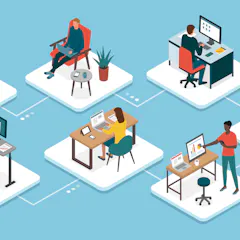
The sudden shift to remote work in 2020 has paved the way for a new type of workspace in the future.

While some progress has been made toward gender equality in the research world, the coronavirus pandemic has reminded us that the old models are never far away and can re-emerge.

Changes to working life created by COVID-19 give employers an opportunity to embrace a caregiver-friendly work culture, supporting the millions of Canadians who juggle employment and informal caring.
Top contributors
-

Associate Professor Leeds University Business School, University of Leeds
-
Professor of Sociology and Founding Director of The Future of Work Lab, Podcast at MissPerceived, The University of Melbourne
-
Dean's Chair in Management and Māori Business, Te Kunenga ki Pūrehuroa – Massey University
-
Professor of Management, Deakin University
-
Professor and Lincoln Professor of Ethics in Public Affairs, Arizona State University
-
Professor of Organisational Psychology and Health, University of Manchester
-
Emeritus Professor University of South Australia, Adelaide University
-
PhD Candidate in Anthropology, UCL
-
Director of the King's Global Institute for Women's Leadership, Professor of Work and Employment, King's College London
-
Professor of Quantitative Social Science, UCL
-
Professor of Organizational Behaviour, University of Guelph
-
Professor and Head, Department of Marketing, Griffith University
-
Adjunct Professor, Business School, University of Technology Sydney
-
Associate Head of School (Research), UniSQ School of Business, University of Southern Queensland
-
Associate Professor in Marketing, Griffith University