
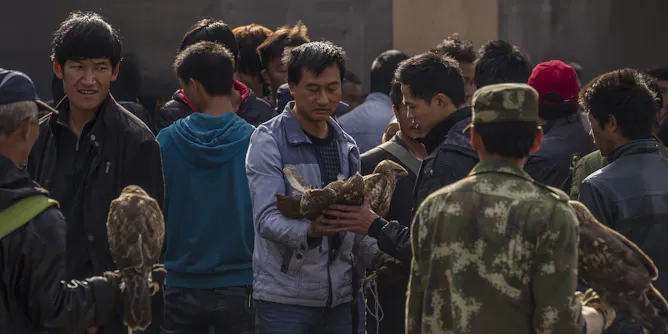
If wildlife trade is forced underground it could become an even bigger threat to public health, fuel black market prices, and accelerate exploitation and extinction of species in the wild.
Articles on Wildlife trade
Displaying 41 - 54 of 54 articles
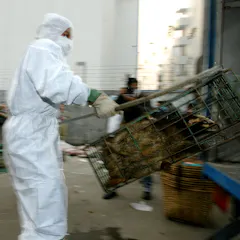
Wild animals and animal parts are bought and sold worldwide, often illegally. This multibillion-dollar industry is pushing species to extinction, fueling crime and spreading disease.
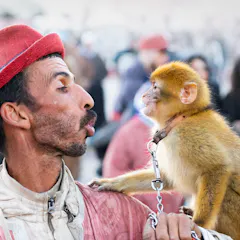
Wildlife crime is difficult to track but of deep concern since about 60% of primate species are now threatened with extinction.
Social media offers good conditions for wildlife trafficking to thrive.
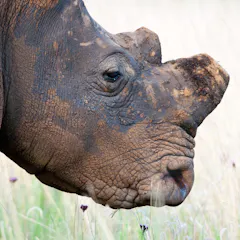
Saving the rhino means tackling demand for its horn.
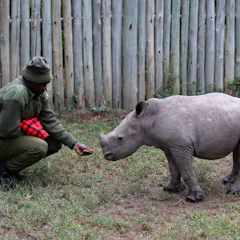
Local and indigenous communities remain mostly excluded from real benefits, and conservation often comes at a huge cost to them.
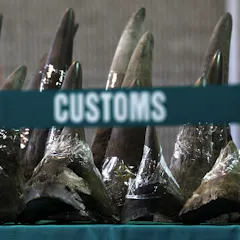
Rhino horn trade continues to be a highly lucrative business across the world.
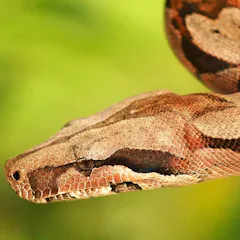
Keeping non-native reptiles as pets is against the law – with good reason. Alien species traded on the black market can potentially establish themselves in the wild if they are released or escape.
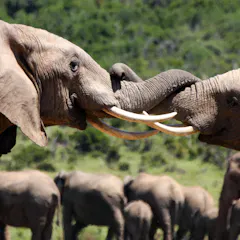
The ivory trade is a very contentious issue and will be debated at CITES. It will revolve around maintaining or lifting the ban on trade. But the human element is likely to be ignored.
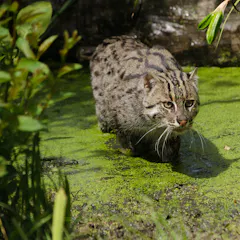
Many scientific names have changed since China’s ‘protected species list’ was last updated in 1989.
The focus of CITES is not solely on the protection of species. It also promotes controlled trade that is not detrimental to the sustainability of wild species.
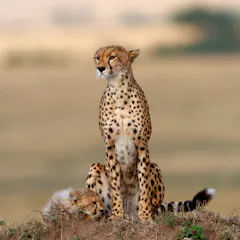
60% of the world’s largest carnivores and herbivores are classified as being threatened with extinction

The amount of ivory on sale in Vietnam has increased by more than 600% in the past eight years. As China has taken a tougher stance on the ivory trade, sales in Vietnam have increased.
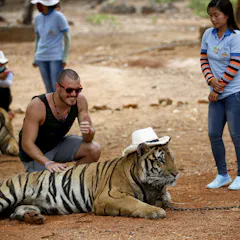
A police raid on the popular tourist attraction has found 40 frozen tiger carcasses.
Top contributors
-

Director of the Wildlife Crime Research Hub, Australian Research Council Industry Laureate Fellow, Adelaide University
-
Visiting Research Fellow, Manchester Metropolitan University
-
Senior Research Fellow, Oxford Martin Programme on the Wildlife Trade, University of Oxford
-
Senior Lecturer of Criminology, Nottingham Trent University
-
Senior Research Fellow, Conservation Science and Policy, University of Oxford
-
Professor of Law and Environmental Justice, Anglia Ruskin University
-
Research Associate, Fitzpatrick Institute of African Ornithology, University of Cape Town
-
Postdoctoral research fellow, Adelaide University
-
PhD Student, Adelaide University
-
Ph.D. student at the Invasion Science & Wildlife Ecology Group, Adelaide University
-
Visiting Research Fellow, Manchester Metropolitan University
-
Research Fellow in Conservation Marketing, University of Oxford
-
Research Associate, Department of International Relations, University of the Witwatersrand; Chief Research Officer, Good Governance Africa; Managing Director, Harvey Economics Pty Ltd.
-
Oxford Martin Fellow, Research Associate, Illegal Wildlife Trade, University of Oxford
-
Investigadora Doctora en Etología y Bienestar Animal, Universitat de València