

Smartphone apps and wearable devices can tell when workers have been within six feet of each other, promising to help curb the coronavirus. But they’re not all the same when it comes to privacy.
Articles on Wearable technology
Displaying 21 - 40 of 87 articles

Lightweight, flexible materials can be used to make health-monitoring wearable devices, but powering the devices is a challenge. Using fuel cells instead of batteries could make the difference.

From wearables with monitoring chips to face scanners that assess your contentment, workplace surveillance seems to be going in one direction.

A health informatics researcher explains why people don’t always get the ‘credit’ they think they should from using wearable fitness trackers.

Trying a new exercise routine? Strapping on a new wearable monitor? An expert in human physiology explains the ins and outs of your heart rate and why it’s a valuable number to understand.
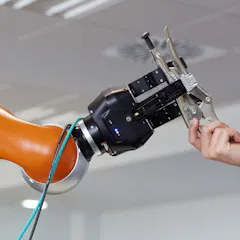
Engineers predict a time when people and robots physically interact all day long. For that to happen safely will require new soft materials that can do things like sense touch and change shape.

The Rape-aXe ‘female condom’, anti-rape underwear and an anti-groping stamp are all now on the market. But they put the onus on women to protect themselves, rather than on men not to attack them.

It can be tough to train a dog – but mainly because humans are even more prone to distraction and inconsistency than our canine companions. Wearable technology might help us be a bit more consistent.
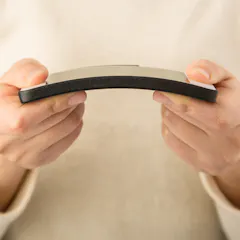
Making technology such as a new smartphone that can you can roll, fold and bend requires new ways to manufacture.

Using smartphones and wearable devices to identify mental health symptoms and deliver psychotherapy will allow more people to access quality care, according to one psychiatrist.

An offer that appears beneficial on the surface, but can lead to unintended negative consequences is called a “perverse incentive”.
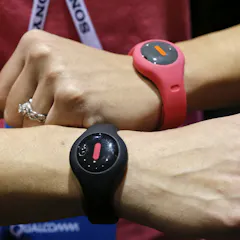
Insurer John Hancock now requires customers to use activity trackers for life insurance policies. Here’s how that will put life insurance and even mortgages out of reach for many people.

We can either take advantage of advances in technology to enhance human beings (never to go back), or we can legislate to prevent this from happening.

Wearables help regular people track their activity, but sophisticated technology can give deeper insights to elite athletes.
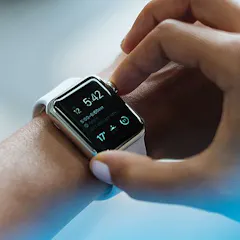
Research shows that people’s social networks, employment conditions and life stages all impact their use of wearable devices. Understanding these factors can help you achieve your fitness goals.

Jawbone was one of the first companies to popularise wearable fitness bracelets. Others can learn from its failings.

Activity tracking devices are boosting people’s desire to make healthy lifestyle changes – and stick to them

From power walks to silly walks, we can use our movement to generate energy in a way that is unique to everyone. And that can be used to help secure our wearable technology.
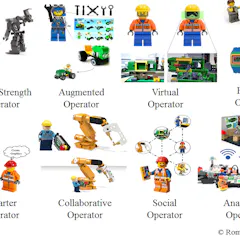
People will still be needed on factory floors, even as robots become more common. Future operators will have technical support and be super-strong, super-smart and constantly connected.
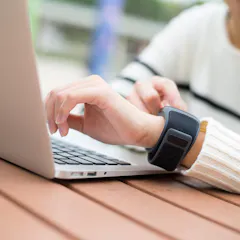
Ford Motor Company’s attempts (and failure) to monitor its employees offers some lessons in why we should question the use of wearable tech by companies today.
Top contributors
-

Professor of Sociology (retired), Lancaster University
-
Senior Lecturer in Design Interactions, Lancaster University
-
Professor of Organisational Behaviour, Bayes Business School, City St George's, University of London
-
SHARP Professor, Vitalities Lab, Centre for Social Research in Health and Social Policy Centre, and the ARC Centre of Excellence for Automated Decision-Making and Society, UNSW
-
Senior Lecturer and Researcher in Innovation and Digital Leadership, University of Brighton
-
Associate Professor of Research, Embodied Design and Wearable Futures, University of Southern Denmark
-
Associate Professor of Health and Sport Science, University of Dayton
-
Associate Professor, Informatics and Operations, Kingston University
-
Professor, The University of Melbourne
-
Doctoral Student in Computer Engineering, Boston University
-
Associate Professor of Education, University of Connecticut
-
Associate professor, Monash University
-
Senior Lecturer, School of Computer Sciences and Electronic Engineering, University of Essex
-
Chancellor's Professor of Medicine, Liberal Arts, and Philanthropy, Indiana University
-
Assistant Professor, University of Colorado Boulder