
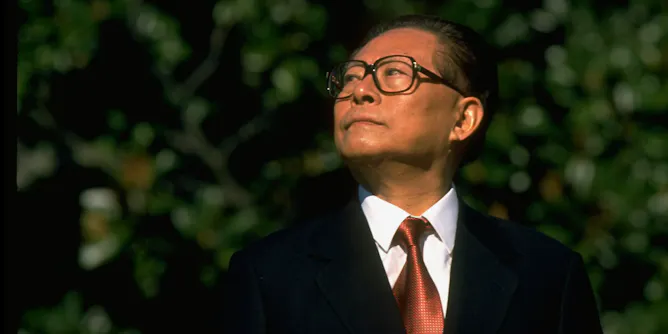
Jiang oversaw China’s reemergence on the global stage, and sustained growth at home. But his policies also set the scene for excess and the growth of President Xi Jinping.
Articles on Wealth inequality
Displaying 21 - 40 of 121 articles

The United States has more economic inequality than other wealthy nations.

Amid a number of major crises, the world clearly needs radical change. But what will it look like? The desire to return to pre-pandemic ‘normal’ is powerful, but ‘normal’ is what got us where we are today.
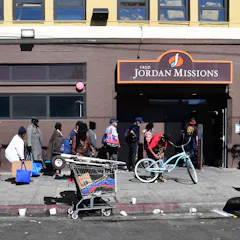
The United States came in 41st worldwide on the UN’s 2022 sustainable development index, down nine spots from last year. A political historian explains the country’s dismal scores.

Media ownership has consolidated around a handful of billionaires – and that might not be great for democracy.
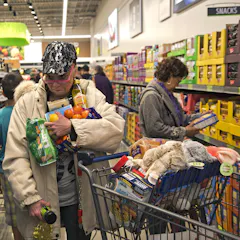
The rising cost of groceries and gas is fueling the fastest increase in consumer prices in 40 years and widening the inflation gap between the rich and poor.
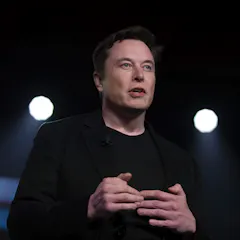
Giving away stock that has soared and that the donor has owned for at least a year makes the biggest dent in what share the IRS takes.

In 1992 64% of the top 1% had been there the year before. By 2017 that proportion had grown to 73%.

Highly compensated ‘enablers’ such as financial experts, lawyers, accountants, notaries, estate agents and company service providers are assisting oligarchs, dictators and criminals around the world.

The wealth of the top 200 Australians has risen by A$56 billion to a staggering $480 billion.
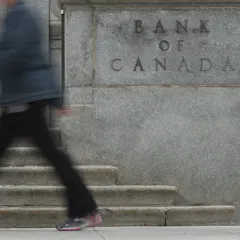
Unconventional policies can be used to alleviate — instead of exacerbate — inequality, something Canadians are clamouring for. The Bank of Canada needs to rediscover its former innovation zeal.
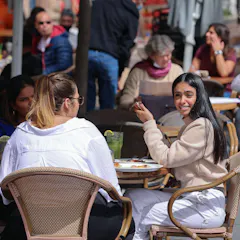
The pandemic has exposed inequalities in society. There is concern that tying freedoms to vaccinations may further disadvantage vulnerable groups.
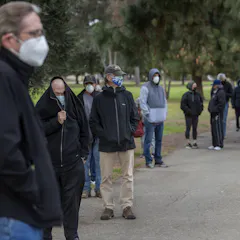
No one likes a long line. But privileging the rich and powerful – as has often been the case – may undermine trust in the vaccine rollout.
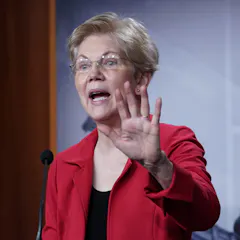
Economists estimate the tax on households worth over $50 million could bring in $3 trillion over 10 years, but it will run into constitutional challenges.

You might be surprised to find yourself in the company of Elon Musk and Jeff Bezos in the world’s richest 1%. This has big implications for planetary survival.
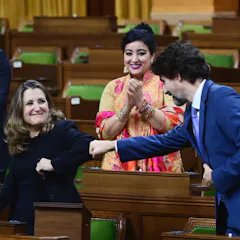
The pace of federal government action to date does not align with the urgency of the twin climate and inequality crises. The latest fiscal update doesn’t go far enough on either crisis.
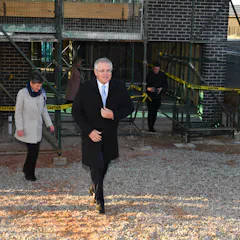
Voters who own housing are strongly invested in increasing the value of their wealth-generating assets. And they strongly favour the Coalition, which knows to protect their interests.

But the taxes have to be well-designed to avoid being overly regressive and targeting the poor.
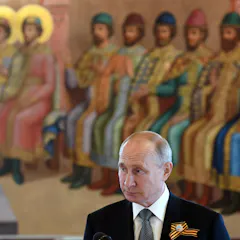
After Russian oligarchs stepped in to help with the coronavirus response, Putin upped their taxes. But it’s unlikely to phase them.

Surviving COVID-19 means reconsidering what type of world we want to build and live in, together. We can no longer feign being a democracy that is not democratic.
Top contributors
-

Associate Professor in Urban Geography, The University of Melbourne
-
Part-Time Professor of Economics, The New School
-
Professor, Crawford School of Public Policy, Australian National University
-
Professor, Department of Philosophy, University of Victoria
-
Adjunct associate, Swinburne University of Technology
-
Professor of Economics and Public Policy, ANU College of Arts and Social Sciences, Australian National University
-
Emeritus Professor, Department of Political Economy, University of Sydney
-
Professor of Economics, University of Michigan
-
Associate professor, University of Sydney
-
Professorial Fellow and Co-Director, HILDA Survey, Melbourne Institute of Applied Economic and Social Research, The University of Melbourne
-
Professor, UTS Business, University of Technology Sydney
-
Professor of Housing & Social Policy, HHAUS Housing, Homelessness & Urban Studies, Swinburne University of Technology
-
Professor Emerita of Law, Vanderbilt University
-
Professor of Business and Society, University of Technology Sydney
-
Associate Research Professor of Information Systems, Arizona State University; Institute for Humane Studies