
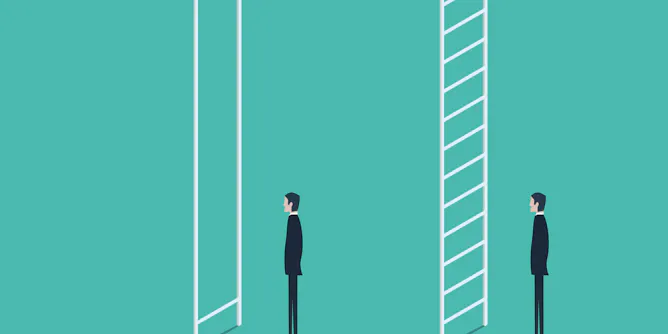
The new level of inequality that is emerging in Australia is not only a challenge to our morality but a serious threat to our future economic growth.
Articles on Wealth inequality
Displaying 81 - 100 of 121 articles
The major presidential candidates each gave an economic address this week. Get behind the problems they identified and the promises they made with this roundup of key coverage from our archive.
Australia has become collectively richer but much more unequal in recent decades.
An analysis of what’s known as the Gini coefficient offers some clues on what makes one society more unequal in terms of income than another.

Two centuries of tax policy show efforts to raise taxes on the rich hinge on questions of fairness. The history also suggests proponents have a tough road ahead.
New figures reveal inequality in Britain and the effects of the redistributive tax and benefits system.
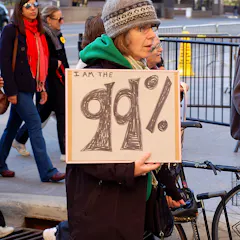
Americans tend to agree inequality is a problem, but Democrats and Republicans have very different ideas about what is causing it and how to solve it.

The late Antonin Scalia and his conservative colleagues in recent years have rolled back protections for workers and unions while giving more rights to businesses and the wealthy.
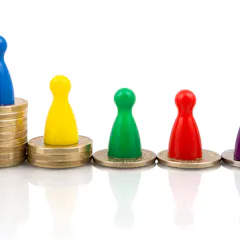
A new study on inequality analyzes the impact of fiscal policy, dramatically altering the standard view of rich and poor in America. It may also change how voters and candidates think about the issue.
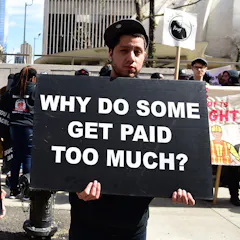
The latest economic research suggests there are better ways to narrow the gap between the richest and the poorest.
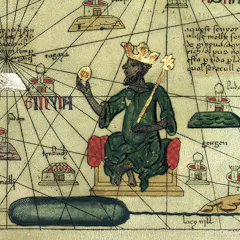
Oxfam’s latest report says that the richest 62 people own as much as the poorest 3.6 billion. But it doesn’t have to be that way.

Oxfam’s report shows that as the gap between rich and poor grows, other inequalities are also on the rise.

Providing citizens with a basic income has shown signs of success in lifting people out of poverty, but more importantly the idea is transforming the way we think about inequality.
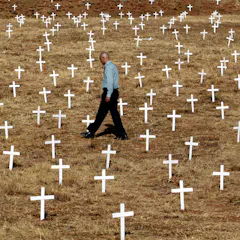
South Africa’s homicide rates have declined consistently since democracy, but remain among the highest in the world. They are about four times the global average at more than 30 per 100,000 people.

If the government wants to tackle wealth inequality, then it has the tools at its disposal to help people pay a fair amount for everyday goods.

Opposition leader Bill Shorten told Q&A viewers that Australia is the most unequal it has been in 75 years. Is that statement supported by the research?
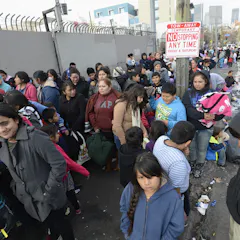
Does the definition of self-control – choosing long-term over short-term outcomes – even make sense for people who are short on time, money or both?

One reason for widening inequality is the decline of unions, which in turn is partly the result of the gradual elimination of the “working class” from our vocabulary.

Evidence on the ability, or lack thereof, of children to rise above the economic status of their parents shines light on the continued persistence of inequality, including in South Africa.

New research shows how cities are tackling the issues usually dealt with by states and the federal government
Top contributors
-

Associate Professor in Urban Geography, The University of Melbourne
-
Part-Time Professor of Economics, The New School
-
Professor, Crawford School of Public Policy, Australian National University
-
Professor, Department of Philosophy, University of Victoria
-
Adjunct associate, Swinburne University of Technology
-
Professor of Economics and Public Policy, ANU College of Arts and Social Sciences, Australian National University
-
Emeritus Professor, Department of Political Economy, University of Sydney
-
Professor of Economics, University of Michigan
-
Associate professor, University of Sydney
-
Professorial Fellow and Co-Director, HILDA Survey, Melbourne Institute of Applied Economic and Social Research, The University of Melbourne
-
Professor, UTS Business, University of Technology Sydney
-
Professor of Housing & Social Policy, HHAUS Housing, Homelessness & Urban Studies, Swinburne University of Technology
-
Professor Emerita of Law, Vanderbilt University
-
Professor of Business and Society, University of Technology Sydney
-
Associate Research Professor of Information Systems, Arizona State University; Institute for Humane Studies