

Income inequality, the most common way to measure the gap between the rich and the poor, only tells part of the story. Wealth inequality tells the rest.
Articles on Wealth inequality
Displaying 61 - 80 of 121 articles

The Conversation scholars analyze a few of the key themes and speeches that punctuated the three-day gathering of global elites in the Alps.

We asked four of our regular economics writers to examine a key theme they expect to flare up in 2018 and why.
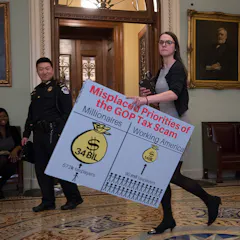
While much has been written about why the GOP’s tax plan would exacerbate income inequality, there are two reasons it’s even worse than you think.
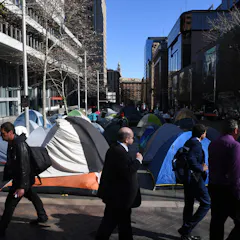
If the gap between the wealth of the billionaires and that of the average residents continues to widen dramatically, there is likely to be discontent.
The two major sources of data show conflicting trends on income inequality.
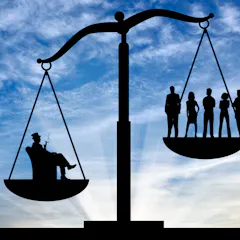
Who do you trust? Increasingly the answer seems to be nobody, especially when it comes to inequality.
The data show wealth inequality has grown but is lower now than before the GFC. And overall household income inequality has barely shifted since the start of this century.
Trump should drop his plans to cut taxes and instead look to some of our closest friends to learn what policies actually work to build and sustain a vibrant middle class.

The soaring cost of housing has helped make capital ownership more profitable than work.
Wealth inequality is no 21st-century phenomenon. But it was decisively shaped by public policy during the last 100 years as economies emerged from war and redesigned the structures for life.
Today the world is dominated by 30 financial corporations that hold more than half the shareholdings of its corporate giants. And they follow the logic of finance capital – the logic of money.
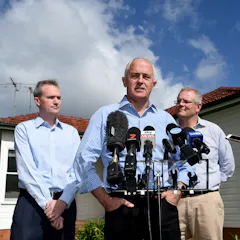
Housing experts writing for The Conversation largely agree on the government policies that are causing negative distortions in the market and the wider economy. And supply is not the key concern.

Our big cities increase incomes faster than population growth, but most residents miss out on the extra income growth. Creating multiple centres of activity may help make bigger better for everyone.
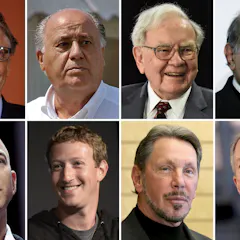
According to the latest Oxfam report, the richest eight people in the world are as wealthy as the bottom 50% of the world’s population. But let’s scrutinise these numbers a bit more.
Some people evidently think wealth inequality is a good thing, but there’s plenty of evidence to show the problems it causes.
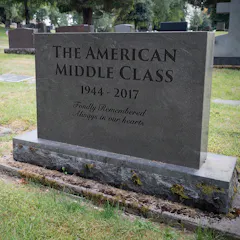
Finding a way to reduce inequality is key not only to solving a host of other problems but also to rescuing America’s fast-disappearing middle class.

Although the Fed delayed raising rates this month, it has signaled it intends to wean the U.S. economy off its unprecedented monetary stimulus. Now the question is whether Congress will take the handoff.

Dallas Rogers speaks with Ilan Wiesel and Ray Forrest about the impact of the super rich on local politics, our cities and wealth inequality.

Rather than pursue self-interested policies that widen the gap between rich and poor, companies can invest in their workers, curb income inequality and make more money all at the same time.
Top contributors
-

Associate Professor in Urban Geography, The University of Melbourne
-
Part-Time Professor of Economics, The New School
-
Professor, Crawford School of Public Policy, Australian National University
-
Professor, Department of Philosophy, University of Victoria
-
Adjunct associate, Swinburne University of Technology
-
Professor of Economics and Public Policy, ANU College of Arts and Social Sciences, Australian National University
-
Emeritus Professor, Department of Political Economy, University of Sydney
-
Professor of Economics, University of Michigan
-
Associate professor, University of Sydney
-
Professorial Fellow and Co-Director, HILDA Survey, Melbourne Institute of Applied Economic and Social Research, The University of Melbourne
-
Professor, UTS Business, University of Technology Sydney
-
Professor of Housing & Social Policy, HHAUS Housing, Homelessness & Urban Studies, Swinburne University of Technology
-
Professor Emerita of Law, Vanderbilt University
-
Professor of Business and Society, University of Technology Sydney
-
Associate Research Professor of Information Systems, Arizona State University; Institute for Humane Studies