

There’s a widening divide between two Canadas: one marked by working-class misery and homelessness; the other by the unprecedented prosperity of the uber-wealthy. This wealth gap is unsustainable.
Articles on Wealth gap
Displaying 1 - 20 of 49 articles

Financial literacy gives women the knowledge, confidence and skills to engage in financial decision-making.

In the age of ‘whitened, straightened, veneered smiles’, the distance between ruined poor teeth and healthy, wealthy teeth is growing.

Over the past half-century, a rising share of economic activity in the UK and other rich countries has been connected with ‘bad’ wealth accumulation.

Social media plays a major role in empowering youth as it did in the recent Gen Z protests in Nepal. But its role in protest movements can also be problematic.

The measure enables broad tax cuts that disproportionately favor wealthy households while forcing its costs on the most economically vulnerable Americans.

Older adults in the UK’s wealthiest bracket are nearly twice as likely to eat well, stay active and avoid depression.

If Canada allows inequality to rise unchecked, it risks ending up where hundreds or ancient societies have: plagued by widespread unrest, violence and even complete collapse.

New research shows that Americans’ personal wealth is not enough to compensate for factors that affect how long people live, such as health behaviors, education or social support.
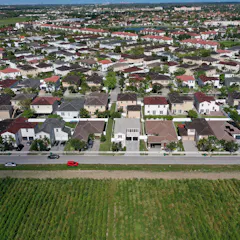
Housing market appreciation has been the primary driver of growing white-Black wealth disparities since the mid-1980s.
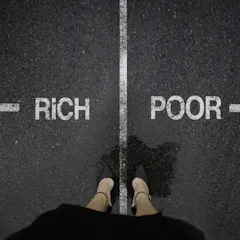
The wealthiest areas in the US are almost 7 times richer than the poorest regions, a disparity that has nearly doubled since 1960.

Compared to countries we might benchmark against, New Zealand ranks poorly for inequality and the redistributive measures that would fix it. But other countries have shown it is possible to change.

The Labour Party’s proposed capital income tax targets earners whose gains are missed by the current system. We explain how this is different from other taxes targeting the wealthy.

Mapping daily temperature variations across the US revealed stark differences between wealthy and poor neighborhoods, and large differences by race.

While Warren Buffet’s ‘buy low, sell high’ strategy has proven extremely successful for himself, it’s challenging for those without significant financial resources.

Ending institutional racism is a long-term goal and requires well-informed and engaged people to remake systems and structures

The idea of passive income is often glamorized, but the reality is that many of these ventures require significant effort.

You may feel little sympathy for people in the top bracket of earnings, but don’t let that stop you reading. Like it or not, their views and actions matter to everyone

The UK Labour Party used to radically advocate for common ownership. But as private wealth in Britain benefits from ever greater tax breaks, anti-inequality sentiment is waning.

Almost two-thirds of low-income countries are at risk of debt distress – in part because of higher borrowing costs. And that isn’t the only problem.
Top contributors
-

Professor of Politics, University of Canterbury
-
Research Associate, Public Policy Institute, University of Auckland, Waipapa Taumata Rau
-
Professor of Politics, Te Kunenga ki Pūrehuroa – Massey University
-
Visiting Fellow, School of Policy Studies, University of Bristol
-
Professor of Law, University of Waikato
-
Research Professor in Contemporary British History, King's College London
-
Professor, University of Auckland, Waipapa Taumata Rau
-
Senior Lecturer in Human Rights, Constitutional Law and Legal Theory, University of Wollongong
-
Distinguished Reserach Professor, Southern Centre for Inequality Studies, University of the Witwatersrand
-
Professor of Sociology, School of Social Sciences, Monash University
-
Economics PhD Candidate, Stellenbosch University
-
Professor, College of Business Administration, Ajou University
-
President, University of Oregon
-
Lecturer in Marketing, City St George's, University of London
-
Senior researcher, SMERU Research Institute