
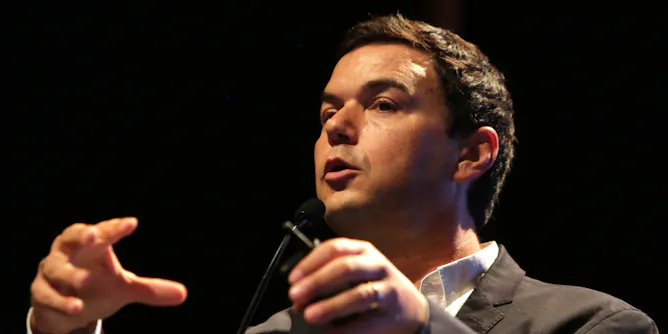
Thomas Piketty’s new book is designed to make his thought available to a wider audience.
Articles on Thomas Piketty
Displaying 1 - 20 of 38 articles
Unless the economic benefits resulting from having the government of national unity become socially inclusive, it might well collapse.

‘Late capitalism’ is referenced in books, articles and as a trending meme. But what are the origins of the term – and what does it describe?
Ghanaian postcolonial intellectuals viewed terms such as development, neo-colonialism, self-reliance, and indigeneity as central to discussions of global inequalities.

Political and economic power-holders will strive for a return to pre-pandemic ‘normality’.

Inequality is decried at campaign rallies and in the global commentariat. But little is being done at any policy level.

Extensive research has been done on poverty and inequality in South Africa but more is needed to better understand the status quo and mainly inter-sectional factors that drive inequality.

The soaring cost of housing has helped make capital ownership more profitable than work.
The crisis confronting neoliberal capitalism suggests that its internal contradictions are now undermining its very foundations. What can we expect from a post-neoliberal world?

The World Economic Forum draws a straight line from social injustice to many of the risks facing the world in 2017.
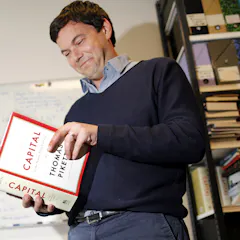
A 700-page book of economics was never going to be a walk in the park.
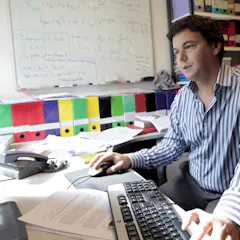
Some people evidently think wealth inequality is a good thing, but there’s plenty of evidence to show the problems it causes.
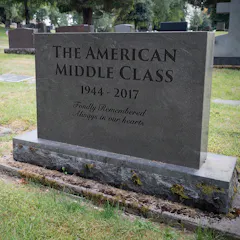
Finding a way to reduce inequality is key not only to solving a host of other problems but also to rescuing America’s fast-disappearing middle class.

A new study on inequality analyzes the impact of fiscal policy, dramatically altering the standard view of rich and poor in America. It may also change how voters and candidates think about the issue.
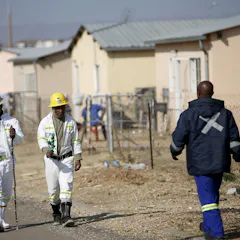
International experiences indicate that South Africa could reduce income inequality by introducing a national minimun wage.
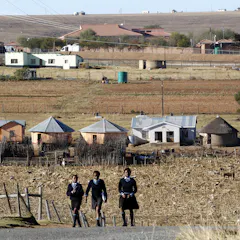
A lot has changed for the better in South Africa’s education system - but inequality remains a thorn in the country’s side. How can we disrupt educational inequality?
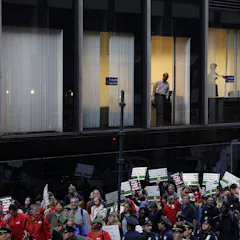
The Marikana tragedy has indicated the violent nature of the struggles over resources and income shares. Inequality must be fought because it perpetuates social injustice.

Thomas Piketty’s visit reminds us of the need to reconsider South African inequality-fibbery. His inequality critique is vital, but only if it can withstand the neoliberal embrace.
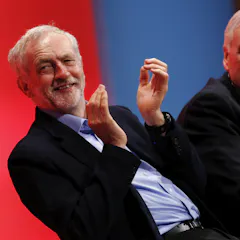
One of Jeremy Corbyn’s picks for his economic advisory team is doubtful about the viability of a Robin Hood tax, but sees little obstacle to public ownership in the banking sector.
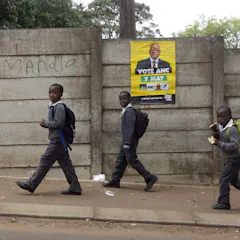
Twenty years ago, Brazil and South Africa were in a similar position when it comes to inequality. Brazil has made significant progress in addressing this, but South Africa hasn’t.
Top contributors
-

Distinguished Reserach Professor, Southern Centre for Inequality Studies, University of the Witwatersrand
-
Robert D. Burch Professor of Economics and Law and Director, Burch Center for Tax Policy and Public Finance, University of California, Berkeley
-
Professor of Economics and Director of the Development Policy Research Unit, University of Cape Town
-
Senior Lecturer in Social Policy, Teesside University
-
External Research Associate,, University of East Anglia
-
Senior Lecturer in the Department of Culture, Media & Creative Industries, King's College London
-
Visiting Senior Fellow in History, UNSW
-
Emeritus Professor, Department of Political Economy, University of Sydney
-
Part-Time Professor of Economics, The New School
-
Senior Lecturer, Goldsmiths, University of London
-
Professor of AI, Research Group Leader, UNSW
-
PhD Candidate, University of the Witwatersrand
-
Associate Professor, The University of Western Australia
-
Doctoral Researcher in Economic History, Lund University
-
Assistant Professor of International Business and Strategy, Florida International University