
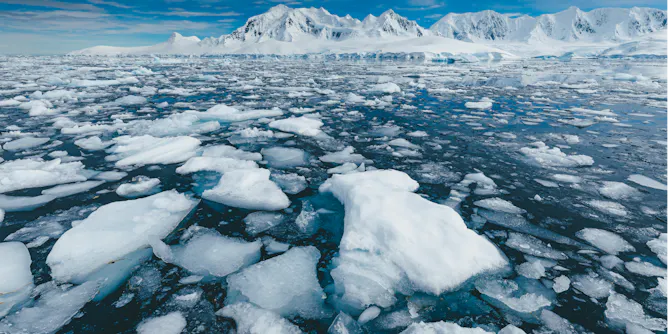
This remarkable seasonal change in Antarctic sea ice is like a heartbeat within our planet’s climate system. We need to better understand it.
Articles on Waves
Displaying 1 - 20 of 59 articles

The tsunami struck just 12 hours after a cruise ship had left the fjord, rattling the tourism industry.
Researchers have used lab models to study how rogue waves form, but these don’t always transfer over to the natural world.
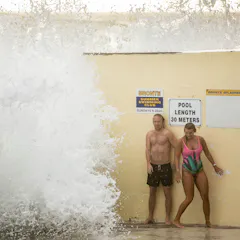
Long-period swell is a classic hidden hazard that can trick even the most experienced beach goers.
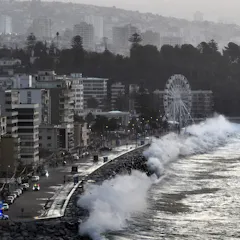
Big storms can generate ocean swells that travel thousands of kilometres and cause damage to distant coasts. Predicting their paths and local impacts remains a challenge.
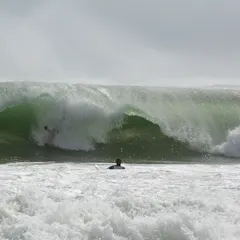
What drives surfers to hit the waves as a cyclone approaches the coast? And what will it take to get them to stop?
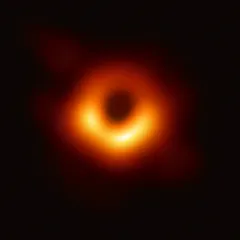
If we sent objects or light towards a rotating black hole, we may be able to get energy back.

A shallower pool may have subtle effects on swimmers’ performance – but perhaps not the ones you’d think.
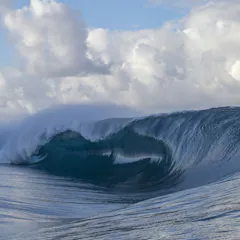
There are some great surfers vying for gold in Tahiti, but arguably the star of the show is the famous Teahupo'o wave itself. Here’s what makes it special, and why surfers respect its power.

People taking pebbles from some beaches in Cumbria, England, will now face fines of up to £1,000.

Maritime folklore is awash with tall tales of monstrous waves. A new study gets closer to understanding where they come from and how to predict them.
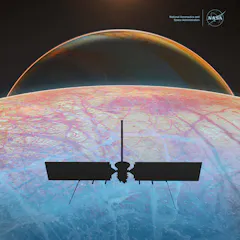
Europa Clipper will contain a plaque that celebrates humanity’s relationship with water and a decades-old tradition of searching for life outside Earth.
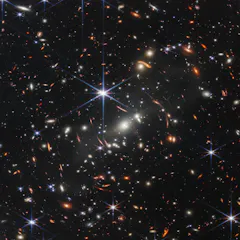
Sound needs matter to propagate, so the vast vacuum of space is not just empty − it’s silent.
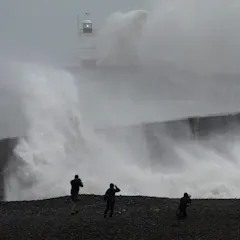
The same instruments used to measure earthquakes pick up vibrations as ocean waves put pressure on the sea floor. Four decades of data tell a story about ocean storms.
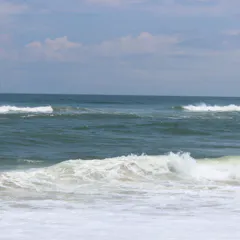
Rip currents are a leading cause of near-shore drownings, but there are effective ways to survive one. And these phenomena also play important ecological roles that are an emerging research area.

New research may upend our understanding of the brain, showing that travelling waves of neuronal excitation dominate the activity associated with our thoughts and feelings.
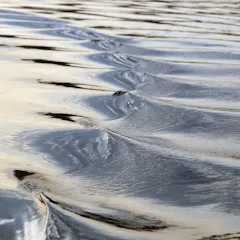
In the future, our computer may be able to produce long-term forecasts in areas such as climate change, bushfires and financial markets – while being cheaper and more accessible than supercomputers.

A new way to make high-frequency light could make it easier to look at things 10 times smaller than conventional microscopes can see.
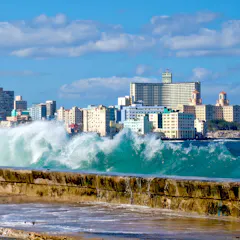
Sea-level rise isn’t the only climate-related problem for our coasts – extreme waves that cause flooding and erosion are also changing, but exactly how is hard to predict.
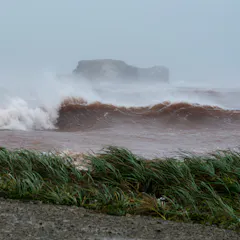
Storm Fiona caused a lot of property damage and erosion on the Canadian coast. But its effects are also felt in the depths of the Gulf of St. Lawrence.
Top contributors
-

Associate Professor of Climate Science, Brandeis University
-
Associate Professor, UNSW
-
Senior Principal Research Scientist, Environment, CSIRO
-
Professor, Kyoto University
-
Kernot Professor of Engineering, The University of Melbourne
-
Honorary Senior Lecturer, Department of Civil and Environmental Engineering, University of Auckland, Waipapa Taumata Rau
-
Research Scientist, Energy Economist, CSIRO
-
Professor of law and ocean sciences, University of Southampton
-
Professor, Fluid Dynamics, Swinburne University of Technology
-
Research Engineer, CSIRO
-
Principal Research Scientist in Extreme Weather, The University of Melbourne
-
Professor, Australian National University
-
Assistant Professor of Physics and Astronomy, West Virginia University
-
Postdoctoral Researcher, Australian National University
-
Professor of Earthquake Science, The University of Melbourne