
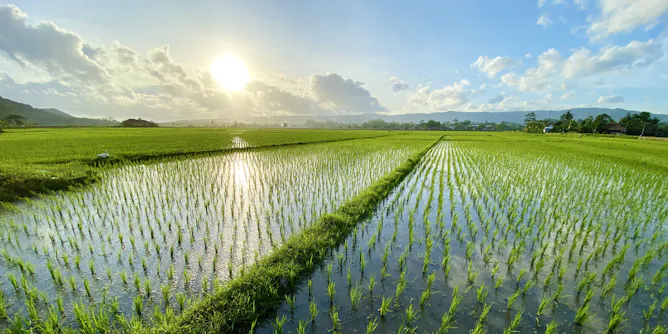
Rice is life for billions of people. But this grain crop depends heavily on irrigation – and the looming El Niño is likely to bring dry conditions.
Articles on Water cycle
Displaying 1 - 20 of 36 articles
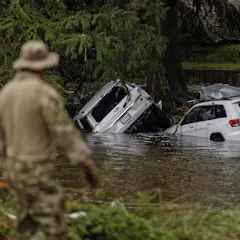
Large parts of the central and eastern U.S. have seen at least 50% more precipitation than normal. An atmospheric scientist explains why and what creates flash flood weather.
Technically, you’d think so. But some things are just too small to measure.

From dried-up rivers to flooded crops and cities, rising temperatures in 2024 wreaked havoc with water, creating life-threatening challenges for people and nature alike. Explore this interactive map.
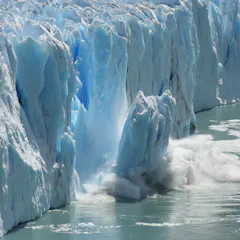
Water is very heavy – and it can move. Until now, changes to water on land have actually offset much of the rising sea level from ice melt. How? Gravity
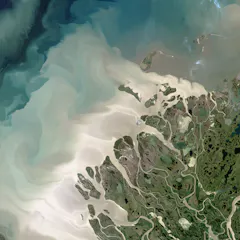
A new study shows how thawing permafrost and intensifying storms will change how water moves into and through Arctic rivers.
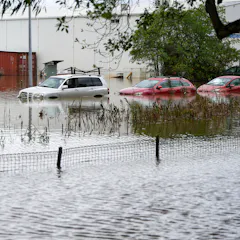
The impacts of record heat on the global water cycle were severe and wide-ranging – and the trend will continue in 2024.
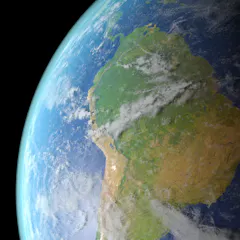
New research finds fresh water losses are concentrated in South America, most of Africa and much of Australia.

Parts of New York’s Hudson Valley were hit with 10 inches of rain, and the mountains of Vermont – where runoff can quickly turn deadly – saw some its worst flooding since Hurricane Irene.

Calling the Amazon “the lungs of the world” overlooks the forest’s vital role in the water cycle.
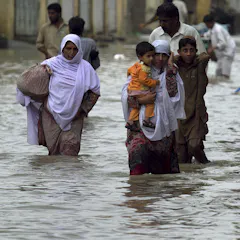
Globally, the air is getting hotter and drier, which means flash droughts and risky fire conditions are developing faster and more frequently.
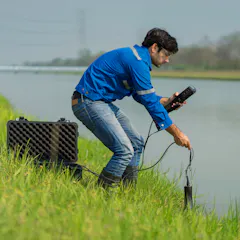
Toxic synthetic chemicals, called PFAS, are a serious threat to humans and wildlife – but many people are unaware of them.
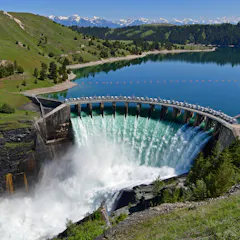
How does flowing water make electricity? An engineer explains hydroelectric generation.
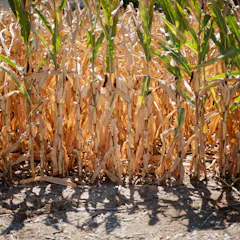
Flash droughts can develop within a few weeks, causing water shortages, damaging crops and worsening fire risks.
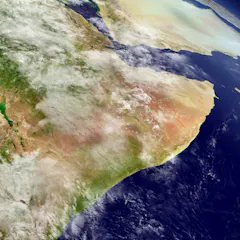
High intensity rain has actually increased, which is topping up underground water stores.
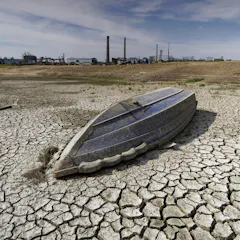
The world’s great rivers are see-sawing from trickles to floods.

Extreme downpours caught people off guard from Las Vegas to Kentucky in July 2022.
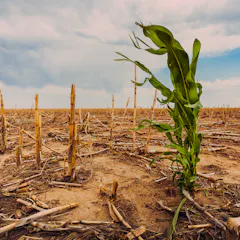
‘Green water’ is essential for healthy soils and a benign climate, but it’s under threat.
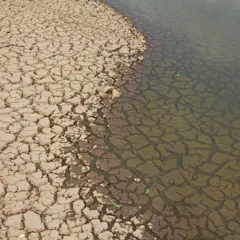
Dry regions will get drier and wet regions wetter as the climate changes. How quickly? Quicker than we thought, unfortunately.
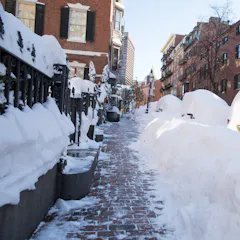
Winters are getting warmer, yet Bostonians were digging out from nearly 2 feet of snow from a historic blizzard in late January. Why is the Northeast seeing more big snowstorms like this?
Top contributors
-

Professor of Climate Science, UMass Lowell
-
Professor, Water and Landscape Dynamics, Fenner School of Environment & Society, Australian National University
-
Associate Director, Climate System Research Center and Associate Professor of Climatology, UMass Amherst
-
Reader in Cell and Molecular Biology, Oxford Brookes University
-
Lecturer in Computational Hydrology, Newcastle University
-
Hydrologist, Flood Forecaster, Australian Bureau of Meteorology
-
PostDoc, Institute for Atmospheric and Climate Science, ETH Zurich
-
Principal Scientist & Programme Leader of Southern Hemisphere Climates and Environments, National Institute of Water and Atmospheric Research (NIWA)
-
Working Group Leader, Terrestrial Safe Operating Space, Potsdam Institute for Climate Impact Research
-
University of Victoria
-
Professor of Ocean-Atmosphere Interaction, National Oceanography Centre
-
Senior Lecturer in Physical Geography, Loughborough University
-
Professor of Snow Hydrology, Colorado State University
-
Emeritus Fellow, Marine Physics and Ocean Climate, National Oceanography Centre
-
Director of Future Design Institute, Kanazawa Institute of Technology