
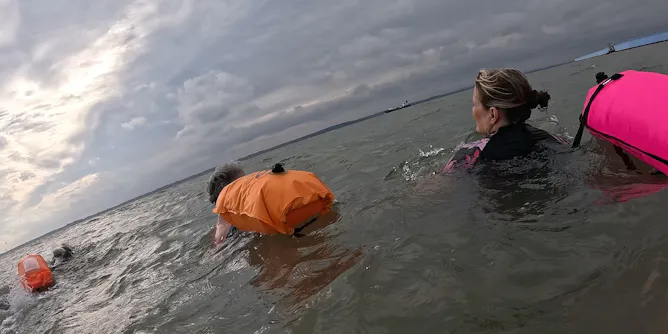
Through navigating pollution, outdoor swimmers are reminded that the health and wellbeing of our bodies is bound to the quality of our waters.
Articles on Vitamin Sea
Displaying 1 - 20 of 28 articles

Sailing voyages help young people develop strong connections with the sea that can last a lifetime.

Four in ten people surveyed were unaware that tides come in twice daily, that they vary in timing each day, and that they differ in height across the country.
Talking to teenagers about safety isn’t easy. Here’s how to do it in a way that’s honest, effective and grounded in care.
Heading to the coast for fresh air, walks and dips has been prescribed for those looking to improve their health for hundreds of years.
Through my reconnection with nature, I’ve reframed my experience of illness.
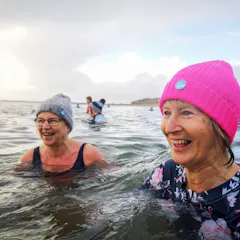
Wild swimmers tend to feel more autonomy and competence.

Knowledge is one of the most powerful tools to incite the action needed to save ocean health, so better ocean literacy is essential.

The Scottish Association for Marine Science wants to better consider how its research could affect the ocean.

Conservation measures can be designed in ways that improve nutrition and health of people.

Measuring the ‘ecosystem services’ that the ocean provides is difficult, but an essential step to understand how best to protect marine ecosystems.

Smellscapes of the sea are multi-layered - they are shaped by interactions between water, marine life and environmental conditions.

The Plymouth fish finger project will boost the amount of locally caught fish that makes it into the city’s supply chain rather than leaving the city to be eaten elsewhere.
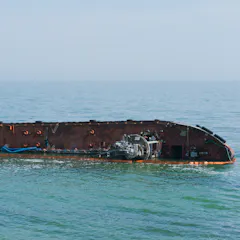
Countless thousands of lives are lost at sea every year. New safety efforts could benefit from learning from historic and successful initiatives to reduce fatal accidents in the UK’s docks.
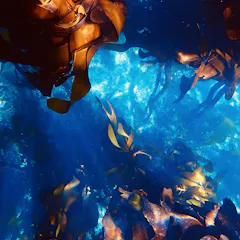
Marine art is an important form of storytelling. Visual, performance, sculptural and moving image arts have driven the evolution of marine sciences too.

Ocean therapy provides a lens to see, understand and experience the ocean as healing, restorative and health-enabling.

Diary entries revealed people’s strong appreciation of Scotland’s freshwater environments.

Looking at, listening to, and immersing ourselves in inland and coastal waters can directly benefit our physical and mental health - here’s how the study of blue health has evolved.
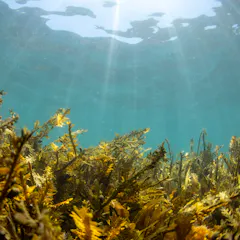
A study has suggested that consuming ecklonia cava – a type of brown algae – could prevent or delay the onset of Parkinson’s disease.

Human interactions with fish can result in three kinds of interspecies encounters that strengthen people’s connections with wildlife and natural environments.
Top contributors
-

Visiting Fellow (Marketing & Advertising), Bournemouth University
-
Associate research scientist in Oceans and Human Health, University of Galway
-
Lecturer in Microbiology, Department of Biosciences, Nottingham Trent University
-
Chancellor's Fellow, Science Education and BSL, University of Edinburgh
-
Assistant Professor, Markets, Innovation, and Design, Bucknell University
-
Professor of Markets, Business, and Society, University of Bath
-
Lecturer in Neuroscience, University of Leeds
-
Professor of Consumer Research, University of Bristol
-
Senior Lecturer in Environmental Psychology, Universität Wien
-
PhD Candidate, Biological and Environmental Sciences, University of Stirling
-
PhD Candidate, Ecotoxicology, Plymouth Marine Laboratory
-
Ocean Nexus Postdoctoral Research Fellow, Institute for Coastal and Marine Research, Nelson Mandela University
-
Research Fellow, Humanities, University of Southampton
-
PhD Candidate, Department of Biodiversity and Conservation Biology, University of the Western Cape
-
PhD Candidate, Literature and Languages, University of Stirling