
OzSAGE brings together infectious disease and public heath experts, engineers, architects, economists and social scientists. Its first recommendations deal with ventilation and the measures that will have to accompany widespread vaccination.
Articles on Ventilation
Displaying 21 - 40 of 47 articles
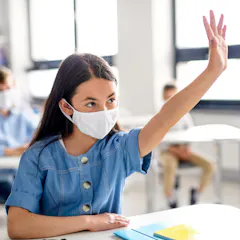
Most kids will be unvaccinated if schools in the two largest states re-open in term 4. There may still be community transmission, but there are measures we can take to shield kids from the virus.
COVID infections are rising among children. Here’s how parents and schools can best protect kids right now.
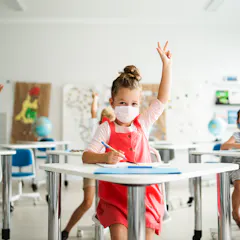
Air-ventilation upgrades have been badly needed in U.S. classrooms since long before the pandemic. Low-tech filtration systems that cost about the same as a textbook per student can make a big difference.
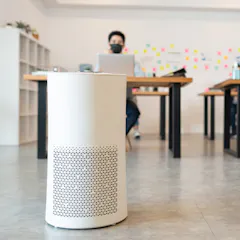
A$50 million could provide all NSW school classrooms with air purifiers with HEPA filters. This pales compared to the roughly $220 million-a-day cost of Sydney’s lockdown.

With evidence showing the COVID virus is airborne, it’s no coincidence many outbreaks in schools have occurred in winter – when windows are closed.
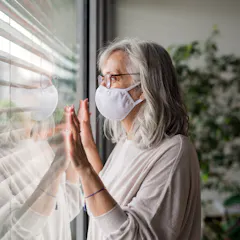
Researchers are piecing together clues to better understand the puzzling array of symptoms in those who never seem to fully recover from COVID-19.

We found two small air cleaners in a single hospital room could clear 99% of potentially infectious COVID aerosols within 5.5 minutes.
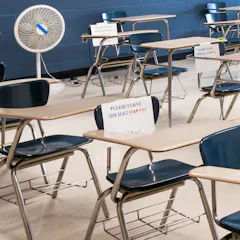
Simulations of classrooms and offices can help determine the safest configurations to reduce the spread of COVID-19.

Because COVID-19 is airborne, we can’t know if the shelter system is as safe as it should be without seeing metrics related to ventilation, filtration and occupancy.
Airborne transmission is likely to be behind several recent leaks in hotel quarantine. But the Northern Territory has a quarantine model that works.
Ventilation is one of the most important methods of preventing the spread of infectious disease, a fact we’ve known for centuries.
Studying how SARS-CoV-2, the virus that causes COVID-19, travels through indoor air spaces can help reduce transmission risk.
Open windows and doors, use fans, and set your aircon to pull fresh air from outside.
Being indoors with other people is a recipe for spreading the coronavirus. But removing airborne particles through proper ventilation and air filtration can reduce some of that risk.

Super-spreader events typically have the ‘three Vs" in common: indoor venues, poor ventilation and vocalisation. But many buildings frequented by the public lack ventilation or the means to monitor it.
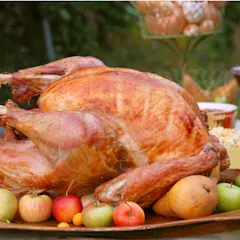
COVID-19 and holiday family gatherings are not a good pair. But taking the right precautions before, during and after the family gets together can greatly reduce coronavirus risk this holiday season.

Our video shows aerosol emissions from singing a simple scale. No wonder singing in a choir can be risky.
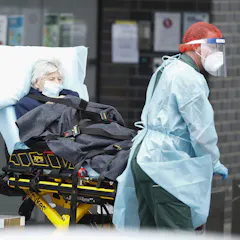
Most aged care homes are designed to be naturally ventilated. But when windows are closed to keep out the cold, poor ventilation appears to be common – and that’s a problem for infection control.
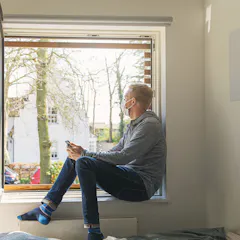
Good ventilation can reduce the risk of catching coronavirus. An environmental engineer explains how to know if enough outside air is getting into a room and what to do if ventilation is bad.
Top contributors
-

Adjunct Professor of Architecture, University of Technology Sydney
-
Professor, Systems and Computer Engineering, Carleton University
-
Emeritus Professor, Faculty of Science, University of Technology Sydney
-
Adjunct Research Professor and Lecturer, Systems and Computer Engineering, Carleton University
-
Scientia Professor of Economics, UNSW
-
Professor of Public Health, University of Toronto
-
Professor of Global Biosecurity, NHMRC L3 Research Fellow, Head, Biosecurity Program, Kirby Institute, UNSW
-
Professor of Mechanical Engineering, University of Colorado Boulder
-
Professor and Chair, Department of Environmental Health, Boston University
-
AI, Medicine and Data Justice Post-Doctoral Fellow, Queen's University, Ontario
-
Professor, Department of Civil & Mineral Engineering, University of Toronto
-
Associate Professor of Physiology, The University of Melbourne
-
Professor, University of Sydney; RMIT University
-
Associate Professor, The University of Melbourne
-
Director, Plants and Environmental Quality Research Group, University of Technology Sydney