

Black mambas were found to be indicators of toxic poisons from heavy metals.
Articles on Black mamba
Displaying all articles
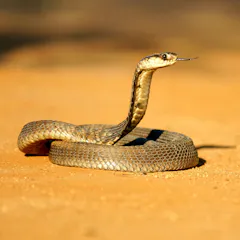
Africa’s most dangerous snakes not only kill their victims, they can also destroy skin, muscle, and even bone. New drugs could limit these wounds.
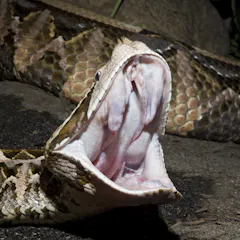
New climate change modelling has found that as the earth heats up, venomous snake populations in Africa are likely to move across borders in search of places to live.
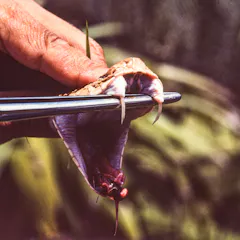
By reporting this new way that future antivenoms can fail, the research has highlighted a problem with current antivenom testing recommendations.
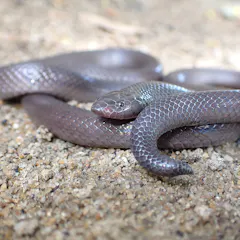
Even by conservative estimates, Mozambique’s snakebite figures are far higher than previously thought.
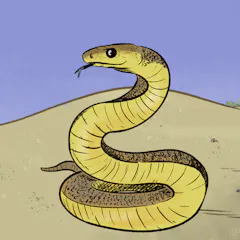
In the blue corner is the extremely venomous Black Mamba – top snake of Africa – and in the red corner is the muscular Inland Taipan – Australia’s alpha snake.

Not much is known about the pathology of trauma of black mamba bites – that is, what the black mamba’s toxin does, physically, inside a victim’s system.
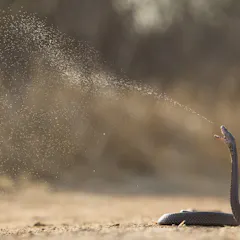
The best cure against a snakebite is to avoid being bitten at all. Here is what you need to know about snakebites, antivenom, and what you need to do if bitten.
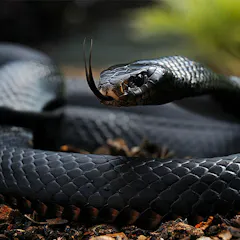
One way to tackle the snakebite antivenom crisis may be through biotechnological innovation to make antivenoms more cost-effective, easier to produce, and more efficacious against snakebites.
Top contributors
-

Professor & Head of Section at the Department of Biotechnology and Biomedicine, Technical University of Denmark
-
PhD Student Department of Bio and Health Informatics, Technical University of Denmark
-
Postdoctoral researcher, Department of Biotechnology and Biomedicine, Center for Antibody Technologies, Technical University of Denmark
-
Professor of Macroecology and Macroevolution, Universidade Federal de Sergipe
-
Researcher at Instituto Clodomiro Picado, Universidad de Costa Rica
-
Research Fellow and Co-head, Australian Venom Research Unit, The University of Melbourne
-
Lecturer in Pharmacology, Lancaster University
-
Lecturer, Lúrio University
-
Senior Specialist, University of Pretoria
-
Director of Centre for Snakebite Research & Interventions, Liverpool School of Tropical Medicine
-
Emeritus Professor, Instituto Clodomiro Picado, Universidad de Costa Rica
-
Pharmacist, PhD, at the Danish Poisons Information Center (GIFTLINJEN), Department of Anaesthesiology, Copenhagen University Hospital
-
Post-doctoral fellow the HerpHealth lab, office 218, Building G23. Unit for Environmental Sciences and Management, North-West University; University of KwaZulu-Natal