
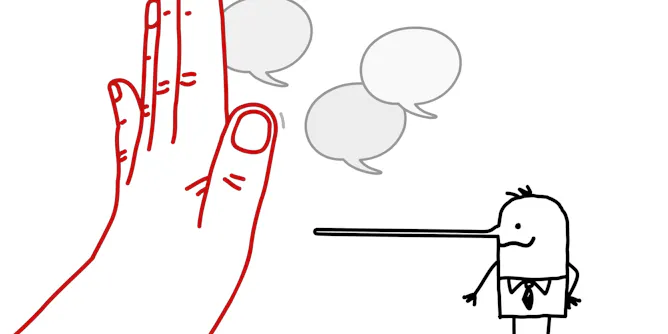
A social psychologist explains how to avoid being misled, and how to prevent yourself – and others – from spreading inaccurate information.
Articles on Vaccine misinformation
Displaying 41 - 56 of 56 articles
A national coalition of scientists, communicators and health experts is empowering Canadians to work together against online misinformation about COVID-19 and COVID-19 vaccines with #ScienceUpFirst.

Even if you’re vaccinated, you still need to come forward for COVID testing, even if you have the mildest symptoms.

Vaccine hesitancy will not go away fast. In fact, there are parallels in the physical world to how quickly or slowly an object returns to its normal state.
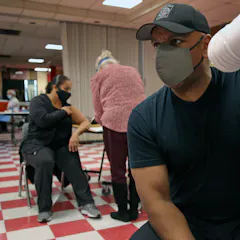
New guidelines take a broad definition of who can apply for a religious exemption to vaccinations. A lot will hinge on what constitutes ‘undue hardship’ to the employer.

Prominent ‘danger’ signs are needed online to warn people about misinformation.

Calling out false information on social media may do more harm than good.
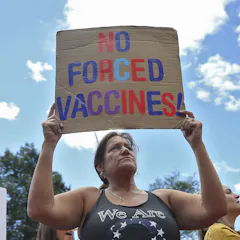
From 2017 to 2019, Twitter users in the United States saw many tweets related to vaccination but only rarely encountered anti-vaccine content and almost never saw content from bots.
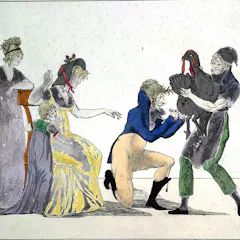
The history of anti-vaccination theories can help us understand how such claims capture a popular following. The same misinformation used against 19th century smallpox vaccine is still in use today.
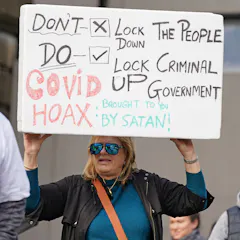
When it comes to COVID-19 misinformation, not all nations are the same. Some are peddling a larger variety of myths than others - and each seems to have its own personal favourite.

From political ideologies, conspiracy theories or “reopen” protests, when faced with uncertainty, we seek reassurance in the face of mortality through efforts at containment.

It’s common to encounter people who are misinformed, but don’t know it yet. What’s the best way to talk to someone else about what they think is true?
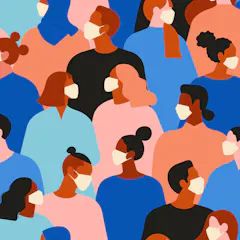
Conspiracy theories bloom in times of uncertainty and foster distrust of medical authorities.
Every day, new “alternative facts” are peddled in the public realm. But misinformation is not solely a modern problem - its origins are as old as humanity.

Anti-vaccine info online might have foreign roots and political aims.
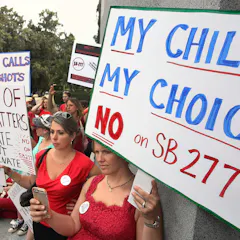
Vaccination rates for children in some parts of California are down, despite a law that narrowed exemptions. Here’s a look at why people refuse to listen to evidence when it comes to the flu vaccine.
Top contributors
-

Assistant Professor of Pediatrics, University of Colorado Anschutz
-
Professor of Law, Villanova University
-
Assistant Professor of Behavioral and Community Health Sciences, University of Pittsburgh
-
Professor Emeritus of Biochemistry, University at Buffalo
-
Assistant Professor of Public Health, University of Pittsburgh
-
Assistant Professor of Epidemiology and Biostatistics, University of Illinois Chicago
-
Professor of Information Systems, Michigan State University
-
Assistant Professor of Pediatrics, University of Pittsburgh
-
Professor of Marketing, The University of Western Australia
-
Associate Professor of Communication Studies, University of Nevada, Las Vegas
-
George Munro Chair in Literature and Rhetoric, Dalhousie University
-
Clinical Associate Professor, Faculty of Medicine, University of British Columbia
-
Associate Professor, Department of Philosophy, Trent University
-
Professor of Education and Psychology, University of Southern California
-
Associate Professor in Social Psychology, School of Psychology, University of Nottingham