

Millions of Americans rely on this network of federally funded health clinics for their primary care.
Articles on US budget
Displaying 1 - 20 of 52 articles

Careful research into public information and in-depth interviews has shown the scale of personnel cuts at the Environmental Protection Agency.
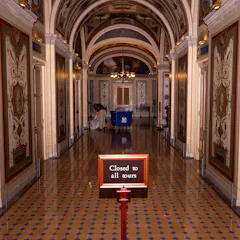
A study of the 2013 shutdown that lasted 16 days revealed long-term negative effects on federal workers and led to weakened government performance.
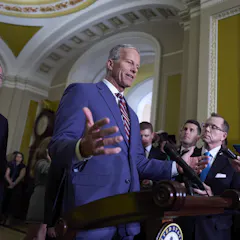
By using reconciliation, which was originally intended to rein in deficits, Republicans can pass the bill with a simple majority vote. But analysts expect it to lead to larger deficits.

The program is a crucial source of funding, particularly in small towns and rural America, where privately raised cultural heritage funds are harder to come by.
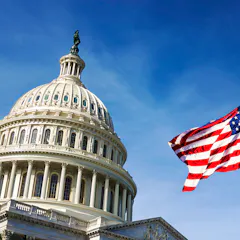
US government debt is soaring and foreign investors are getting nervous. We don’t really know where the tipping point is.

Society as a whole can benefit from programs that protect kids because the harms experienced in childhood can last a lifetime.
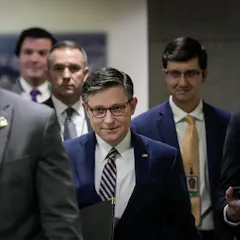
The threat to shut down the federal government to attain political goals appears to be an important factor in the budget negotiations.
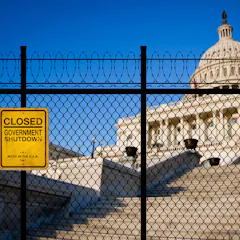
Shutting down the government won’t help reduce the deficit. Here’s what would.
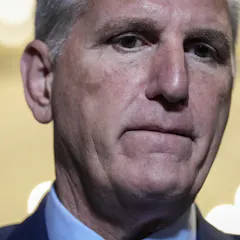
An expert on Congress helps untangle the mess that is Kevin McCarthy’s life as speaker of the House right now.

How will the House vote on the deal negotiated by the White House and GOP leaders? If they reject it, there are political as well as huge economic risks to debt standoffs in Congress.
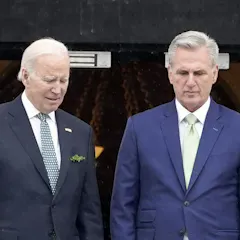
Research shows that leaders who can embrace competing demands and focus on the long term are more likely to succeed.

The program’s expenses are rising rapidly as baby boomers retire and health care costs grow.
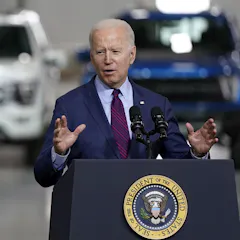
To cut enough greenhouse gas emissions, the world will need technologies that are still being developed, particularly for industries that are tough to clean up, like cement, steel and shipping.

The Pentagon has spent more than $800 billion on military operations in Iraq. But that doesn’t include money needed to care for veterans, rebuild the country or pay interest on war debt.
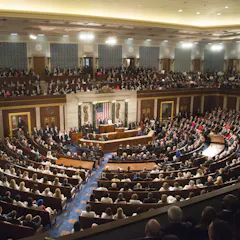
Even if other parts of the federal government shut down, Congress could – and would have to – keep working. A legal scholar explains why and how that is possible.

Missiles that fly 3,000 mph or faster – much faster than the speed of sound – are the next generation of high-technology weapons.

The budget line known as “decisions taken but not yet announced” points to $9 billion of unannounced tax cuts.

A Trump administration proposal to merge the federal departments of Labor and Education could spell doom for the liberal arts, an education scholar asserts.

Money always seems tight for university scientists. A sociologist conducted hundreds of interviews to see how they think about funding sources and profit motives for basic and applied research.
Top contributors
-

Professor of Public Policy (retired), University of Virginia
-
Daniel Patrick Moynihan Senior Lecturer in Public Policy and Public Finance, Harvard Kennedy School
-
Professor of Political Science and Affiliate Professor of Public Policy, University of Maryland, Baltimore County
-
Professor in The Division of Global Affairs and The Department of Political Science, Rutgers University - Newark
-
Assistant Professor, Miller Center, University of Virginia, and US Studies Centre, University of Sydney
-
Associate Professor of Finance, Northwestern University
-
Professor of Politics, University of California, Santa Cruz
-
Associate Professor of Accounting, University of the Pacific
-
Clinical Professor of Law, University of Chicago
-
Professor of Energy and Environmental Policy, Director of the Climate Policy Lab and Center for International Environment and Resource Policy, The Fletcher School, Tufts University
-
Assistant Professor of Public Policy, University of Maryland
-
Professor of Political Science, California State University, Long Beach
-
Associate Professor of Social Work, New York University
-
Senior Lecturer, MIT Sloan School of Management
-
Eminent Scholar and Professor of Economics Emeritus, Auburn University