
During a year of extraordinary uncertainty, workers built resilient networks within and across boundaries and distance. An anthropologist explains how these clusters and long-distance ties help people cope, organize and adapt.
Articles on US government shutdown
Displaying 1 - 20 of 67 articles

Billions of dollars have likely been wiped off the US gross domestic product.
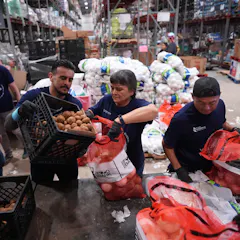
As the government shutdown wore on in October, calls began surging, signaling that Americans are very concerned about paying their bills and feeding their families.
House speakers have had the power to determine when the oath is administered, and courts have been reluctant to weigh in on that influence.
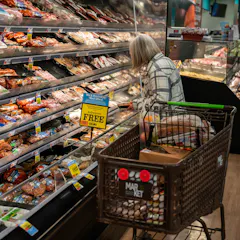
Nearly 60% of Americans enrolled in the Supplemental Nutrition Assistance Program are either children under 18 or adults who are 60 or older.
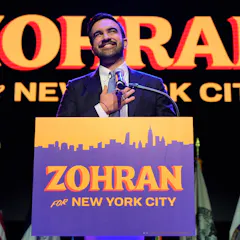
The Republicans have tried to blame Democrats for the shutdown. But in US politics, the president owns the economy, for better or worse.
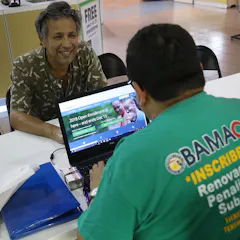
Florida relies on marketplace plans far more heavily than any other state. If subsidies are eliminated, health insurance will be unaffordable for many Floridians.
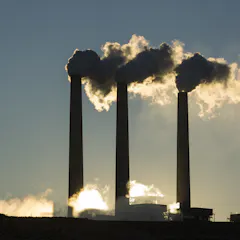
As soon as the 2018-2019 shutdown began, coal-fired power plants started emitting more particulate matter pollution. And when the inspections resumed, the levels dropped back to normal.

Federal funding cuts are destabilizing many food pantries, homeless shelters, mental health clinics and other nonprofits, threatening the services they provide.

Air traffic controllers are considered essential workers and required to work without pay during the shutdown, but there are reports some are calling in sick in greater numbers than usual.

The triple whammy of deep staff cuts, shutdown furloughs and the expiration of an information-sharing law leaves national cybersecurity in a perilous state.
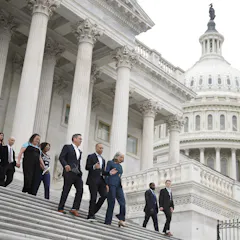
As the battle for health care plays out in Washington, the shutdown itself could also make it harder for Americans to get the care they need.

Uncertainty, a stumbling labor market and major structural problems are all weighing down the economy. And Fed rate cuts may not help much.
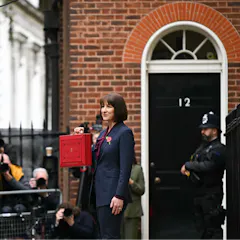
With hundreds of thousands of federal employees furloughed as part of the latest US government shutdown, a scholar explains why such events never occur in the UK.
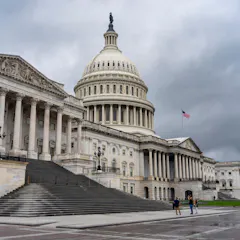
Amid negotiations, Democrats may feel like they finally have some leverage against the Trump administration, according to a political science scholar.
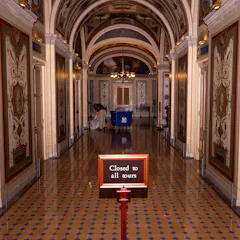
A study of the 2013 shutdown that lasted 16 days revealed long-term negative effects on federal workers and led to weakened government performance.
Congress has until March 14 to pass a spending bill that will keep the lights on in Washington.
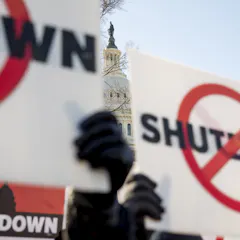
As Democrat and Republican leaders negotiate a potential spending deal to fund the government, the partial shutdown of 2013 offers some clues about the economic impact should they fail.
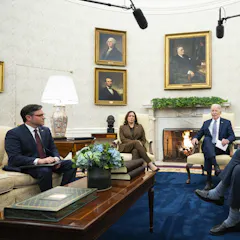
Congress is again on the brink of a government shutdown less than four months after the last close call.
The threat to shut down the federal government to attain political goals appears to be an important factor in the budget negotiations.
Top contributors
-

Associate Professor of Finance, Northwestern University
-
Professor of Public Policy (retired), University of Virginia
-
Research Fellow, American University School of Public Affairs
-
Associate Professor of Business, Boston University
-
Associate Professor of Public Policy and Administration, Florida International University
-
Hurst Senior Professorial Lecturer, Co-Director Transatlantic Policy Center, American University School of International Service
-
Associate Professor of Political Science, Northwestern University
-
Assistant Professor, Miller Center, University of Virginia, and US Studies Centre, University of Sydney
-
Associate Professor in American Politics and Foreign Policy, US Studies Centre, University of Sydney
-
Senior Fellow, Government Affairs Institute, Georgetown University
-
Associate Professor in American and International Politics, University of Birmingham
-
Professor of Physical, Theoretical and Computational Chemistry, Michigan State University
-
Assistant Professor of Management, Mississippi State University
-
Professor of Teaching of History, Wayne State University
-
Professor in American Politics, The University of Melbourne