
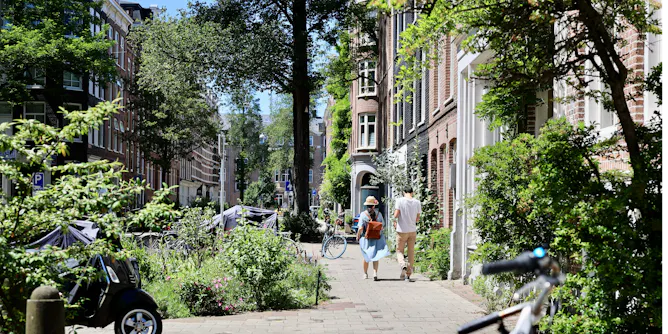
In 2015, 6,700 premature deaths were caused by urban heat – this can be reduced by a third by planting more trees.
Articles on Urbanisation
Displaying 61 - 80 of 169 articles
East Africa is one of the fastest urbanising regions in the world, but it’s still in the early phases. There’s a big opportunity to get the region’s cities right.
Successive Japanese administrations have tried – and largely failed – to reduce urban overcrowding for 70 years.

Quite how to gauge the size of a city – or where one ends and the next begins – is getting harder to determine. The 21st century belongs to the limitless city.
New towns have had a better track record in places of rapid economic and population growth, such as east Asian countries.

Harnessing the combined effect of trade and urbanisation could significantly boost the economies of African countries.
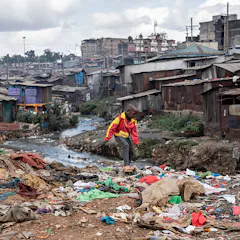
Cities have the authority and duty to consider children’s rights as part of climate change responses.
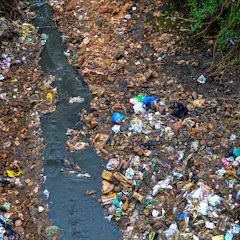
The country’s urban centres where unvaccinated people live in crowed settlements are key risk areas.
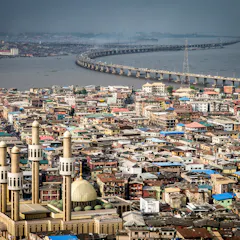
Governing a city like Lagos, with deep-seated socioeconomic inequalities, is not a job for the fainthearted.
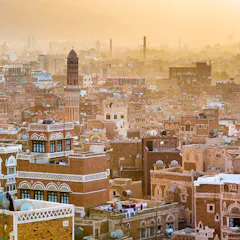
Naturalistic thinking has long helped humanity grapple with complex urban predicaments. What role can it play today?

Cave-specific conservation and protection actions are essential to protect cave habitats for the continued survival of bats, and ultimately, the well-being of humans.
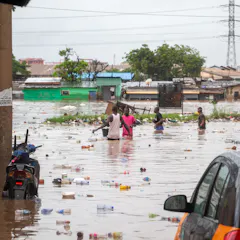
The fast growth of the metropolis and the city’s political significance, to its large informal economy and the challenges residents face.

The changing dynamic between Borneo’s pigs and Indigenous people is a powerful reminder of the fragility of the human-nature connection.
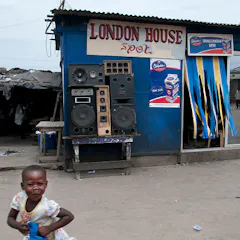
Ghanaian city authorities are focused on addressing problems of poverty, education and health rather than managing green spaces in slums
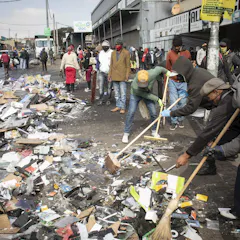
Much of the commentary on the July riots, which cost over 300 lives and billions of rands in damage to the economy, has neglected the long history of violent protests in the country.
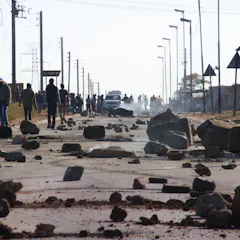
The practice of using electricity revenue surpluses to fund other municipal services is running out of road.
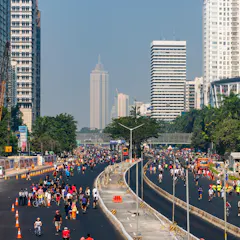
The way we build our cities is adversely affecting our health, and, in particular, our hearts. Thinking of urban planners as health professionals could change that
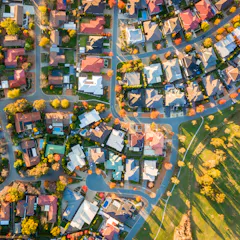
New research indicates that people in urban areas, on average, have the smallest carbon footprints, and those living in the suburbs the highest.
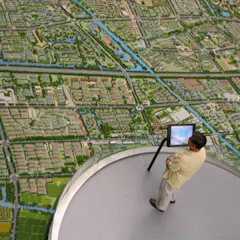
The pandemic has accelerated some urban trends and reversed others, while focusing attention on the vulnerabilities of cities. The old planning certainties will have to be revisited.
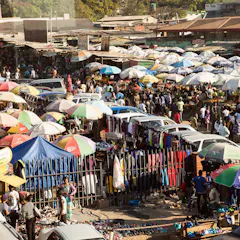
As the global South transitions to a predominantly urban future, food offers a way to understand the role of cities in future development.
Top contributors
-

Research associate at African Centre for Cities, University of Cape Town
-
Professor School of Architecture and Planning, University of the Witwatersrand
-
Associate Professor at the Southern Centre for Inequality Studies, University of the Witwatersrand
-
Teaching Assistant Professor, University of Pittsburg and Visiting Associate Professor, The University of Osaka, University of Pittsburgh
-
Research Active Lecturer, Discipline of Psychology, Charles Darwin University, Charles Darwin University
-
Research Associate, MRC Epidemiology Unit, University of Cambridge
-
Guest Lecturer, Climate Change Economics, University of Oxford & Director, Climate and Sustainability Programme, ODI Global
-
Distinguished Research Fellow, Human Sciences Research Council
-
Head of Urbanisation and Wellbeing, African Population and Health Research Center, African Population and Health Research Center
-
Medical Entomologist at the School of Biological Sciences, University of Nairobi
-
Research Scholar, Center for Sustainable Urban Development, Climate School, Columbia University
-
Associate professor, Uppsala University
-
Professor, University of the Witwatersrand
-
Professor of Development Planning, UCL
-
Assistant professor, University of San Francisco