
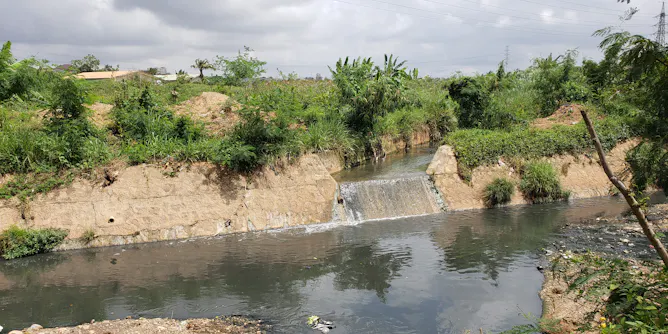
The inability of city authorities to enforce land-use regulations has allowed people to carry out ecologically unfriendly activities along the water bodies.
Articles on Urbanisation
Displaying 41 - 60 of 168 articles

Due to limited interactions with the police, Kenyans in rural areas are less likely to see the police as relevant actors.

From lit-up orbs to bland office blocks, cities are full of buildings that people do or do not like. What really shapes how they live – for better or for worse – is urban planning.

Puddles are an often-ignored but crucial habitat for rare and unusual wildlife.
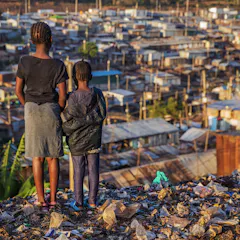
The impact of housing quality extends beyond health to education and subsequent economic outcomes, particularly for children.
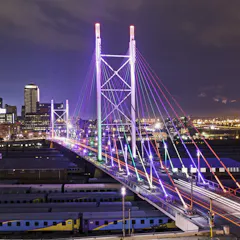
If the numbers are correct, and it’s not certain that they are, Cape Town may have overtaken Johannesburg as the largest city in South Africa.
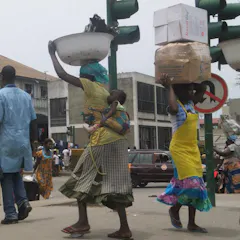
The city of Accra has no plan to tackle pedestrians’ behaviour.
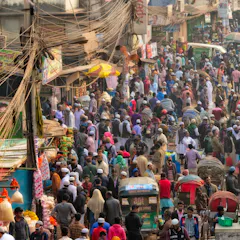
What makes a city workable to many people is access to informal labour markets, cheap travel options, flexible housing and rental arrangements.
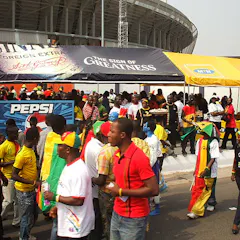
Ghana’s implementation of key population policies has not been consistent.
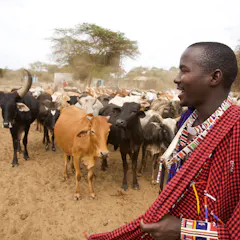
A world without pastoralists would not only be a poorer place, but we would lose an important lifeline to our collective future.
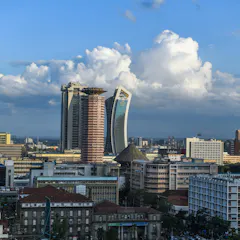
Kenya’s experienced fast population growth and urbanisation - this has brought about some big challenges.
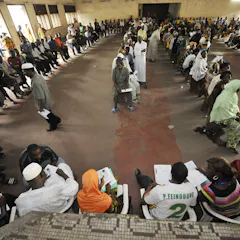
Many countries in West Africa do not have up to date census surveys.
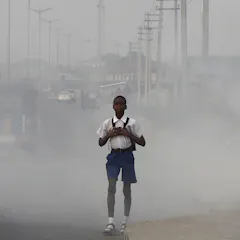
Air pollution accounts for many deaths in Africa yearly. However, this may change if people learn to protect themselves and hold their leaders accountable.
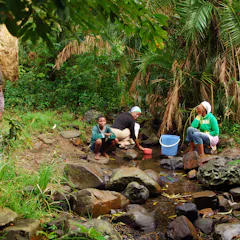
Experiencing nature helps people in times of joy and pain. However, inequity of access to green spaces means that South Africans cannot enjoy nature when they need to.
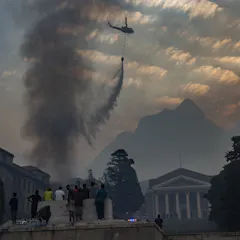
Autumn extreme fire weather around Cape Town in South Africa has become 90% more likely in a warmer world.

If the Earth were ever subsumed into a single cityscape, it would collapse under the weight of its own ecological footprint.
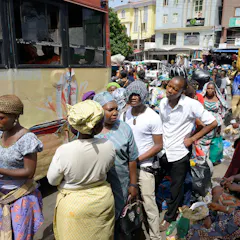
Cities are increasingly unsafe and unhealthy. Family planning can help curb unsustainable urbanisation.

This mosquito spreads very fast to new areas and can adapt to various climatic conditions, unlike the non-invasive malaria vectors.

Urban expansion in Sub-Saharan Africa and the need for daily mobility

In 2015, 6,700 premature deaths were caused by urban heat – this can be reduced by a third by planting more trees.
Top contributors
-

Research associate at African Centre for Cities, University of Cape Town
-
Professor School of Architecture and Planning, University of the Witwatersrand
-
Associate Professor at the Southern Centre for Inequality Studies, University of the Witwatersrand
-
Teaching Assistant Professor, University of Pittsburg and Visiting Associate Professor, The University of Osaka, University of Pittsburgh
-
Research Active Lecturer, Discipline of Psychology, Charles Darwin University, Charles Darwin University
-
Research Associate, MRC Epidemiology Unit, University of Cambridge
-
Guest Lecturer, Climate Change Economics, University of Oxford & Director, Climate and Sustainability Programme, ODI Global
-
Distinguished Research Fellow, Human Sciences Research Council
-
Head of Urbanisation and Wellbeing, African Population and Health Research Center, African Population and Health Research Center
-
Medical Entomologist at the School of Biological Sciences, University of Nairobi
-
Research Scholar, Center for Sustainable Urban Development, Climate School, Columbia University
-
Associate professor, Uppsala University
-
Professor, University of the Witwatersrand
-
Professor of Development Planning, UCL
-
Assistant professor, University of San Francisco