
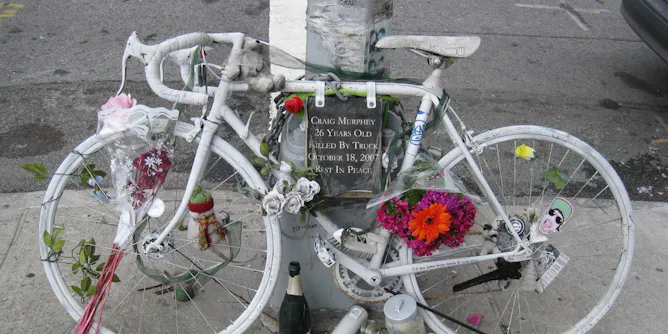
US cities were designed and engineered around cars. Now some are working to increase walking and biking, but the shift isn’t easy.
Articles on Urban policy
Displaying 21 - 40 of 113 articles
Minorities are driving the bicycling boom, but bike infrastructure investments often neglect their needs. A new study explores what riders in low-income and minority neighborhoods want.

Under 10 percent of new Citi Bike and Divvy bike docks are sited where residents suggested using interactive online maps, a new study shows. But that doesn’t mean city officials weren’t listening.

Rising e-commerce means more delivery trucks and urban gridlock. Lockers at transit centers, where carriers can leave packages for people who live or work nearby, are a potential solution.
Hundreds of US cities have pledged to meet the carbon reduction targets in the Paris climate accord. Now it’s time for them to start showing results.
How smart are our cities now? In Queensland, a study of all 78 local government areas reveals major gaps between the ten leading the way in becoming smart cities and the rest of the state.
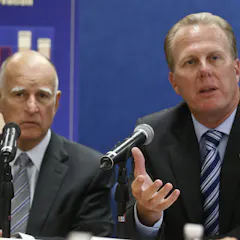
They may not say ‘climate change,’ but many Republican US mayors support clean energy, jobs in renewable industries, and other climate-friendly policies. And so do majorities of their constituents.
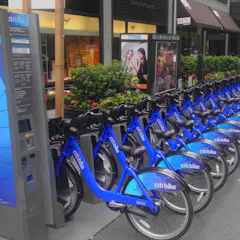
Dozens of US cities have launched bike-share programs in the past decade. There have been bumps – critics want wider access, and cities want bikes stored out of the way – but bike sharing is on a roll.

Governments have started to see automation as the key to brighter urban futures. But what will this look like?
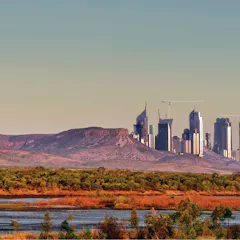
Business-as-usual projections assume our four biggest cities must absorb three-quarters of Australia’s population growth over the next 30 years. Might new cities be a better way to deal with it?

Even in cities with good public transportation, some areas can be ‘transit deserts,’ where demand exceeds supply. Living in these zones makes it hard to access good jobs, health care and other services.

Given the challenges Australian cities face, the need for urban planning based on solid research is greater than ever. Sadly, when it comes to research funding, planning is at the back of the queue.
They don’t all support the same strategies for coping with it, but US mayors increasingly see climate change as a pressing urban challenge.

Ségou in Mali has successfully developed its urban cultural economy in ways that’s inclusive, sustainable and context-sensitive.
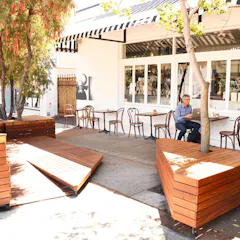
Many parklets are privately funded, but these projects often allow for more public participation than more traditional public spaces.

The State of Australian Cities Conference begins in Adelaide today. In major cities across the nation, there’s a stark contrast between lofty planning goals and the sprawling reality on the ground.
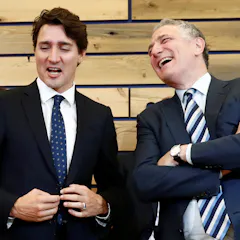
Toronto has entered a joint venture with a Google sister company to create a high-tech urban development area. The goal is to ‘re-imagine cities from the internet up’ – Google’s internet, of course.
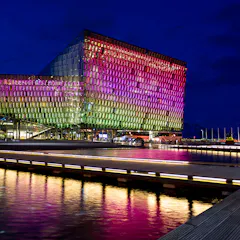
Digital media on building facades are changing the appearance of our cities. This creates a need for new urban policy guidelines to retain architectural quality and promote social engagement.
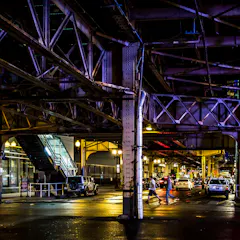
New research shows that noise pollution in US cities is concentrated in poor and minority communities. Beyond regulating airplane noise, the US has done relatively little to curb noise pollution.
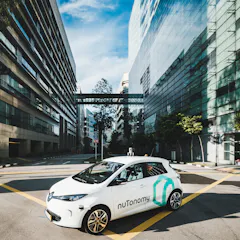
It’s clear autonomous vehicles will disrupt our cities, their land use and planning. Whether they make urban life better or worse depends on how well we anticipate and adapt to their impacts.
Top contributors
-

Professor of Planning, School of Built Environment, UNSW
-
Head of Urbanism and Associate Professor of Urban Studies, School of Architecture, Design and Planning, University of Sydney
-
Professor of Human Geography and Planning, University of Tasmania
-
John Rennie Short is a Friend of The Conversation.
Professor Emeritus of Public Policy, University of Maryland, Baltimore County
-
Assistant Professor of Community and Regional Planning and Director, Urban Information Lab, The University of Texas at Austin
-
Senior Lecturer in Urban Planning & Design, Monash University
-
Professor Sustainability and Urban Governance, RMIT University
-
Professor of Urban Management & Planning, Griffith University
-
Professor of Urban Studies and Planning, Queensland University of Technology
-
Senior Lecturer in Urban and Environmental Planning, Griffith University
-
Adjunct Fellow, School of Earth and Environmental Sciences, The University of Queensland
-
Assistant Professor, Political Science, Boston University
-
Associate Professor of Urban Planning, The University of Melbourne
-
Co-Director, Initiative on Cities, Boston University
-
Research associate, The University of Melbourne