
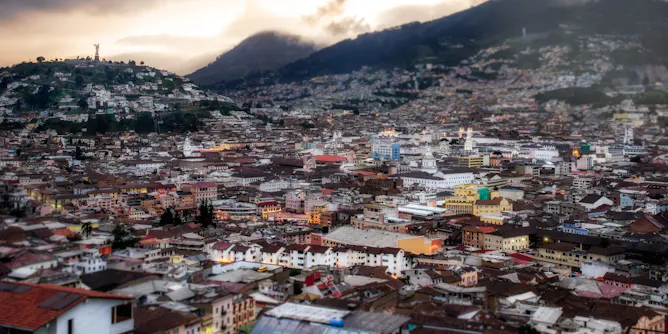
This global conference will set out how cities should develop over the next 20 years, tackling some of humankind’s toughest issues.
Articles on Urban policy
Displaying 61 - 80 of 113 articles
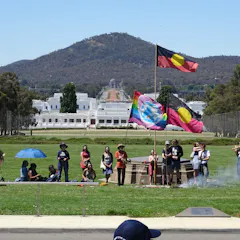
Imagine if we did urban development in a way that honours Indigenous histories, knowledge and relationships with those places.
Like a 5D movie on speed, the city today defies conventional boundaries. This raises new questions about what we imagine to be ‘the city’ – and how we as a democratic community can shape it.
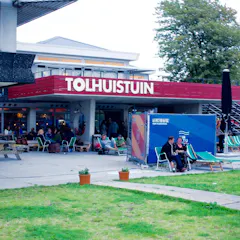
When municipal or state governments join forces with smaller creative communities to shape urban regeneration the results can be far-reaching.

On the same day that London’s legendary Fabric closed permanently, Berlin’s infamous techno club Berghain was granted a tax break.
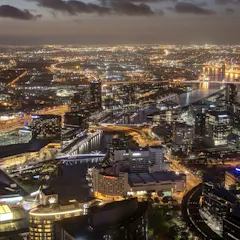
If the sharing economy is here to stay, planners and designers must respond with imagination to spread the positive effects of the tourism economy for the benefit of residents as well as tourists.
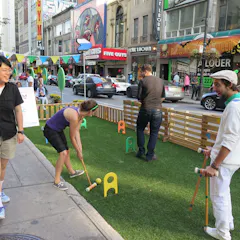
This Friday is the 11th PARKing Day, when people pay a parking meter, then turn the space into a pop-up parklet. It’s a day that invites citizens to rethink the city and their place in it.
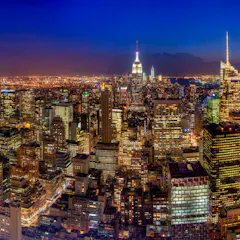
Worldwide real estate makes up 60% of the value of all global assets. But it’s being concentrated into the hands of a wealthy few.
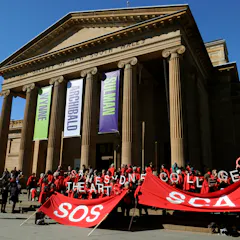
Art schools are emerging globally as very powerful instruments of urban renewal. In a time of transformation, Sydney must learn to tap into the value of having multiple art colleges.
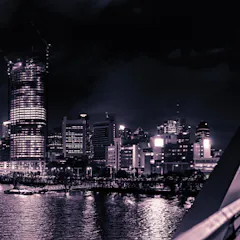
With foresight, we can steer our cities closer to the future we want instead of the futures we fear.
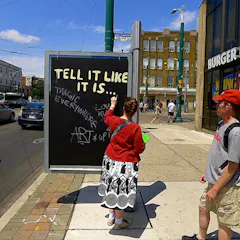
In Australia, a small but growing cadre of residents is experimenting with hacktivism in planning. Giving a voice to real people living in everyday places can help ensure planning meets public needs.

Bigger cities increase wages, output and innovation, but also problems of congestion and pollution. Congestion charges can minimise these problems by dramatically improving traffic flows.

Millions of people need to be confident that suitable public toilets will be available when they leave their homes. A shortage of such facilities is a serious problem for an ageing population.
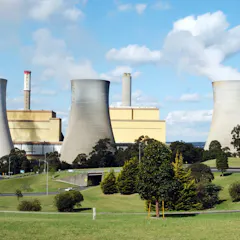
City-centric thinking arguably obscures connections between ‘humans’ and ‘nature’, and ‘urban’ and ‘rural’ or ‘wild’. Growing evidence of the depths of these links is testing the concept of ‘urban’.
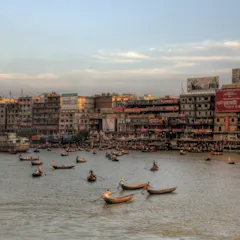
Bringing significant benefits to an emergent middle class, Dhaka’s cultural, economic, environmental and political landscapes are being rapidly but unevenly transformed.

The rhetoric of ‘smart cities’ is dominated by the economic, with little reference to the natural world and its plight. Truly smart and resilient cities need to be more in tune with the planet.
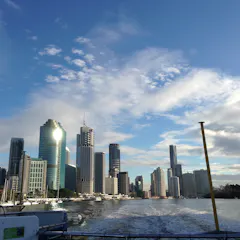
Australia’s Smart Cities Plan largely conveys a limited role for people: they live, work and consume. This neglects the rich body of work calling for better human engagement in smart cities.
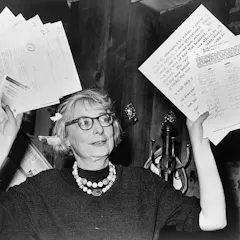
In an age of data-driven urban science, we need to remember how Jane Jacobs gave voice to the multiple languages, meanings, experiences and knowledge systems of a vibrant city.

Cities are home to many different people who will not always agree. We need to learn to embrace public debate as an ongoing, constructive process for working through diverse views and values.
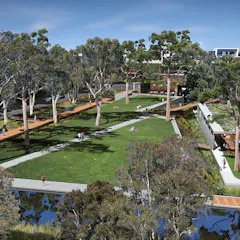
The Green Square urban renewal area – expected to be Sydney’s most densely populated area by 2030 – represents a new paradigm of urban living.
Top contributors
-

Professor of Planning, School of Built Environment, UNSW
-
Head of Urbanism and Associate Professor of Urban Studies, School of Architecture, Design and Planning, University of Sydney
-
Professor of Human Geography and Planning, University of Tasmania
-
John Rennie Short is a Friend of The Conversation.
Professor Emeritus of Public Policy, University of Maryland, Baltimore County
-
Assistant Professor of Community and Regional Planning and Director, Urban Information Lab, The University of Texas at Austin
-
Senior Lecturer in Urban Planning & Design, Monash University
-
Professor Sustainability and Urban Governance, RMIT University
-
Professor of Urban Management & Planning, Griffith University
-
Professor of Urban Studies and Planning, Queensland University of Technology
-
Senior Lecturer in Urban and Environmental Planning, Griffith University
-
Adjunct Fellow, School of Earth and Environmental Sciences, The University of Queensland
-
Assistant Professor, Political Science, Boston University
-
Associate Professor of Urban Planning, The University of Melbourne
-
Co-Director, Initiative on Cities, Boston University
-
Research associate, The University of Melbourne