

Developers will now be responsible for dealing with noise issues from nearby music venues – but it will take real community activism to prevent closures.
Articles on Urban development
Displaying 121 - 140 of 217 articles
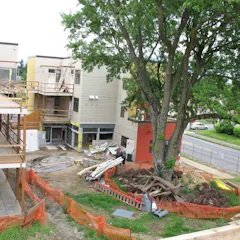
City residents all around the world are getting together to create housing tailored to their needs and budgets, instead of being developed for maximum profit.
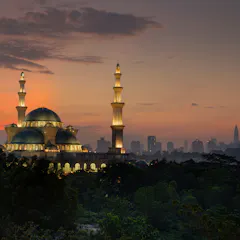
By drawing on common values, faith communities can take a lead in making cities fairer, safer, accessible and affordable for all.

Ségou in Mali has successfully developed its urban cultural economy in ways that’s inclusive, sustainable and context-sensitive.
Toronto has entered a joint venture with a Google sister company to create a high-tech urban development area. The goal is to ‘re-imagine cities from the internet up’ – Google’s internet, of course.
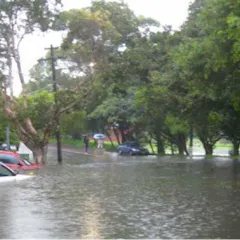
A massive residential development in a flood-prone inner-city suburb sounds like a recipe for disaster. But good urban design can deliver higher density and reduce the flood risk.
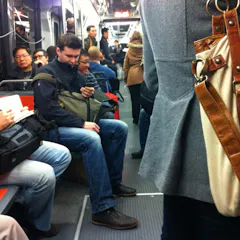
Millions of Americans rely on public transit to get to school, work or stores, but many can’t get the service they need. ‘Uberizing’ transit by offering more options on demand could fill the gaps.
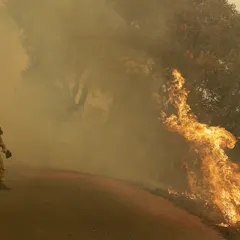
The media and policymakers often say a ‘perfect storm’ of environmental factors cause wildfires but that ignores the role of irresponsible urban planning and development in raising fire risks.

Traditionally, new communities first get hard infrastructure – schools, hospitals, transport – and ‘soft’ social infrastructure comes later. Liveability and public health suffer as a result.
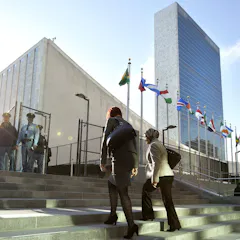
An expert in urban leadership reports from the UN General Assembly’s high-level conference.
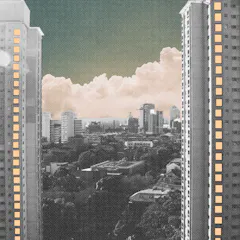
Residents of two high-rise public housing blocks are being given ‘mood lights’ to express how they feel based on their experience of the process of redeveloping their neighbourhood.

A new project documents who uses urban industrial lands slated for redevelopment. It reveals a vibrant but largely hidden sector at the interface between creative industries and small manufacturing.
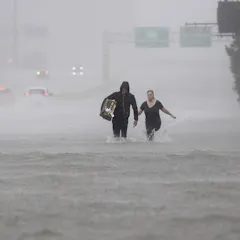
As Hurricane Harvey shows, flooding can happen wherever large storms stall and dumps lots of rain. A new study finds that development is increasing in flood zones inland, where people may not think they are at risk.
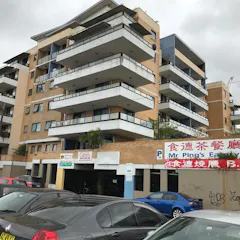
The inexorable logic of the market will create suburban concentrations of lower-income households on a scale hitherto only experienced in the legacy inner-city high-rise public housing estates.
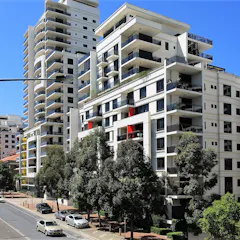
Many new housing developments are being built along busy roads and rail lines, but lack design features that would reduce occupants’ exposure to harmful traffic pollution.
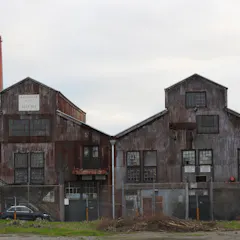
Cleaning up and reusing contaminated sites, known as brownfields, can create jobs and promote economic growth. But it also can drive gentrification that prices out low-income residents.

Achieving the goal of sustainable cities depends on rolling back the market after decades of privatisation and deregulation.
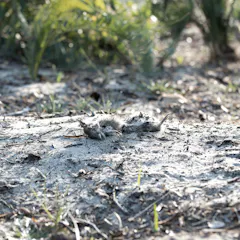
More than 50 million birds, mammals and reptiles are thought to be killed each year in New South Wales and Queensland by the removal of native vegetation, and planning laws are failing to protect them.
A rail link is a big step towards transforming transport access and land use in ways that will enable a much bigger city to remain liveable. And Melbourne can learn from Sydney about this.
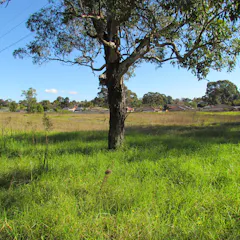
New research shows many good intentions for creating urban environments that promote good health were not carried through. The solutions start with engaging more closely with residents themselves.
Top contributors
-

Head of Urbanism and Associate Professor of Urban Studies, School of Architecture, Design and Planning, University of Sydney
-
Research Fellow, School of Communication, Society & Culture, Macquarie University
-
Professor of Sustainability, Curtin University
-
Vice Chancellor’s Senior Research Fellow, School of Global, Urban and Social Studies, RMIT University
-
Professor of Architecture and Urban Design, The University of Melbourne
-
Teaching Assistant Professor, University of Pittsburg and Visiting Associate Professor, The University of Osaka, University of Pittsburgh
-
Associate Professor in Urban Infrastructure and Policy, UCL
-
Deputy Director, Australian Urban Design Research Centre, The University of Western Australia
-
Research Active Lecturer, Discipline of Psychology, Charles Darwin University, Charles Darwin University
-
Professor, University of Canberra
-
Professor, City Futures Research Centre, Faculty of the Built Environment, UNSW
-
Professor of Urban Resilience and Pro Vice-Chancellor, University of Bristol
-
Senior Lecturer in Digital Society, Western Sydney University
-
Associate Professor in Wildlife Conservation, Edith Cowan University
-
Professor of Environmental Management, The University of Queensland