
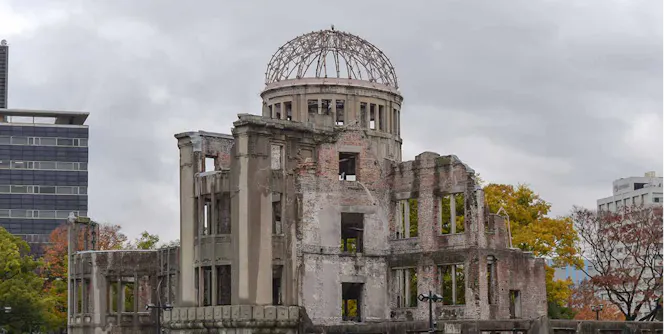
World heritage sites play an essential role in advancing Unesco’s goals, but more foresight is needed to imagine and enable promising strategies that address the needs of future generations.
Articles on UNESCO
Displaying 41 - 60 of 143 articles

Urban farming is an ancient tradition in Bamberg, and the gardeners’ district is an integral part of the World Heritage City, growing food, promoting sustainability and fighting climate change.
Protecting the continent’s historical artefacts requires political will from governments – and a reawakening of cultural conscience among Africans.
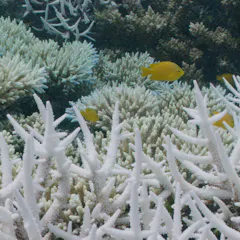
The reef is suffering environmental conditions that are so extreme, scientists are struggling to simulate these scenarios in laboratories.
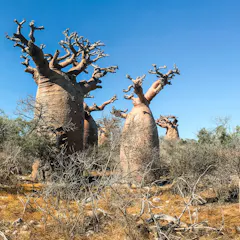
Many of Africa’s forests are unknown to the public at large, yet so fascinating and important.

When the British government expelled Chagos Islanders from their homeland, it put a unique culture at risk of erasure.
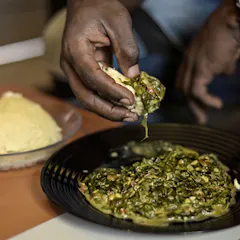
Facing a growing bias against indigenous crops, Kenyan researchers set out to showcase the value in local options - and set a global standard.
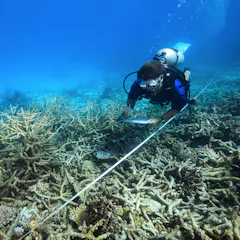
Saving the Great Barrier Reef is not about throwing money at it – what matters is how the dollars are spent.

Making scientific research free to read could bolster collaboration and research on solving problems such as pandemics, climate change and more. The UN has taken a step towards realising this goal.

Symbolic recognition will boost the marketability of the Valencian delicacy.
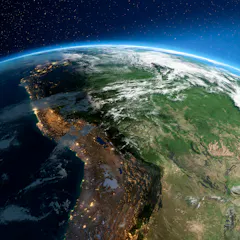
We need to guarantee that the benefits of sciences are shared between scientists and the general public, without restriction. Peru and Brazil are leading the way.

Michelle Grattan discusses the political week that was with Professor Paddy Nixon.
Australia has suggested a UNESCO recommendation to list the Great Barrier Reef as ‘in danger’ was motivated by politics. This is hardly the first such accusation levied at the organisation.
Sussan Ley and Terri Butler on the Great Barrier Reef being ‘in danger’
Michelle Grattan discusses the recommendation by UNESCO that the Great Barrier Reef be classified as "in danger" with Sussan Ley and Terri Butler
Australia’s new Deputy Prime Minister Barnaby Joyce, climate policy and UNESCO
Michelle Grattan discusses politics with politics + society editor, Amanda Dunn
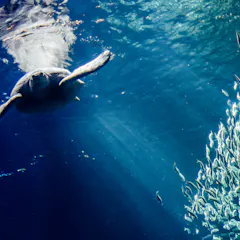
The ocean moderates climate change by absorbing CO₂ emissions, hosts valuable biodiversity and provides food to millions, but all of these services are threatened by pollution and human activities.
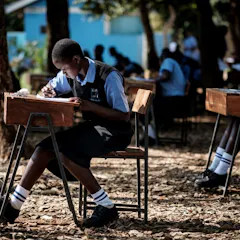
Far too often it is still an education for some and not for everybody.
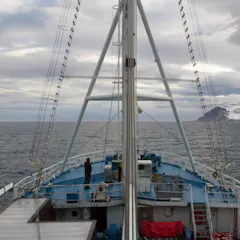
The UN’s Ocean Decade demands collaborative action across disciplines, nations, communities, and generations, and its success relies on diverse voices that represent current and future ocean leaders.
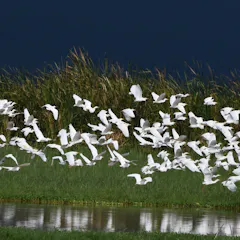
Biosphere reserves are the living labs in which people and nature learn how to live and thrive together. Four pilot sites in Africa show the programme’s promise.

Open-educational resources are critical for increasing global learners’ access to education during COVID-19 and beyond. Blockchain technology can address concerns about plagiarism in resources.
Top contributors
-

Adjunct Principal Research Fellow, College of Science and Engineering, James Cook University
-
UNESCO Chair on Climate Change Variability of Natural and Cultural Heritage and Professor in Physics, James Cook University
-
Professorial Fellow, University of Canberra
-
Assistant Professor, University of Kinshasa
-
Honorary Fellow in Economics, The University of Queensland
-
Professor in Conservation Science, School of the Environment, The University of Queensland
-
Emeritus Professor, Faculty of Law, Humanities and the Arts, University of Wollongong
-
Professor of International Politics, Deakin University
-
Professor of Marine Conservation, University of Exeter
-
Professorial Fellow, ARC Centre of Excellence for Coral Reef Studies, James Cook University
-
ARC Laureate Professor, The University of Melbourne and James Cook University, The University of Melbourne
-
Associate researcher, University of the Witwatersrand
-
-
Professor, School of the Environment, The University of Queensland
-
Professor of Environmental Management, The University of Queensland