

Commitments to Indigenous health research cannot be clawed back as part of proposed dismantling of equity, diversity and inclusion criteria for federal research funding.
Articles on UNDRIP
Displaying 1 - 20 of 33 articles

In its current form, safe drinking water legislation would weaken key legal provisions, particularly those related to rights and governance for First Nations.

For Canada’s regulatory reform proposals to work, federal leaders need to stick to tight timelines even when faced with lawsuits and provincial pushback.

The Nuclear Waste Management Organization has proposed building a nuclear waste repository at a site in northern Ontario. But nearby First Nations say they weren’t consulted.
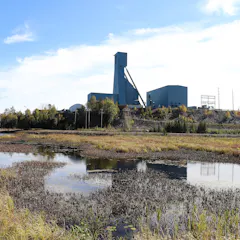
Canada’s accelerated approach to mining raises major concerns for both the environment and Indigenous rights.

We tend to view private property as a sacrosanct, never-changing principle. But property rights are legal constructs — never absolute and always evolving.

New Closing the Gap data show Australia is on track to meet just four targets, while another four are getting worse. It’s time for a different approach.

Since the Voice, policies to improve the lives of First Nations people haven’t gotten much traction. What are the major parties promising this election?
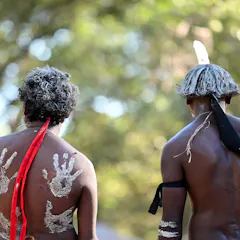
Anthony Albanese has distanced himself from a truth telling commission in favour of economic empowerment for Indigenous people. You can’t have one without the other.

The recent title lands agreement between British Columbia and the Haida Nation is historic and inspiring, but also long overdue in light of decades of rulings by international human rights bodies.
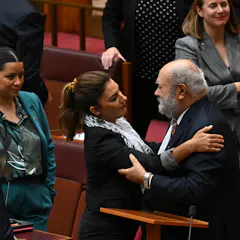
In the aftermath of a disappointing Voice referendum, Indigenous politicians are looking to the United Nations Declaration for the Rights of Indigenous Peoples as a potential way forward.

Saskatchewan’s provincial government must work with Indigenous nations on a shared vision for the future that is more likely to withstand the tests of time and litigation.

Indigenous economic development corporations can generate income for communities and support the transition to clean energy.
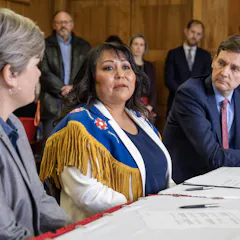
New agreements in B.C. provide economic compensation for land restoration activities to several First Nations and limit new oil and gas development projects.

By starting their own entrepreneurial and developmental projects, First Nations are working toward economic prosperity for their communities and furthering reconciliation.

As protected and conserved areas increase, an equity-based approach that respects Indigenous rights can help bring the transformative changes we need to halt and reverse biodiversity loss.

To fully implement the UN Declaration on the Rights of Indigenous Peoples, Canada must engage in genuine and inclusive law reform.

To fully understand what led to the stabbings in James Smith Cree Nation, we need to look at how the legacy of settler colonial violence impacts Indigenous communities.
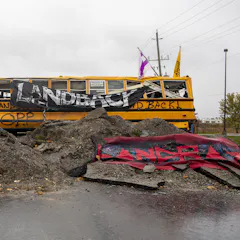
Settler Canadians have a responsibility to build respectful, reciprocal relationships with Indigenous nations on our shared geographic space. This relationship starts with land restitution.

Indigenous filmmakers are changing the world by telling their own stories in their own ways.
Top contributors
-

UN Expert Mechanism on the Rights of Indigenous Peoples (EMRIP) and Professor in Political Science, Global Affairs and Public Policy, University of Toronto
-
Assistant professor in Indigenous Governance, École nationale d'administration publique (ENAP)
-
Senior Lecturer of Indigenous Studies, Indigenous Education and Research Centre, James Cook University
-
PhD Student, University of Guelph
-
Executive Co-Director, UNU Hub on Empowering Communities to Adapt to Environmental Change, United Nations University; University of Calgary
-
Grand Council Chief of the Anishinabek Nation
-
Adjunct professor, Monash University
-
Director of Environment for Chiefs of Ontario
-
Associate Professor of Economics, University of Manitoba
-
Professor; Director, Indigenous Rights and Resource Governance Research Group; Faculty at the Balsillie School of International Affairs, Wilfrid Laurier University
-
Associate Professor of Geography, University of Guelph
-
Research Associate, Finding Flowers Project, Faculty of Environmental Studies, York University, Canada
-
Vice President Research and Public Policy, Canadian Council for Aboriginal Business
-
Assistant Professor, College of Law, University of Saskatchewan
-
Chair of the Board for Community Circle