

While his appointment as UN Secretary-General was a huge breakthrough, Kofi Annan also led the organisation through some of its ugliest moments.
Articles on UN sustainable development goals (SDG)
Displaying 161 - 180 of 287 articles

After cascading ecological catastrophes in the 90s, China spent 20 years seriously investing in sustainability. Now that effort is paying off.

A new report reveals Australia is lagging behind most wealthy nations in working towards the globally agreed goals. It’s performing particularly badly on climate and environmental indicators.
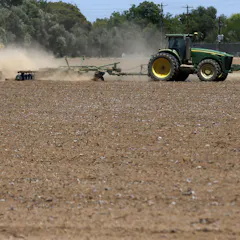
Desertification is a problem of global proportions. If action isn’t taken now, it will accelerate and fuel further migration and conflict.

South Africa has made significant progress with some of the sustainable development goal targets. But with others its lagging far behind.
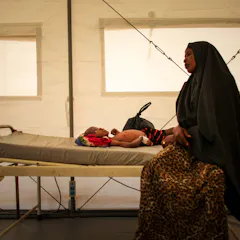
Many countries still don’t openly and comprehensively address sexual and reproductive health.

Australia’s business-as-usual plan will not be enough to achieve our 2030 Sustainable Development Goals.

There’s no such thing as a one-size-fits-all plan for sustainable, healthy urban living. Urban diaries help identify what works – and doesn’t work – for tropical cities like Cairns or Townsville.

The case of the start-up Phenix shows that the fight to reduce food waste requires a regulatory context that encourages innovation at the level of the business ecosystem.
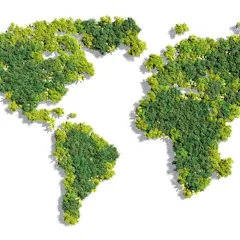
But often these new ‘forests’ have only grown thanks to increased deforestation abroad.
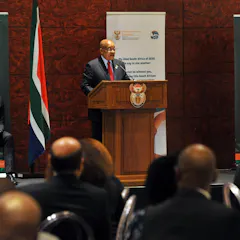
It’s important yet complicated to align national development plans with the SDGs. But it isn’t impossible.

On World TB Day 2018, eradicating TB finally looks like a goal that could be met — if political leaders can step up with cash and actions to match their political declarations.
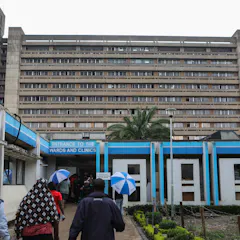
Kenya spends millions treating women who have complications after unsafe abortions.
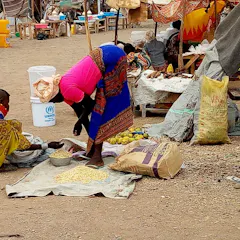
Refugee policy may well be a humanitarian issue. But it is also a development issue.

Local governance can have a real effect - positive or negative - on the quality of schooling.

For a public space to be seen as safe, welcoming and accessible, a diverse range of people need to actively use it. That’s why any space-changing project needs to engage broadly with the community.

It seems there is a gap between what companies publicly assume or state they are doing with the sustainable development goals and what they are actually doing.
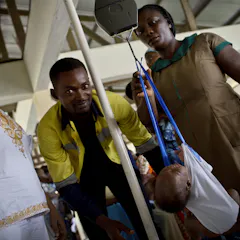
For healthcare to be accessible, affordable and equal, policies and programmes that promote universal health coverage need to be based on evidence.

Understanding where there are high numbers of new HIV infections is important to establishing whether interventions are working or not.

Stigma stops people from getting tested for HIV, and staying on their treatment. Unless it’s addressed, the AIDS epidemic will persist.
Top contributors
-
 John Thwaites is a Friend of The Conversation.
Chair, Monash Sustainable Development Institute & ClimateWorks Australia, Monash University
-
Chair of Policy Innovation, School for Data Science and Computational Thinking, Stellenbosch University
-
Senior Research Fellow, Monash University
-
Sustainable Development Solutions Network Manager, Monash Sustainable Development Institute, Monash University
-
Professor of Business and Sustainable Development, University of Edinburgh
-
Professor of Development Economics, Monash University
-
Thomas Wiedmann is a Friend of The Conversation.
Professor of Sustainability Research, UNSW
-
Vice-Chancellor's Senior Research Fellow, RMIT University
-
Research Fellow, Stellenbosch University
-
Associate Professor in Construction and Environmental Performance, The University of Melbourne
-
Canada Research Chair of Epidemiology & Global Health, McGill University
-
Associate Director (International) - Melbourne Centre for Cities, The University of Melbourne
-
Reader in Development Economics, University of Manchester
-
Senior Lecturer, Crawford School of Public Policy, Australian National University
-
Associate Professor in Public Health, The University of Queensland