

African countries should start early to develop an agreed position before the next set of global priorities is discussed.
Articles on UN millennium development goals
Displaying 1 - 20 of 67 articles
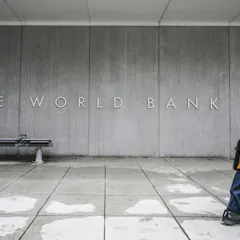
The World Bank board operates on the basis of reaching decisions by consensus. This means that any executive director must earn the respect of their colleagues to affect change.
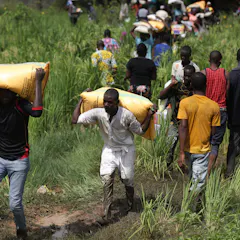
Nigeria has the largest number of people living in extreme poverty in Africa. Turning the tide requires inclusive growth, value added productivity and strong institutions.
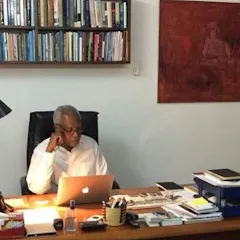
Despite a succession of different challenges, Bgoya’s approach has been consistent.
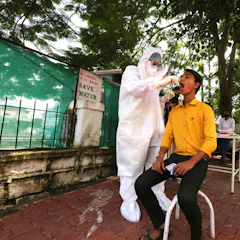
After the pandemic, South Asian governments must spend money on making public services work, rather than relying on GDP growth to pull people out of poverty.
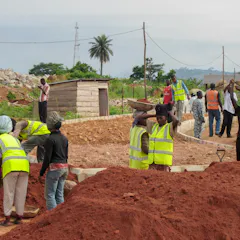
Communities are always at the receiving end of infrastructure projects. They must also be at the centre of the decision making processes.

If trends continue, 87% of the world’s poorest people will live in sub-Saharan Africa by 2030.
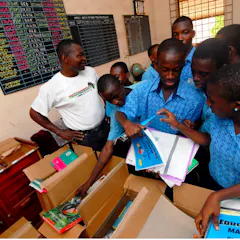
Achieving the sustainable development goals on education in Ghana requires efficient resource allocation, not necessarily more money.
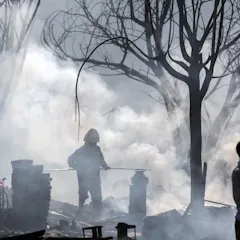
The data suggest that boys experience as much disadvantage as girls.

Only half of Kenya’s 47 counties achieved the 2000 goal on reducing child mortality
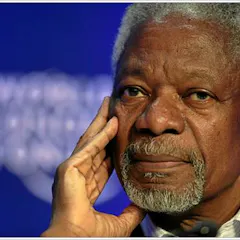
While his appointment as UN Secretary-General was a huge breakthrough, Kofi Annan also led the organisation through some of its ugliest moments.

Epidemiologists and public health managers are looking to complement indoor-based malaria solutions with those that focus on the outdoors. Drones are a crucial part of their armoury.

Development officials have been cautiously optimistic that we were on our way to eradicating hunger. But a recent report by the UN shows a surge in global hunger due to conflict and climate change.

Evidence suggests a strong relationship between sustainability and the global competitiveness of a country. Nigerian businesses need to embrace it in order to thrive.

South Africa did a brilliant job of increasing access to safe water for millions of people after the first democratic elections in 1994. But it hasn’t kept up the good work.
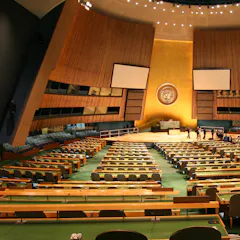
Leaders in Davos are being asked to consider how global cooperation could be reinvigorated. They could do worse than start with UN reforms.
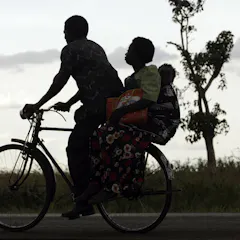
A study in Malawi shows how the participation of local community leaders in policy development can change men’s attitudes to maternal and child health for the better.

Mozambique has made significant progress in its fight against poverty despite recent economic and political challenges

Nation states, UN bodies and civil society gathered in Quito for Habitat III to adopt the New Urban Agenda. So how will the UN’s new global urban roadmap transform our cities over the next 20 years?

Progress in terms of water and sanitation has traditionally favoured those with money. But the hope with the SDG’s is that this gap will be plugged in the future.
Top contributors
-

-
Lecturer and course director in Water Science, Policy and Management, University of Oxford
-
Research Fellow, Stellenbosch University
-
Professor of Business and Sustainable Development, University of Edinburgh
-
Professor of Law, Conflict and Global Development, University of Reading
-
Professor of International Politics, Queen Mary University of London
-
Associate Professor and Associate Director, Health Systems Program, Johns Hopkins University
-
Senior Lecturer in Sociology and Criminology
-
Professor of International Education and Development, University of Sussex
-
UNSW
-
Professor in Global Development, SOAS, University of London
-
ARC Future Fellow and Sydney Horizon Fellow, School of Public Health, University of Sydney, University of Sydney
-
John Thwaites is a Friend of The Conversation.
Chair, Monash Sustainable Development Institute & ClimateWorks Australia, Monash University
-
Associate Professor of Global Health Systems, The University of Queensland
-
Associate Professor, School of Earth and Environmental Sciences, The University of Queensland